

In the vast and ever-evolving landscape of the global entertainment industry, versatility is not merely an asset; it is the currency of relevance. Few artists embody this principle as profoundly as Yuko Fukushima. A Japanese actress, model, and art collaborator, Fukushima has cultivated a career defined by its remarkable breadth and cultural fluency. With a background that spans Japan, the United States, the United Kingdom, and Canada, she brings a uniquely international perspective to her work, seamlessly transitioning between roles that demand deep emotional resonance, cultural authenticity, and precise commercial appeal.
Represented by the esteemed Day 7 Talent Agency and Volition Entertainment, Fukushima has built an impressive portfolio that resists easy categorization. Her work traverses historical television series, high-impact national commercials for brands like Microsoft and UCLA Health, and viral digital content for platforms like Dhar Mann Studios. Each performance is imbued with a quiet professionalism and a nuanced understanding of character, whether she is delivering authentic 18th-century Japanese dialogue for a major streaming series or conveying a complex emotional arc without a single word in an award-nominated short film.
Her recent endeavors highlight this dynamic range. A collaboration with the award-winning headshot studio The Light Committee saw her headline a promotional campaign, while a modeling project with acclaimed makeup artist AtElieR Saiko allowed her to explore the intersection of beauty and avant-garde creative expression. These projects, though different in scope, share a common thread that runs through all of Fukushima’s work: a commitment to the collaborative process and a deep respect for the power of visual storytelling. As audiences will soon see in her upcoming are now seeing in her principal role in the Emmy-winning Josh Gates’ series Expedition Files—with Season 3 currently airing—Fukushima’s ability to authentically represent her heritage on a global stage marks her as a significant and compelling talent.
New York Art Life Magazine had the distinct pleasure of sitting down with Yuko Fukushima to discuss her multifaceted career, her artistic philosophy, and the discipline required to navigate the demanding worlds of acting, modeling, and creative collaboration.
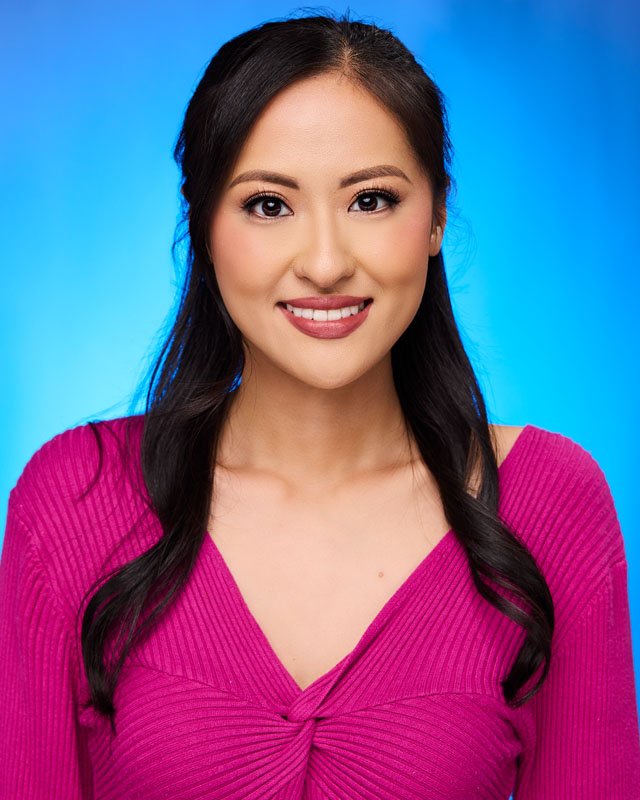
New York Art Life Magazine: Yuko, you have an incredibly diverse background, having lived in Japan, the US, the UK, and Canada. How has this international experience shaped your identity as a creative professional and influenced your approach to storytelling?
Yuko Fukushima: Living across multiple cultures has been the cornerstone of my artistic identity. It has taught me that while customs, languages, and social norms may differ, the core of human emotion is universal. This understanding is invaluable in acting. When I approach a character, I’m not just looking at the script; I’m considering the subtle cultural cues that inform their behavior, their worldview, and their relationships. My international background provides me with a broader palette of human experience to draw from. It has also made me incredibly adaptable. On set, you are constantly working with people from different walks of life, and my experience has taught me to communicate effectively and build rapport quickly, which is essential for a collaborative art form like filmmaking.
NYAL: You trained at the prestigious UCLA Extension and the Margie Haber Studio. What were the most critical lessons you learned from these institutions that you carry with you into every audition and onto every set?
Yuko Fukushima: UCLA Extension provided a fantastic and comprehensive foundation in the craft of acting, from script analysis to character development. It was rigorous and disciplined. The Margie Haber Studio, on the other hand, revolutionized my approach. Margie’s philosophy is about living the character’s life, not just acting it. The core lesson was to stop trying to show an emotion and instead create the specific thoughts and circumstances that would naturally lead to that emotion. It’s about being present and truthful in the moment. I learned to find the personal connection in every scene, to make the stakes real for myself. This training gave me the confidence to walk into an audition room not as an actor trying to get a job, but as the character living out a moment in their life. That shift in perspective has been a game-changer.
NYAL: You have a significant role as a 1700s Japanese Buyer in the upcoming season of Expedition Files, acting opposite Emmy-winning host Josh Gates. What did it mean to you to bring cultural and historical authenticity to such a high-profile international production?
Yuko Fukushima: It was an immense honor and a significant responsibility. Portraying a character from 18th-century Japan required more than just learning lines; it demanded deep research into the customs, etiquette, and dialect of that era. I worked diligently to ensure my gestures, posture, and speech were historically accurate. For me, authenticity is a form of respect—respect for the culture being portrayed and for the audience. Working with a professional of Josh Gates’ caliber was inspiring; he and the entire production team at Circle The Globe and Ping Pong Productions were committed to getting it right. Being able to contribute my cultural knowledge and deliver a performance entirely in Japanese for a global audience on platforms like Hulu and Disney+ is a privilege. It’s an opportunity to bridge history and entertainment, and I am incredibly proud of the work we did.
NYAL: You’ve also worked on several vertical dramas for platforms like ReelShort and DramaBox. This is a rapidly growing format in the industry. How does the acting process differ for content designed specifically for a mobile, vertical screen?
Yuko Fukushima: The vertical drama format is fascinating because it’s so intimate. The frame is much tighter, focusing almost exclusively on the actor’s face and upper body. This means that subtlety is everything. A small flicker of the eyes or a minor shift in expression is magnified and carries immense weight. The pacing is also breakneck; you have to establish character and conflict very quickly to keep the viewer engaged as they scroll. From a performance standpoint, it requires a high degree of precision and emotional clarity. I’ve been fortunate to work with exceptional directors in this space, like Andy Yi Li on The CEO Who Help Me Raise Child, whose short film is in contention for the 2024 Oscars. These experiences have been a fantastic training ground for delivering impactful performances under unique technical constraints.
NYAL: You recently took on the lead role in a training video for the non-profit END OVERDOSE, portraying a woman struggling with opioid addiction. How did you prepare for such an emotionally demanding role, and what do you hope audiences take away from that performance?
Yuko Fukushima: That role was emotionally taxing but profoundly important. END OVERDOSE does critical, life-saving work, and I knew the performance had to be grounded in truth to serve the film’s educational purpose. Preparation involved extensive research into the opioid crisis and the personal stories of those affected by addiction. I focused on understanding the internal conflict—the pain, the desperation, and the humanity beneath the struggle. On set, Director Zej Radke created a safe space for me to explore the character’s vulnerability. My goal was to portray her not as a statistic, but as a human being in crisis, to evoke empathy and encourage viewers to see addiction as a disease, not a moral failing. If the film helps even one person better understand the stakes and learn how to respond, then the work has succeeded.
NYAL: On the commercial side, you’ve represented major global brands like Microsoft, Honda, Samsung, and UCLA Health. What is the key to creating a compelling and authentic performance within the concise timeframe of a 30- or 60-second spot?
Yuko Fukushima: Commercial acting is a unique discipline. You have to create a fully realized character and emotional arc in a matter of seconds. The key is specificity. Before the camera rolls, I generate a mini-backstory for my character. For the UCLA Health “Keep on Rising” campaign, I wasn’t just ‘Patient’; I was a specific person with a life, a family, and a reason to recover. This internal narrative allows for genuine emotional reactions. For the Microsoft Copilot commercial, where I played a judge, it was about conveying authority and thoughtful consideration through expression alone. For Honda/Amazon, it was about a natural, seamless interaction with technology. It’s about finding the human truth in the brand’s message and communicating it clearly and instantly.
NYAL: Your recent modeling collaboration with makeup artist AtElieR Saiko was a dive into the world of creative expression and beauty. What did you discover about the intersection of modeling, performance, and visual art through that project?
Yuko Fukushima: I have been an admirer of AtElieR Saiko’s work since I saw her on Japanese television, so collaborating with her was a dream come true. The experience taught me that a makeup model is not a passive canvas but an active participant in the creation of art. The makeup itself becomes a costume and a character. My job was to embody the mood and story that Saiko was creating with her brushes. It required a different kind of performance—one expressed through stillness, angle, and the way light interacts with the art on your face. It reinforced the idea that storytelling isn’t limited to dialogue or grand movements; it can exist in color, texture, and a single, focused gaze. It was a beautiful fusion of fashion, beauty, and performance art.
NYAL: You also led a promotional campaign for the acclaimed Los Angeles photography studio, The Light Committee. How did acting in a role that is, in itself, about the process of being an actor seeking a headshot feel?
Yuko Fukushima: It was a wonderfully meta experience! The concept was to show the client journey at The Light Committee, from arrival to the final, perfect headshot. The entire performance was non-verbal, guided by a voiceover, so I had to convey a range of feelings—anticipation, confidence, relaxation, satisfaction—purely through my actions and expressions. Having gone through the headshot process countless times myself, I could draw on very real experiences. Working with Rafael, the photographer and owner, was fantastic because he understands an actor’s mindset. The project wasn’t just about modeling; it was about embodying the trust and collaboration that is essential between a photographer and their subject. It was a testament to how professionalism and a positive environment can empower an artist to deliver their best.
NYAL: You’ve appeared in several music videos, including a principal role in Jade Bird’s “Who Wants.” How does the collaborative process with a musical artist differ from that of a film or commercial director?
Yuko Fukushima: In a music video, your performance is in service to the song. The music provides the emotional blueprint—the rhythm, the mood, the narrative arc. My role in Jade Bird’s “Who Wants” was to visually translate the song’s story of a relationship, from its joyful beginnings to its moments of conflict. Director Daniel Ormerod was brilliant at creating scenarios that allowed us to improvise and find authentic moments that matched the song’s energy. Unlike a traditional film where dialogue drives the scene, here, the lyrics and melody are your scene partners. The collaboration is about creating a visual harmony with the musical artist’s creation, adding another layer of meaning to their work.
NYAL: You’ve been featured in numerous viral videos for Dhar Mann Studios, a platform with tens of millions of viewers. What has working in such a high-volume, fast-paced digital production environment taught you about efficiency and professionalism on set?
Yuko Fukushima: Working at Dhar Mann Studios is like a masterclass in on-set efficiency. The production schedule is swift, and you have to be prepared to deliver a solid performance with minimal takes. There is no time for uncertainty. It has sharpened my ability to make quick, strong choices and to trust my instincts. You learn to be fully present and ready the moment the director calls “action.” The crew is a well-oiled machine, and being part of that environment reinforces the importance of professionalism, punctuality, and reliability as a team player. The platform’s massive reach is also a constant reminder of storytelling’s impact and the responsibility that comes with it.
NYAL: Much of your work involves embodying different professional roles—a doctor, a nurse, a nanny, a judge. What is your process for quickly yet convincingly stepping into the shoes of these varied professions?
Yuko Fukushima: My process always begins with observation and research. If I’m playing a doctor, I’ll watch medical dramas. Still, I’ll also look up documentaries or interviews with real physicians to understand their demeanor, their vocabulary, and the weight of their responsibilities. The key is to find the core function of that profession and the mindset it requires. A doctor needs to project calm authority; a nanny must exude warmth and patience. Even for a brief scene, I build a sense of professional history for the character. This internal work allows me to carry myself with the quiet confidence of someone who belongs in that environment, which makes the performance believable to the audience.
NYAL: You’ve worked with content creators like Sameer Bhavnani and Matthew Bandeira who have millions of followers. How do you see the relationship between traditional media and the creator economy evolving for actors today?
Yuko Fukushima: The lines are blurring completely, and I see it as a fantastic evolution. Platforms like YouTube, TikTok, and Instagram have democratized content creation, providing new and powerful avenues for actors to work and be seen. Working with creators like Sameer and Matthew is exciting because they have a direct and intimate connection with their audience. The projects are often character-driven and allow for a lot of creativity and improvisation. For actors, this means more opportunities to build a body of work, showcase range, and connect with a global audience outside of the traditional casting system. I believe the future for actors lies in embracing both—leveraging the reach of digital platforms while continuing to pursue roles in film, television, and theatre.
NYAL: As a bilingual actress, fluent in both Japanese and English, you are uniquely positioned in the industry. How do you leverage this skill, and what advice would you give to other multilingual actors looking to navigate the market?
Yuko Fukushima: Being fully bilingual is one of my greatest strengths. It opens up a wider range of roles and allows me to work on international co-productions, like Expedition Files, or in commercials for global brands like Honda that require authentic Japanese dialogue. My advice to other multilingual actors is to treat each language not just as a skill, but as a key to a different cultural identity. Understand the nuances, the idioms, and the cultural context behind the words. Be prepared to audition in any of your languages at a moment’s notice. Most importantly, see it as your superpower—it’s what makes you unique and valuable in a globalized industry that is hungry for authentic voices and diverse stories.
NYAL: Looking ahead, what kinds of stories are you most passionate about telling, and what are your aspirations for the next chapter of your career?
Yuko Fukushima: I am deeply drawn to stories that explore the complexities of the human condition and foster empathy. I want to continue to take on roles that challenge me emotionally and intellectually, whether it’s in a historical drama, a thought-provoking independent film, or a character-driven series. I am particularly interested in projects that bridge my Japanese and Western backgrounds, telling stories that illuminate the immigrant experience or explore cross-cultural relationships. My ultimate aspiration is to be part of work that not only entertains but also encourages audiences to see the world—and each other—with a little more understanding and compassion. The journey is ongoing, and I am excited to continue learning, growing, and contributing to the art of storytelling.
