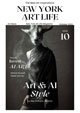


In the vast, interconnected landscape of contemporary art, a new kind of creative leader is emerging—one who operates not merely as an artist, but as a cultural architect, a community builder, and a spiritual guide. Ming Chen is a vanguard of this movement. As the founder and head of creative for “Creative Studio,” an ambitious arts initiative under the U.S.-based missionary organization Ambassadors for Christ (AFC), Chen is pioneering a unique form of cultural evangelism. His work stands at the complex intersection of faith, art, and identity, specifically designed to engage and empower Chinese-speaking young professionals and international students across North America. With a dynamic background that spans from a BA in Musical Theatre Performance to a Doctorate in Christian Education from Southeastern Baptist Theological Seminary, Chen possesses a rare synthesis of artistic intuition and pedagogical rigor. This dual expertise forms the foundation of his mission: to build sustainable, reproducible models of creative discipleship that transform artistic practice into a profound act of spiritual formation.
Chen’s “Creative Studio” is not a conventional artist collective; it is a meticulously designed ecosystem of faith-based creativity. It comprises three distinct yet interconnected projects: COMPOSE Music, which has produced over 35 original Chinese-language worship songs; Joy Script Drama, which develops theatrical productions from the ground up; and CAPTURE Mobile Visual, which encourages storytelling through accessible modern media. Through these initiatives, Chen has cultivated a thriving cross-continental network of young believers who are learning to articulate their faith through culturally resonant art forms. From orchestrating national evangelistic tours and curating the annual North American Sojourners’ Culture Festival to producing innovative Online Original Illustrated Audio Dramas that bring together talent from across the globe, his work consistently pushes the boundaries of ministry. He rejects the notion of a top-down, personality-driven model, instead championing a community-oriented framework he describes as: Discipleship → Creative Collaboration → Presentation → Evangelism → Re-discipleship. In this exclusive interview, New York Art Life Magazine sits down with Ming Chen to explore the theological vision behind his work, the strategic thinking that drives his projects, and his ambitious goal of building a global movement where creativity becomes the frontline of mission.
New York Art Life Magazine: Mr. Chen, thank you for speaking with us. Your journey is quite unique, from musical theatre to earning a Doctorate in Christian Education. How do these seemingly disparate fields inform your work as a creative director and founder of Creative Studio?
Ming Chen: Thank you for having me. I see my journey not as a path between two separate fields, but as a convergence. My training in musical theatre at the Sichuan Conservatory of Music gave me the language of performance, storytelling, and collaboration. It taught me how to connect with an audience, how to structure a narrative, and the power of aesthetics to move the human heart. However, as my faith deepened, I felt a growing desire for that artistic expression to have a more profound, eternal purpose. My doctoral studies in Christian Education provided the theological and pedagogical framework to build that purpose. It taught me how to think systematically about spiritual formation—how people learn, grow, and are transformed within a community. So, when I founded Creative Studio, I wasn’t just thinking about producing a good song or a compelling play. I was thinking, “How can the process of creating this song or play become an act of discipleship for the creative?” The stage and the classroom merged. The art is the curriculum, and the creation process is the lecture hall.
Editor’s Note: We agree with Mr. Chen that “creative” is an excellent and inclusive term that accurately reflects the broad community of writers, musicians, designers, performers, and storytellers his ministry serves, including both professionals and non-professionals.
New York Art Life Magazine: You’ve described your philosophy with the phrase “creation itself is discipleship.” Could you elaborate on what this means in practice within your projects, like COMPOSE Music or Joy Script Drama?
Ming Chen: Certainly. In a traditional model, an artist might have a personal spiritual life and then separately create art. We intentionally fuse the two. For a COMPOSE Music project, for example, we don’t just start with a call for songs. Rooted in the theology of worship, we guide young people to respond to God through songwriting. We emphasize three key dimensions: first, knowing who God is—understanding the One we worship; second, knowing who we are—embracing our identity as worshippers; and third, stepping beyond the church walls to let our worship become a living testimony. The songwriters, musicians, and producers immerse themselves in this spiritual journey, and the act of songwriting itself becomes a central part of that process. The music that emerges is not just an artistic product; it is a documented artifact of their collective spiritual journey. With Joy Script, the process is similarly immersive, as participants develop original works born from their shared exploration of faith and personal testimony. Creation, in this context, becomes a tangible, collaborative act of worship and learning. The art is the fruit, but the discipleship is in the cultivation.
New York Art Life Magazine: Creative Studio specifically serves Chinese-speaking young professionals and international students in North America. Why this particular community, and what are the unique cultural and spiritual challenges you aim to address?
Ming Chen: This community is uniquely positioned at a crossroads of culture, language, and identity. Many are “sojourners,” living far from their home country, navigating the complexities of a new cultural environment while often feeling spiritually isolated. They are highly educated and digitally native but may struggle to find a faith community that speaks their heart language—not just linguistically, but culturally and artistically. Traditional church models can sometimes feel foreign or disconnected from their lived experiences. Our goal is to create a “third space” for them—a community where they can explore their faith using creative forms that are both authentic to their Christian beliefs and resonant with their cultural background. We address the challenge of isolation by fostering deep, collaborative relationships. We tackle the challenge of expression by providing tools and training in music, drama, and visual arts, empowering them to tell their own stories of faith in a way that is powerful and relevant to their peers. It’s about equipping them to be cultural missionaries in their own context.
New York Art Life Magazine: Your projects are incredibly diverse, from producing over 35 original worship songs to national tours and online festivals. How do you maintain artistic quality and theological integrity across such a wide range of outputs and with often emerging, non-professional artists?
Ming Chen: This is a crucial challenge, and the answer lies in our systematic framework: Discipleship → Creative Collaboration → Presentation → Evangelism → Re-discipleship. Theological integrity is established in the initial discipleship phase. We ground every project in a deep, communal study of scripture and doctrine. This ensures that the creative work, no matter the form, is built on a solid foundation. Artistic quality is nurtured through the collaborative process. We intentionally create a supportive ecosystem. For instance, in our COMPOSE project, we invite established professionals like Ray Lin, a Golden Melody Award nominee, to share his faith journey and creative insights in online sessions open to all participants. While we don’t have individual mentoring, our professional musician team then helps produce the songs written by novice songwriters, elevating their work to a professional standard. It’s a model of communal apprenticeship. We believe excellence honors God, so we don’t compromise on quality. But we define “quality” not just by technical polish, but by the authenticity of the testimony and the spirit of collaboration behind the work. The process is designed to elevate everyone’s skill level while keeping the focus on the message.
New York Art Life Magazine: The North American Sojourners’ Culture Festival is a significant initiative. Could you describe its purpose and how you, as Head of Creative, curated an experience that was more than just a virtual showcase?
Ming Chen: The Sojourners’ Culture Festival was born from the desire to create a platform that celebrates, connects, and commissions the vast creative talent within the Chinese-speaking Christian diaspora. It wasn’t meant to be a passive online concert. My role as Head of Creative was to design an interactive and engaging evening event. We curated a program that included not just performances but also songwriting and visual storytelling, as well as competitive showcases where participants received constructive feedback. In addition to music, the program featured original poetry readings, art exhibitions, dancing, and more, introducing their creative works. We were honored to have esteemed guests participate; for example, Menghe Jing was a featured performer, while Ray (Chi An) Lin served as a judge and panelist, offering his professional insights. This created a dynamic exchange between established and emerging creatives. The production value was also critical. We ensured a high-quality stream, professional graphics, and a clear narrative flow for the entire festival. The goal was to make over 2,500 attendees feel like they were part of a vibrant, living movement, not just viewers of a broadcast. It was about building a network and casting a vision for what our collective creativity could achieve.
New York Art Life Magazine: Another highly innovative project is the Online Original Illustrated Audio Dramas. What was the creative impetus for blending Japanese anime-style illustration, voice acting, and original music, and what challenges did you face producing this internationally?
Ming Chen: The impetus was to re-imagine powerful narratives for a generation that communicates through rich, multimedia formats. Static scenes or traditional plays may not connect as deeply with young people who are fluent in the language of anime, graphic novels, and podcasts. We wanted to create an experience that was artistically compelling and emotionally immersive. Combining these elements—the visual appeal of illustration, the intimacy of voice acting, and the emotional power of a musical score—allowed us to explore biblical and life themes with fresh depth and nuance. The greatest challenge was also its greatest strength: our international team. We had illustrators in one country, voice actors in another, and musicians across North America. As Head of Creative, my job was to be the central hub, ensuring a cohesive artistic vision. This involved countless virtual meetings, detailed storyboards, precise timing for audio synchronization, and constant communication across time zones. It required a project management discipline as rigorous as our artistic direction. The success of works like “Encounter: A Miraculous Journey” proved that this global, digital-first collaboration model is not only possible but can produce deeply moving and professionally polished art.
New York Art Life Magazine: You emphasize that your ministry is “not personality-driven” but “community-driven.” How do you actively build a sustainable structure that can outlast any single leader and be replicated in different cities?
Ming Chen: This is the core of my vision. A personality-driven ministry is a fragile one. The key to sustainability is a reproducible system and empowered local leaders. The five-step framework I mentioned earlier is the “operating system” that can be installed in any community. A key part of our future strategy is to actively train local leaders in how to lead this process. The plan is to teach them how to facilitate the discipleship phase, manage collaborative projects, and organize evangelistic events. We aim to provide them with resources, templates, and ongoing mentorship, while encouraging them to adapt the model to their unique local context. For example, a team in a university town might focus more on short-form video for their CAPTURE project, while a team in a city with a strong music scene might pour more energy into COMPOSE. The goal is to create a decentralized network of interconnected creative hubs, not a centralized pyramid with me at the top. The movement’s success will be measured by how well it thrives without my direct involvement in every project.
New York Art Life Magazine: The term “cultural evangelism” can be interpreted in many ways. What does it mean to you, and how does it differ from more traditional forms of outreach?
Ming Chen: For me, “cultural evangelism” is about embodying the gospel within the culture, rather than shouting it at the culture. Traditional evangelism often involves a direct, propositional presentation of faith, which is absolutely vital. However, in a postmodern, often skeptical world, art can open doors that direct proclamation cannot. It speaks a universal language of beauty, longing, pain, and hope. Our approach is to create art that is excellent and honest in its own right—a beautiful song, a compelling story, a stunning image. This art doesn’t necessarily have to be a sermon. It can simply reflect a world-view shaped by the gospel. It might explore themes of redemption, forgiveness, or hope in a way that resonates with someone who would never step inside a church. The art becomes the point of connection, the conversation starter. Evangelism happens when someone is moved by a performance and asks, “What is the hope that inspired this story?” It’s a more incarnational approach—entering into the cultural space and creating signposts of transcendence and beauty that point toward their ultimate source.
New York Art Life Magazine: You’ve produced a significant body of original work—over 35 songs and 7 drama productions in five years. What are the central themes you find your community of artists returning to again and again?
Ming Chen: That’s an insightful question. While the specific topics vary, a few central themes constantly resurface. The first is the theme of “sojourning” or displacement—the feeling of being an outsider, of searching for a home, which resonates deeply with the immigrant and international student experience. This often connects to the larger biblical theme of our spiritual pilgrimage on earth. The second is the tension between suffering and hope. Our artists create work that is unflinchingly honest about life’s struggles—mental health, relational conflict, career pressures—but always frames that struggle within the ultimate hope of the gospel. It’s not cheap optimism; it’s a hard-won hope. Finally, there is a recurring theme of identity—moving from an identity defined by academic or career achievement to one rooted in being a beloved child of God. These themes are so powerful because they are not theoretical; they are the lived realities of the artists themselves.
New York Art Life Magazine: Your projects often culminate in public presentations, like the multi-state evangelistic tours. What is the role of the audience in your creative model? Are they passive recipients or active participants?
Ming Chen: The audience is the final, essential piece of the creative cycle. They are never just passive recipients. Our live events are designed to be participatory and dialogical. During a COMPOSE concert, for example, we don’t just perform songs. The songwriters will share the personal stories and testimonies behind their music, creating a powerful context that invites the audience into their journey. For our Joy Script Drama project, we have two distinct models. Our online activities focus on collaborating to create short gospel dramas for local churches to use. Separately, our in-person version, the FaithStory Camp, is an immersive experience where participants learn storytelling through interactive games, guided by professional directors. They then collaboratively write and perform powerful dramas based on their own real-life testimonies. In every case, the goal is to break down the wall between the “performer” and the “spectator.” We want the event to be an encounter with the art, with the artists, and ultimately, with God who inspired it. The presentation marks the beginning of a new conversation, ideally leading the audience member back into a community of their own.
New York Art Life Magazine: How has the rise of digital platforms like YouTube, Spotify, and Zoom impacted your ministry’s reach and strategy?
Ming Chen: Digital platforms have been absolutely transformative. They have allowed us to transcend geographical limitations and build a truly North American and even global community. A song written by a student in Pennsylvania can be heard by someone in California or even in Asia the moment it’s released on Spotify. Crucially, platforms like Zoom allow for real-time, interactive events. Many of our productions are conducted as dual livestreams with both Zoom and YouTube, creating a dynamic space for participation that a simple broadcast cannot offer. Our Lent Online Worship Nights, for instance, have reached over 1,700 viewers simultaneously, uniting people in worship from dozens of cities. These platforms are not just distribution channels; they are community hubs. The COMPOSE Music Project podcast creates an ongoing conversation about faith and creativity. Strategically, this means we now think in terms of a “hybrid” model. A live tour is powerful, but its impact is amplified and sustained when we release high-quality recordings and behind-the-scenes content online. The digital space allows us to continue the discipleship process long after the live event has ended.
New York Art Life Magazine: Your work has been featured on major platforms like GOOD TV USA. What does this kind of recognition mean for your ministry and the artists you mentor?
Ming Chen: The recognition from platforms like GOOD TV is incredibly encouraging for our artists. For many of them, who are young professionals or students creating in their spare time, seeing their work broadcast on a major Christian network is a powerful affirmation. It tells them that their voice matters and their art has a professional quality that can impact a wider audience. For the ministry, it provides credibility and visibility, opening doors to new collaborations and helping us reach individuals we might not otherwise connect with. It validates our model of creative discipleship, showing that a community-focused, process-oriented approach can produce work of exceptional quality. Most importantly, it gives glory to God on a larger stage, broadcasting these testimonies of faith and creativity to a much broader audience.
New York Art Life Magazine: You often quote Ephesians 2:10, “For we are God’s workmanship, created in Christ Jesus to do good works.” How does this theological conviction shape your view of the artist’s role in society?
Ming Chen: That verse is the bedrock of my entire philosophy. It tells us two profound things. First, that we are ourselves a work of art—”God’s workmanship” (in Greek, poiema, from which we get the word “poem”). Our very existence is an act of divine creativity. This imbues every human being with inherent dignity and creative potential. Second, it tells us that we were created for something: “to do good works.” As artists, this gives our work ultimate purpose. The artist’s role in society, from this perspective, is not primarily self-expression. It is to be a co-creator with God, using our gifts to reflect His truth, beauty, and goodness into the world. Our art should be one of those “good works.” It can be a work that brings healing to the broken, clarity to the confused, hope to the despairing, and beauty to desolate places. The artist, then, is not on the fringes of society but is a cultural steward, tasked with cultivating a culture that points toward its Creator.
New York Art Life Magazine: Your vision is expansive, aiming for a “one-region-one-strategy” approach to creative discipleship. Looking ahead five to ten years, what is your dream for this movement?
Ming Chen: My dream is to see a flourishing, self-sustaining network of creative discipleship hubs in every major metropolitan area with a significant Chinese-speaking population across North America, and eventually, in Europe and Asia as well. I envision a future where a young Christian professional moving to a new city can immediately plug into a local creative community that is using our model but has adapted it to their unique cultural landscape. I see a digital platform that connects these regional hubs, allowing for seamless collaboration on large-scale projects—an original album, a feature film, a global arts festival. The ultimate dream is that this movement becomes so embedded in the life of the church that “creative discipleship” is no longer a niche ministry but a core component of how we train and equip the next generation. I want to see a generation of believers who are so fluent in expressing their faith through art that they naturally and beautifully engage and redeem culture from the inside out.
New York Art Life Magazine: Finally, you’ve said, “Creation is not decoration, and culture is not a stage—it is the frontline of mission.” What is your message to a young artist who feels a calling to integrate their faith and their art but doesn’t know where to start?
Ming Chen: My first message would be: you are not alone. There is a growing movement of people who share your calling. Second, start where you are, with what you have. Don’t wait for a grand vision or a perfect project. Start by finding one or two other believers who share your passion. Begin a small group where you study scripture together and discuss how it intersects with your art form. This is the discipleship phase. Third, shift your mindset from creating a product to cultivating a process. Instead of asking, “What can I make?” ask, “Who can I create with?” and “How can this act of creation draw us closer to God and to each other?” Collaboration and community are your greatest assets. Finally, I would say be courageous. Culture is indeed the frontline, and frontlines can be intimidating. But your creativity is a powerful, God-given tool. Do not treat it as a mere hobby or a decorative accessory to your faith. See it for what it is: a divine calling to shape narratives, to build bridges, and to reveal glimpses of God’s glory in a world that desperately needs to see it. Your art is your ministry. Begin today.
For more information on Ming Chen and the Creative Studio projects, please visit the following links:
- COMPOSE Music Project: www.youtube.com/@composemusicproject2020
- COMPOSE Music Project Podcast: https://composemusicproject.buzzsprout.com
- Lent Online Worship Nights: https://youtube.com/playlist?list=PLN33DxdtNHGFmuaD1WlRxy-X31srtKiQV&si=YO64H0XHnRMdFAnX
- North American Sojourners’ Culture Festival: https://www.youtube.com/playlist?list=PLN33DxdtNHGGc_oZnd4uoNSqadsSAmGeR
- North American Online Original Illustrated Audio Dramas: https://www.youtube.com/playlist?list=PLN33DxdtNHGF7rrYILHQUXgH93lHjy0cS
