


If you looked out your window this morning, you didn’t see the usual grey hustle of the city. You saw a whiteout. Today, December 29, 2025, goes down as one of those days where the city that never sleeps definitely hit the snooze button. We woke up to a massive NYC storm that decided to dump a serious amount of powder on the five boroughs, and honestly? It’s been chaos out there.
The morning commute—if you were brave enough to attempt it—was a scene straight out of an disaster movie, just with more honking and expensive lattes. We are talking about gridlock on the BQE, the LIE looking like a parking lot, and the FDR Drive practically disappearing under a sheet of white. And don’t even get me started on the airports. The departure boards at JFK, LaGuardia, and Newark lit up with red “CANCELLED” text like Christmas lights gone wrong. Thousands of travelers are currently stuck eating overpriced airport sandwiches, wondering if they’ll ever make it out of this big winter NYC freeze.
The sidewalks, NYC Snow ? treacherous. There is that specific New York City phenomenon where the snow mixes with trash, car exhaust, and dirt to create “slush lagoons” at every crosswalk. You step off the curb thinking it’s solid ground, and suddenly you’re ankle-deep in freezing grey water. It’s a mess. Flights grounded, schools confused about whether to go remote or just give up, and the kind of traffic difficulties that make you question why anyone owns a car in Manhattan.
But, as we wipe the fog off our glasses and dry out our socks, we have to admit: this is part of the deal. This is the price of admission for living in the greatest city on earth.
The Machine: How NYC Fights Back
Despite the groaning and the slush-puddles, New York is actually equipped for big snowfalls better than almost any other city in America. We like to complain, but the logistics of clearing this city are mind-bogglingly impressive.
When a NYC storm is forecasted, the Department of Sanitation (DSNY) goes into war mode. We aren’t just talking about a few guys with shovels. We are talking about an army. New York has a fleet of over 2,000 collection trucks that can be retrofitted with plows. They have salt spreaders that look like something out of a sci-fi movie. They have the “Snow Laborers”—temporary workers hired specifically to dig out bus stops and fire hydrants. There is a rhythm to it. Before the first flake even hits the pavement, the salt spreaders are out, coating the asphalt in that crunchy white brine. When the accumulation starts, the plows run in tandem, creating sparks as steel hits street. It’s a loud, grinding, industrial ballet.
Usually, the system works. The avenues get cleared first (to keep the emergency vehicles moving), then the cross streets. But every once in a while, Mother Nature throws a curveball that’s too fast even for the DSNY. That’s what today feels like. The sheer rate of snowfall per hour overwhelmed the plows, covering the blacktop as fast as they could scrape it. It’s a reminder that no matter how much tech and salt we have, sometimes the NYC Snow just wins.
A Timeline of Frozen History of NYC Storm.
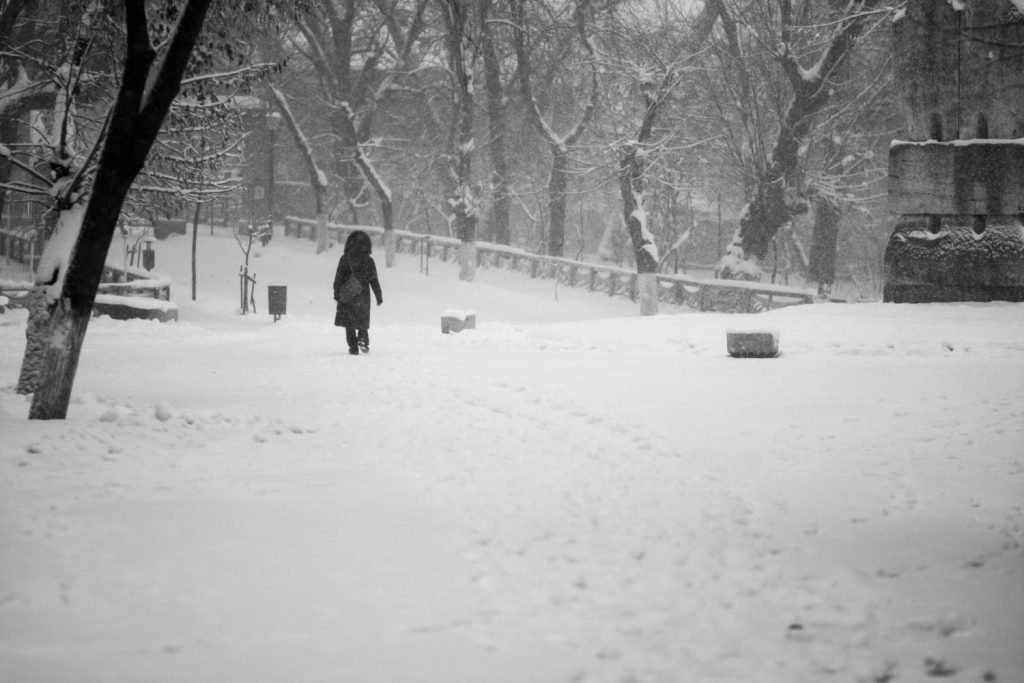
Today feels historic, but is it? To understand the scale of a big winter NYC event, you have to look back. We have a long, dramatic history with winter weather. Here is a timeline of the most notable snowstorms that have brought Gotham to its knees.
1. The Great White Hurricane (March 1888)
This is the grandfather of all storms. The “Blizzard of ’88” is the benchmark by which all other storms are measured. Imagine a New York without subways (because they didn’t exist yet) and without cars. It started as rain, turned to snow, and then the temperature plummeted. Winds hit 85 miles per hour. The city was buried under 20 to 40 inches of snow, but the drifts were reported to be as high as second-story windows. The Impact: It was tragic—over 200 people died in NYC alone. But this storm actually shaped the modern city. The telegraph lines, which were overhead and snapped under the ice, were moved underground. And the chaos of the above-ground rail lines convinced the city planners that they finally needed to build a transit system underground. You can thank this storm for the subway system we have today.
2. The Big Snow of 1947 (December 1947)
This one is famous because nobody saw it coming. In 1947, weather forecasting wasn’t exactly high-tech. The forecast called for “occasional light snow.” The Reality: 26.4 inches fell in Central Park. It fell silently and heavily. Commuters went to work in the morning with a dusting and came out at 5 PM to find the city paralyzed. Cars were abandoned in the middle of Fifth Avenue. It took days to dig out, and it remains a legendary example of why New Yorkers have trust issues with weather reports.
3. The Blizzard of 1996 (January 1996)
For many millennials, this is the core memory of NYC Snow. It was a massive nor’easter. The snow just wouldn’t stop. The Stats: 20.2 inches in Central Park. The Vibe: This was the storm that really highlighted the divide between the boroughs. While Manhattan got plowed fairly quickly, Queens and Brooklyn felt ignored, sparking huge political debates about snow removal equity. It was a heavy, wet snow that snapped trees and turned the city into a ghost town for a weekend.
4. The “Snowmageddon” Debacle (December 2010)
This storm wasn’t the biggest in terms of inches (about 20 inches), but it was a logistical nightmare. It happened right after Christmas. The Chaos: The Bloomberg administration got slammed for this one. Plows got stuck. Ambulances got stuck. Subway trains were stranded on the tracks with passengers inside for hours. Streets in the outer boroughs went unplowed for days. It was a PR disaster and a dangerous situation that proved that even a modern city can crumble if the management isn’t perfect during a NYC storm.
5. Winter NYC Storm Jonas (January 2016)
The current Heavyweight Champion of the World. The Record: 27.5 inches in Central Park. The Scene: This was an absolute walloping. The governor issued a travel ban, effectively shutting down all non-emergency vehicles. But because it happened on a weekend, the vibe was different. It became a city-wide party. People were cross-country skiing down Broadway. Times Square was empty of cars, filled only with people taking selfies. It was the ultimate “Big Winter NYC” moment—record-breaking, paralyzing, but weirdly joyful.
The Survival Instinct
So, how do we handle it? What do New Yorkers do when the NYC Snow piles up?
We adapt. That’s our superpower. First, there is the panic buying. If you went to a Trader Joe’s or a Whole Foods yesterday, you saw the carnage. Bread, eggs, milk, and for some reason, kale, vanished from the shelves. We prepare for a one-day storm like it’s the apocalypse.
Then, there is the gear. You can spot a true New Yorker by their footwear. We don’t mess around with cute sneakers in this weather. It’s all about the Bean Boots, the Timberlands, or the heavy-duty Hunters. We learn the “penguin walk”—shuffling your feet to avoid slipping on the black ice disguised as puddles.
And let’s pour one out for the delivery workers. On a day like today, when the wind chill is sub-zero and the streets are unnavigable, the e-bike delivery guys are the lifeline of the city. They are out there battling the elements to bring us our pad thai and pepperoni pizzas. If you are ordering in during a NYC storm, tip 50%. Seriously.
New York Poetry Covered in White (NYC Snow and NYC Storm)
Okay, we’ve complained about the traffic, listed the disasters, and analyzed the plows. But we have to address the elephant in the room:
It is breathtakingly beautiful. There is a moment, usually late at night or very early in the morning, when the snow is still falling and the plows haven’t turned it black yet. The city changes.
Sound works differently in a big winter NYC. The snow acts as a sound dampener, absorbing the screech of brakes, the rumble of the subway, and the shouting. A hush falls over Manhattan that feels almost holy. You can walk down the middle of an avenue and hear your own breathing. The architecture softens. The sharp, brutal angles of the skyscrapers get frosted tips. The brownstones in Brooklyn and Harlem look like gingerbread houses, their stoops covered in pillowy drifts. The gargoyles on the old buildings wear little white hats.
And Central Park? Central Park becomes a Narnia. The Sheep Meadow turns into a pristine white expanse. The Bow Bridge looks like a painting. You see kids (and adults who are kids at heart) dragging sleds toward Pilgrim Hill. For a few hours, the grit, the grime, the smell, and the stress of the city are buried under a cold, clean blanket. It creates a sense of community, too. Normally, New Yorkers ignore each other. We avoid eye contact at all costs. But in a massive NYC storm, we bond. We share an exasperated look at the bus stop. We help push a taxi that’s stuck in a drift. We commiserate over the slush. The snow levels the playing field; rich or poor, uptown or downtown, we are all just trying not to fall on our butts.
The Aftermath ( NYC Snow)
By tomorrow or Wednesday, the magic will fade. The pristine white snow will turn into that infamous “gray sludge.” The mountains of snow on the street corners will become trash magnets. The subways will smell like wet wool and damp dogs.
But for right now, on this Monday, December 29, 2025, we are in the thick of it. The flights are cancelled, the meetings are rescheduled, and the radiator is clanking away in the corner.
So, if you are stuck inside today, embrace it. Make some hot cocoa, look out the window at the swirling white chaos, and appreciate the power of a real NYC storm. It’s inconvenient, it’s messy, and it’s expensive. But it’s also a reminder that nature is still the boss, even in the city of steel and glass.
Stay warm, New York. We’ll dig ourselves out eventually. We always do.
Central Park Conservancy: Winter Guide
FlightAware – JFK Airport Status
9 questions and answers about NYC Storm and NYC Snow
1) Is Central Park closed during a heavy snowfall? Generally, no. In fact, Central Park is arguably the most popular place to be during a snowstorm. New Yorkers flock there to sled, cross-country ski, or just walk around. However, the NYC Parks Department might close specific areas or entrances if there is a danger of falling tree branches (which happens with heavy, wet snow), or if the conditions are truly dangerous (like hurricane-force winds). But 99% of the time? It’s open for business and beautiful.
2) Do tunnels, bridges, and subways close during a storm? It’s a mixed bag.
- Subways: The underground lines usually keep running (they are the city’s lifeline). However, the outdoor lines (like parts of the N, Q, and the 7 train) often get suspended because snow piles up on the tracks or freezes the third rail.
- Bridges & Tunnels: They usually stay open, but with reduced speed limits. However, in extreme “State of Emergency” events (like the 2016 blizzard), the Governor can issue a total travel ban, closing bridges and tunnels to non-emergency vehicles to keep the roads clear for plows.
3) Who removes snow from a skyscraper sidewalk? It is not the city! In NYC, the property owner is legally responsible for clearing the sidewalk in front of their building. For a skyscraper, that means the building’s management company and their maintenance staff. They are on the hook to clear a path within a certain amount of hours after the snow stops, or they get slapped with a fine.
4) Who is responsible for the safety of the frozen lakes in the parks? The NYC Parks Department. They monitor the ice thickness at places like the Lake in Central Park or the pond in Prospect Park.
- Real talk: It is almost never safe to walk on the natural lakes in NYC anymore. Our winters just aren’t consistently cold enough to freeze them thick enough. You will see red flags posted warning you to stay off. If you see people walking on them, they are taking a huge risk.
5) Are car chains obligatory during the winter? No, and in many cases, they aren’t even allowed on city streets because they damage the asphalt. New York City doesn’t have “chain laws” like the mountains in California or Colorado. If the weather is bad enough that you think you need chains, you probably shouldn’t be driving in Manhattan anyway. Snow tires, however, are highly recommended.
6) Where is ice skating practiced in the city of NYC? There are so many great spots!
- The Rink at Rockefeller Center: The famous one with the big tree. Expensive and crowded, but iconic.
- Wollman Rink (Central Park): Great views of the skyline from inside the park.
- Bryant Park: This is a favorite because admission is free (you just pay for skate rentals).
- Brookfield Place: A nice rink right on the water in Battery Park City.
- Sky Skate: A newer indoor rink way up high at The Edge (Hudson Yards).
7) Where is the closest to NYC ski resort? If you want real outdoor skiing, the closest spot is usually Mountain Creek in Vernon, New Jersey. It’s about an hour and 15 minutes from the city (without traffic).
- Honorable Mention: Big SNOW American Dream in New Jersey is technically closer (near the Meadowlands). It’s an indoor ski slope inside a mall, so it has snow year-round, even in July.
8) What happens after the city issues a snowstorm warning? The city activates its “Snow Plan.”
- Alternate Side Parking Suspended: This is the most important thing for car owners. You don’t have to move your car for street cleaning (so plows don’t bury you back in).
- The Salt Spreaders Roll Out: Before the snow starts, trucks coat the major highways and avenues with brine and salt.
- Notification Blasts: Phones across the city light up with “Notify NYC” alerts giving updates on travel bans or subway delays.
- Outdoor Dining Sheds: If the storm is predicted to be huge, the city might order restaurants to close their roadside dining sheds so plows can get through.
9) What is the purpose of the red ladder that is often found in Central Park?
If you walk around The Lake, The Pond, or the Harlem Meer in the winter, you will often see long, bright red ladders (sometimes resting on wooden posts or lying near the water’s edge).
Their purpose is strictly for safety:
- Rescue: If someone ignores the warning signs, walks onto the frozen water, and falls through the ice, these ladders are there for bystanders or first responders to use.
- Weight Distribution: You don’t use them to climb. You push the ladder out flat across the ice toward the person in the water. This distributes the weight over a larger surface area so the rescuer doesn’t fall in, too. The person in the water can then grab the rungs and be pulled to safety.
Important: They are emergency equipment. If you see them, it means the water nearby is deep enough to be dangerous, and you should definitely stay off the ice!
