


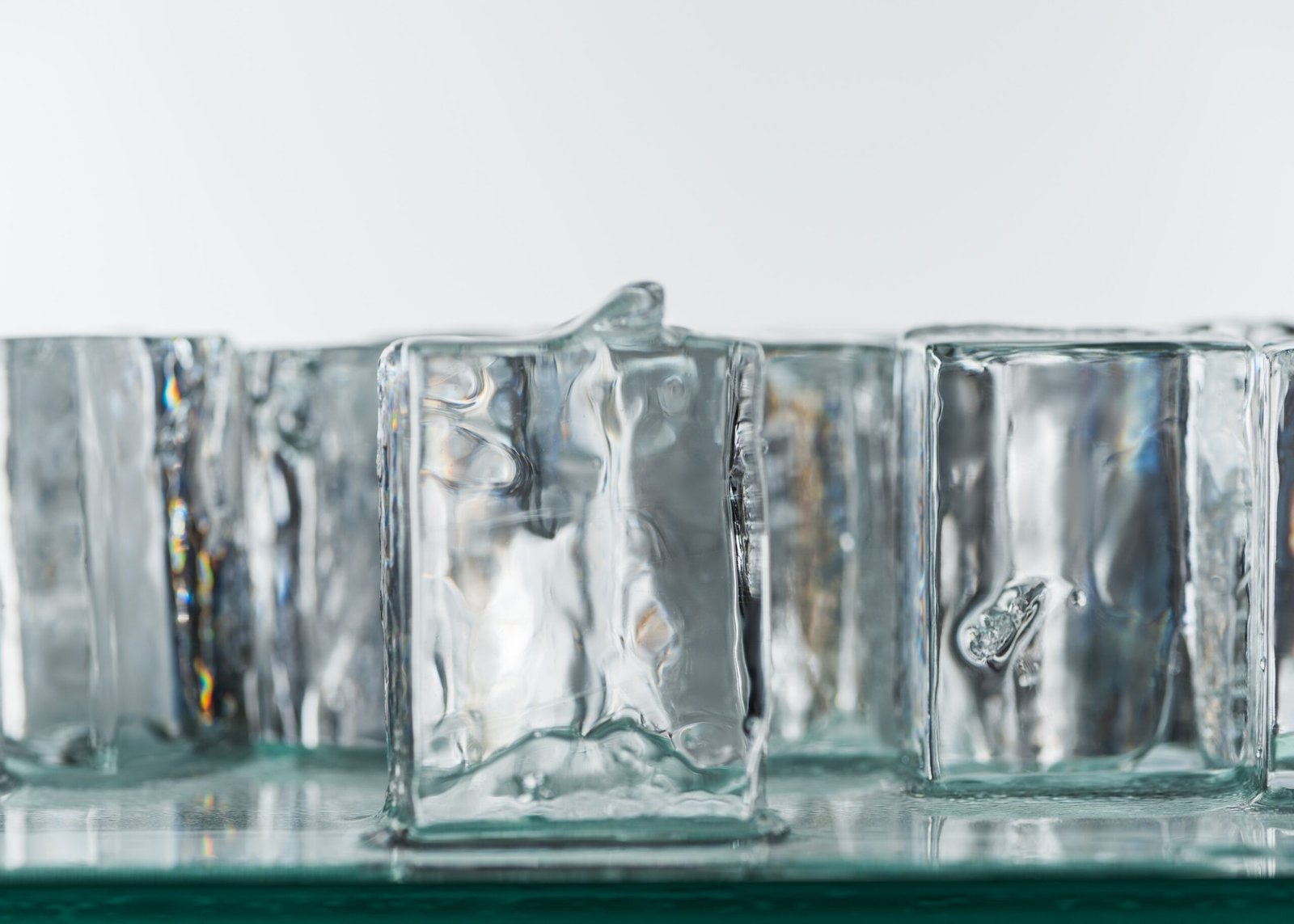
Glass can be transparent or opaque, delicate or monumental, familiar or strangely unfamiliar. For centuries, Murano, the Venetian island renowned for its glassmaking, built an international reputation on the extraordinary skill of its artisans. But in the years following the Second World War, a remarkable experiment challenged the boundaries of the medium. What if glass could become more than a vessel, an ornament or a decorative object? What if it could carry the same creative ambition as a painting or sculpture?
That question lies at the heart of Fucina degli Angeli: Peggy Guggenheim and 20th-Century Artistic Glass, an exhibition opening November 14, 2026, at the Peggy Guggenheim Collection in Venice. Organized by art historian Cristina Beltrami, the exhibition brings together more than 100 glass works alongside drawings, paintings, sculptures and archival materials, reconstructing an influential chapter in postwar European art. <Cite refs={[“turn391153search0″,”turn391153search1”]}/>
The story centers on Egidio Costantini, the Venetian glass entrepreneur who founded Fucina degli Angeli in 1955, and Peggy Guggenheim, the American collector whose support helped bring the project to international attention. Together with artists and Murano’s highly skilled glassmakers, they helped establish a new relationship between artistic imagination and traditional craftsmanship.
A Foundry for Artistic Imagination
The name Fucina degli Angeli, meaning “Foundry of the Angels,” was suggested by the French poet and artist Jean Cocteau. Yet the project was not a conventional foundry. Costantini envisioned a collaborative environment where contemporary artists could explore glass through the expertise of Murano’s specialist workshops.
Born in Brindisi in 1912 and raised in Venice, Costantini understood the island’s glassmaking traditions as both a cultural inheritance and an opportunity for experimentation. Following his involvement with the Centro Studio Pittori nell’Arte del Vetro between 1953 and 1955, he established the Fucina to connect artists’ ideas with the technical knowledge required to realize them in glass. <Cite refs={[“turn391153search1″,”turn391153search5”]}/>
The process demanded more than simply translating a drawing into a finished object. Glass responds to heat, gravity, timing and the physical properties of the material. An artist’s initial concept had to be interpreted through the experience of glassmakers who understood how to manipulate molten material and control its transformation.
This exchange became the foundation of the Fucina’s identity. Artists supplied visual ideas and formal experiments; master craftsmen brought them into existence through techniques developed over generations. The resulting works were collaborative achievements in which neither artistic conception nor technical skill could stand alone.
Peggy Guggenheim’s Role in the Experiment
Peggy Guggenheim’s contribution extended beyond collecting individual objects. She helped Costantini expand his network, encouraged collaborations with internationally recognized artists and supported an exhibition strategy that brought the Fucina’s work to audiences beyond Venice. <Cite refs={[“turn391153search1″,”turn391153search7”]}/>
Her involvement reflected a wider commitment to artistic experimentation. Guggenheim had already established herself as a major supporter of modern art through her collecting and gallery activities. Her interest in the Fucina continued that commitment into a field where traditional craft and avant-garde ideas could meet.
The relationship also demonstrated how patronage could shape the development of a medium. By connecting Costantini with artists and institutions, Guggenheim helped create opportunities for glass sculpture to be considered alongside other forms of modern art rather than remaining confined to the decorative arts.
The exhibition’s title appropriately places her name beside the Fucina itself. This is not simply a presentation of beautiful glass objects; it is a reconstruction of the people, relationships and institutional support that enabled an ambitious artistic project to flourish.
From Picasso to Max Ernst and Lucio Fontana
The Fucina’s collaborations brought together a striking range of artistic personalities. Among those represented in the exhibition are Jean (Hans) Arp, Jean Cocteau, Max Ernst, Lucio Fontana, Paul Jenkins, Oskar Kokoschka, Matta, Dorothea Tanning and Mark Tobey. The presentation also explores work connected with Georges Braque and Pablo Picasso, whose ceramic practices offered early points of inspiration. <Cite refs={[“turn391153search0″,”turn391153search1”]}/>
Their involvement demonstrates that glass was not restricted to one movement or aesthetic. Surrealist artists could use it to create strange, organic or fantastical forms. Abstract artists could investigate geometry, color and spatial relationships. Others could explore the tension between transparency and solidity, or between a carefully conceived design and the unpredictability of the production process.
Works by Max Ernst and Cocteau illustrate how glass could support forms that feel almost like characters or figures, while Jean Arp’s biomorphic vocabulary lends itself to shapes that suggest natural growth without directly reproducing nature.
Lucio Fontana’s participation is particularly significant. Known for his investigations of space across painting and sculpture, Fontana explored glass through works associated with his Concetti spaziali. The exhibition includes Concetto Spaziale – Construction (1964), a work donated to Peggy Guggenheim and now held by the Museum of Fine Arts, Boston. <Cite refs={[“turn391153search1″,”turn391153search7”]}/>
These collaborations reveal the medium’s flexibility. Glass could be expressive, architectural, abstract or figurative. Its visual qualities were not fixed in advance; they emerged through the encounter between an artist’s idea and the possibilities of the material.
Murano’s Masters and the Art of Transformation
The Fucina’s achievements cannot be understood without acknowledging the glassmakers themselves. While the names of internationally celebrated artists often dominate the history of modernism, the realization of these works depended on specialist knowledge developed within Murano’s workshops.
Glassmaking is a demanding process. The material changes rapidly under heat, and decisions must often be made while it remains workable. Complex forms require coordination, experience and an understanding of how glass behaves as it cools and solidifies.
Costantini’s project made this technical expertise central to artistic experimentation. Rather than treating the workshop as a service that executed an artist’s instructions, the Fucina created a dialogue between conceptual ambition and material intelligence.
The exhibition’s decision to present glass works alongside drawings, paintings and related sculptures helps make this dialogue visible. Visitors can consider the relationship between an artist’s broader practice and the particular choices required to translate that practice into glass.
It also invites a more expansive definition of authorship. The finished work may bear an artist’s name, but its existence reflects a shared process involving the designer, the founder, the glassmakers and the networks that supported production and display.
An International Language of Glass
The Fucina’s influence extended beyond Italy. In 1965, the Museum of Modern Art in New York presented Sculpture in Glass, an exhibition featuring objects designed by artists including Arp, Ernst and Picasso and executed in Murano. The presentation marked an important institutional recognition of glass sculpture as a contemporary artistic medium. <Cite refs={[“turn391153search7″,”turn391153search8”]}/>
The new Venice exhibition also examines connections between the Fucina and Japanese artists active in the cultural exchanges of the 1960s and 1970s, including Miki Tomio, Katsuhiko Narita, Omura Mikuni and Yokoo Tadanori. These relationships expand the story beyond a European circle, revealing a project that evolved through international encounters and changing artistic interests. <Cite refs={[“turn391153search0″,”turn391153search1”]}/>
Later experiments, extending into the 1980s, demonstrate that the Fucina was not simply a brief postwar phenomenon. Its methods continued to develop as artists and collaborators explored new formal possibilities.
Why This History Matters Today
Contemporary art frequently crosses boundaries between disciplines, combining traditional craftsmanship with industrial processes, conceptual ideas and new materials. The Fucina degli Angeli offers an earlier, compelling example of this approach.
Its history challenges the hierarchy that has often separated fine art from craft. The exhibition suggests that technical mastery is not the opposite of artistic freedom. Instead, it can enable forms of expression that would otherwise remain impossible.
For the Peggy Guggenheim Collection, the presentation also returns attention to the collector’s role as an active participant in the networks that shaped modern art. Guggenheim did not merely acquire finished objects; she helped create conditions in which artists, makers and institutions could work together.
As Fucina degli Angeli: Peggy Guggenheim and 20th-Century Artistic Glass opens in Venice, it offers visitors a chance to reconsider an essential question: where does art end and craft begin? In these glass works, the distinction becomes less important than the extraordinary results of their collaboration.
The exhibition celebrates not only the beauty of glass but also the imagination, skill and shared ambition required to transform it. In the hands of Murano’s masters and the artists who worked with them, a material associated with centuries of tradition became a language for modern sculpture.
