

If you take the 2 train to Eastern Parkway, you don’t just emerge from the subway; you arrive at a destination that feels like the center of the world. Rising before you is a Beaux-Arts palace, a structure so grand and imposing that it rivals the most famous buildings in Europe. This is the Brooklyn Museum.
While the museums of Manhattan often get the lion’s share of tourist attention, those in the know—the locals, the artists, and the true culture seekers—will tell you that the beating heart of New York’s art scene is actually here, in Brooklyn. And right now, there is an even more compelling reason to cross the East River. The museum is currently hosting a luminous, once-in-a-lifetime exhibition titled “Monet and Venice.”
Whether you are an art historian, a casual observer, or someone just looking for a beautiful place to spend a winter afternoon, this article will guide you through the history of this incredible institution, why it matters, and everything you need to know about the current blockbuster show.
The Sleeping Giant – A Brief History of the Brooklyn Museum
To understand why the Brooklyn Museum is so special, you have to understand its ambition. It was never meant to be a “local” museum. It was built to be the biggest museum in the world.
The Grand Plan
The roots of the museum stretch back to 1823, with the founding of the Brooklyn Apprentices’ Library Association. But the building you see today was born from the Gilded Age optimism of the 1890s. Back then, Brooklyn was an independent city—the third-largest in America—and its leaders wanted a cultural institution that would eclipse anything across the river in Manhattan.
They hired the legendary architectural firm McKim, Mead & White. These were the rock stars of architecture, responsible for the original Penn Station and the Columbia University campus. Their design for the Brooklyn Museum was colossal. It was intended to be a square structure with four inner courtyards, topped by a massive dome. Had it been completed as designed, it would have been the largest single museum building on the planet.
The Shift
However, history had other plans. In 1898, Brooklyn was consolidated into Greater New York. Funding priorities shifted, and construction slowed. Ultimately, only about one-quarter of the original design was built. But what a quarter it is! The building features glorious statues of great figures from history and philosophy, massive columns, and high-ceilinged galleries that breathe with grandeur.
For much of the 20th century, the museum was seen as a “sleeping giant.” It held world-class collections but felt a bit fortress-like. That changed in 2004 with a daring renovation. The museum removed its intimidating masonry stairs and added the Rubin Pavilion—a sweeping glass entrance that brings the street level right into the lobby.
This architectural shift was symbolic. It changed the message of the museum from “Keep Out” to “Come In.” It signaled that this is a museum for the people—transparent, accessible, and connected to the vibrant energy of the Brooklyn community.
Why This Museum is Important
You might ask, “If I visit the Met or MoMA, do I really need to go to Brooklyn?” The answer is a resounding “Yes.” Here is why the Brooklyn Museum is vital to the cultural landscape.
1. It is a Trailblazer for Diversity
Long before “diversity” became a buzzword in the corporate world, the Brooklyn Museum was championing non-Western art. It was one of the first American museums to display African objects as art rather than just ethnographic artifacts. Its collections of Indigenous American, Islamic, and Asian art are profound and respectful.
2. It is the Home of Feminist Art
The museum houses the Elizabeth A. Sackler Center for Feminist Art, the first public space of its kind in the country. Its centerpiece is Judy Chicago’s The Dinner Party, a massive, permanent installation that is essential viewing. It is a triangular table setting for 39 mythical and historical women, acknowledging the contributions of women to Western civilization. It is powerful, controversial, and utterly unique to this museum.
3. The Atmosphere
There is a “vibe” at the Brooklyn Museum that you don’t find elsewhere. It is less stuffy, less crowded with tour groups, and more relaxed. It feels like a community center where art happens to live. The “First Saturdays” program (a monthly free event with music and dancing) has legendary status in New York, cementing the museum as a place of joy, not just quiet contemplation.
The Main Event – “Monet and Venice”
Now, let’s talk about the show that has everyone buzzing.
“Monet and Venice” is a landmark exhibition. It is New York’s largest museum show dedicated to Claude Monet in over 25 years, and it focuses on a specific, radiant chapter of his life that is often overlooked.
The Story Behind the Art
Claude Monet, the father of Impressionism, famously avoided Venice for years. He once claimed that the city was “too beautiful to be painted.” He feared that the shimmering canals and the golden light were clichés, traps that had already been exhausted by other painters.
But in 1908, at the age of 68, he finally gave in. He traveled to Venice and fell under its spell. He treated his visit as a challenge, working with an obsessive energy to capture the unique atmosphere of the floating city.
What You Will See
This exhibition is the first to focus on these luminous Venetian paintings since they debuted in 1912. It features more than 100 artworks, books, and ephemera, including 19 of Monet’s Venetian masterpieces.
Two of the absolute stars of the show are the Brooklyn Museum’s own Palazzo Ducale and The Grand Canal, Venice, which has traveled here from the Fine Arts Museums of San Francisco. Seeing these works together is a revelation. You can see how Monet painted the air itself—the violet haze, the teal ripples, the way the light dissolves the solid stone of the palaces.
A Dialogue of Masters
The exhibition doesn’t just show you Monet in a vacuum. It sets his work in conversation with other giants who painted Venice, such as:
- Canaletto: The master of the precise, detailed veduta (view).
- John Singer Sargent: Who captured the gritty, watery underbelly of the side canals.
- Pierre-Auguste Renoir: Who saw the city with joy and vibrancy.
- Paul Signac: Who broke the city down into dots of pure color.
The contrast is striking. Where other artists focused on the hustle and bustle of gondoliers and tourists, Monet’s interpretation is haunting. His Venice is devoid of humans. There are no people in his paintings—only architecture, color, and light. It creates a dreamlike, almost spiritual experience for the viewer.
An Immersive Experience
The curators, Lisa Small (Brooklyn Museum) and Melissa Buron (Victoria and Albert Museum), have created an atmosphere that transports you.
The galleries are dimly lit to let the paintings glow. But the real magic lies in the sound. The exhibition features an original symphonic installation by Niles Luther, the Museum’s Composer in Residence. As you move through the rooms, the music envelops you, enhancing the “distinctive atmosphere” of Venice. It turns the act of looking at paintings into a multi-sensory journey.
Important “Pro Tips” for the Exhibition
Because this is a blockbuster show, there are some strict rules you need to know to avoid disappointment:
- Pack Light: This is crucial. Bags larger than 8½ x 11 inches are not permitted in the exhibition. This is smaller than a standard sheet of paper!
- No Water: Beverages, including water bottles, are strictly forbidden inside the galleries.
- Loaner Bags: If you bring a big bag, you will have to check it. The museum offers loaner tote bags at the Coat Check so you can carry your wallet and phone, but it’s better to just leave the backpack at home.
- Read the Print: Large-print text is available if you find the dimly lit galleries hard to read.
Exploring the Rest of the Museum
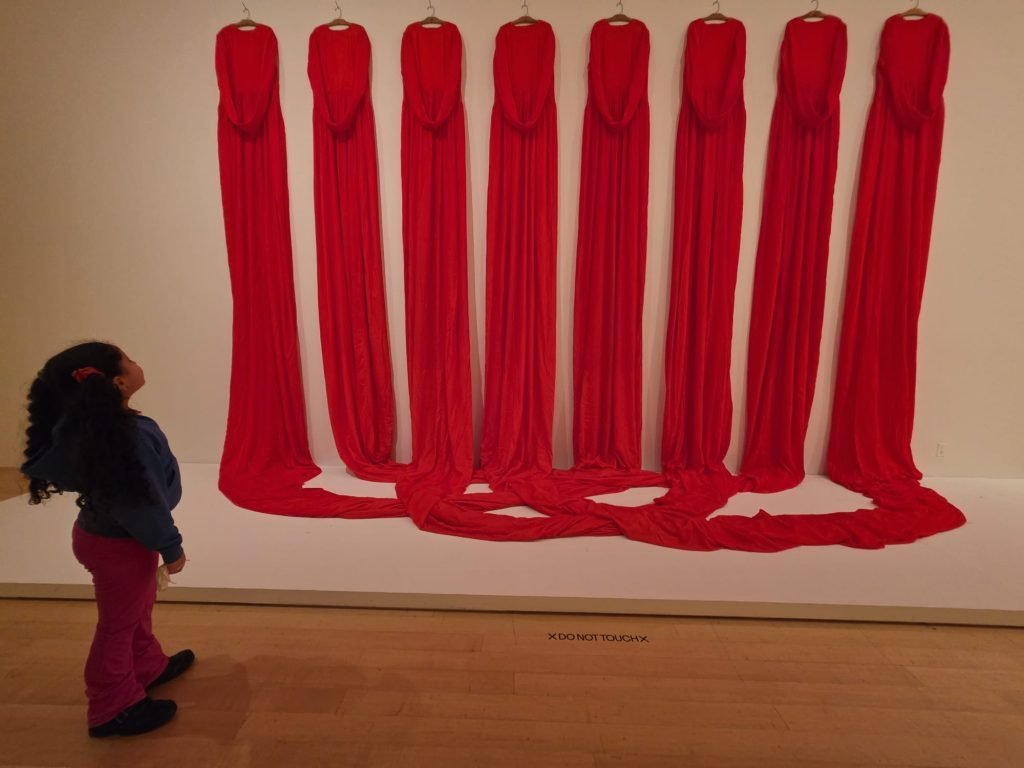
Once you have soaked up the Venetian sun, do not rush to the exit. The Brooklyn Museum is vast, and you should plan to spend at least 3 to 4 hours here. Here is what else you should see:
The Visible Storage (Luce Center for American Art)
Most museums keep 90% of their collection in the basement. The Brooklyn Museum puts it on display. The Luce Center is a maze of glass cases where you can see thousands of objects—lamps, chairs, sculptures, paintings—packed together. It is a treasure hunt for the eyes and offers a glimpse into the sheer volume of the museum’s holdings.
The Period Rooms
Located on the 4th floor, these are entire rooms transplanted from demolished homes. You can stand inside a Dutch farmhouse from the 1700s, an Art Deco library, or the opulent Moorish smoking room from the John D. Rockefeller house. It is like time travel.
Arts of Africa
The museum’s collection of African art is world-renowned. It is presented with dignity and context, moving beyond the colonial gaze to celebrate the artistry and spiritual power of the cultures represented.
The Shop
The Brooklyn Museum shop is excellent. For the Monet and Venice exhibition, expect a curated selection of silk scarves, prints, and the fully illustrated exhibition catalogue. The catalogue is a gem, featuring essays by leading scholars like André Dombrowski and Donato Esposito, exploring the sociohistorical and ecocritical perspectives of Monet’s work.
Why You Should Visit Now
We live in a fast-paced, digital world. We scroll past images of art on Instagram in a fraction of a second.
Visiting the Brooklyn Museum, and specifically the Monet and Venice exhibition, is an act of slowing down. It is an opportunity to stand before a canvas that a master touched over a century ago. It is a chance to see how the light of Venice, captured in oil paint, can still make you feel the warmth of the Italian sun in the middle of a New York winter.
This museum is not just a building; it is a statement that culture belongs to everyone. It is friendly, it is bold, and it is right here in Brooklyn. Whether you go for the history, the community vibe, or the mesmerizing Monets, you will leave feeling inspired.
Practical Guide: Planning Your Visit
Here is the logistical information you need to plan a smooth trip.
Location
The Brooklyn Museum 200 Eastern Parkway Brooklyn, New York 11238-6052
The museum is located in the Morris A. and Meyer Schapiro Wing and Iris and B. Gerald Cantor Gallery on the 5th Floor.
How to Get There
Public transport is the best way to arrive.
- Subway: Take the 2 or 3 train to Eastern Parkway/Brooklyn Museum. The station is right in front of the entrance.
- Bus: The B41, B45, B48, and B69 buses stop nearby.
- Car: There is paid parking at the rear of the museum, but spaces are limited.
Opening Hours
- Monday & Tuesday: Closed
- Wednesday – Sunday: 11:00 am – 6:00 pm
- (Note: First Saturdays of specific months have extended hours, but check the website for current schedules).
Ticket Prices & Booking
For the “Monet and Venice” exhibition, Timed Tickets are REQUIRED. You should book these online in advance as slots fill up quickly.
- Adults: ~$25.00 – $30.00 (Includes General Admission)
- Seniors / Students: ~$16.00 – $20.00
- Children (4-12): ~$10.00
- Members: Free
Note on General Admission: If you only want to see the permanent collection (excluding Monet), the museum operates on a “Suggested Donation” basis for New York State residents. However, for the Monet show, everyone must purchase a fixed-price ticket.
Important Links
- Official Website: www.brooklynmuseum.org
- Exhibition Page: https://www.brooklynmuseum.org/exhibitions/monet-venice
- Email for Touring Info: exhibitions@brooklynmuseum.org
Accessibility
The museum is wheelchair accessible. Large-print text is available for the exhibition.
Don’t wait. The “Monet and Venice” exhibition is a fleeting moment of beauty, much like the sunsets Monet painted. Grab a ticket, take the train to Brooklyn, and let yourself be transported.
