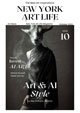


Among them is Jana Padilla, a strategic brand and marketing professional whose name has become synonymous with innovation, precision, and storytelling. Currently shaping narratives at the prestigious Publicis Groupe: Leo NY, Padilla is a quintessential “Strategist of Brands & Creativity,” a title she has earned through a career marked by high-impact campaigns for some of the world’s most recognizable names.
From the hallowed halls of Unilever’s in-house agency, U-Studio, to the fast-paced financial world with Citi, and collaborations with iconic brands like Dove, Bobbi Brown, and Garnier, Padilla has consistently demonstrated an uncanny ability to translate complex, data-driven insights into resonant human stories. Her work is the idea that modern marketing is not merely about selling a product, but about building a universe—an ecosystem of values, aesthetics, and emotions that audiences are not just consumers of, but participants in.
Her journey is as dynamic as the city she calls home, with pivotal roles at OLIVER, Wavemaker, amp Fit, and Rizzoli New York, each adding a unique layer to her expertise. She is a leader who thrives at the intersection of analytics and artistry.
New York Art Life Magazine sat down with Jana Padilla to explore the mind of a modern brand architect, discussing the delicate balance between data and soul, the future of digital storytelling, and the relentless pursuit of excellence that drives her. “If I can inspire even one young dreamer along the way,” she shares, “I’ll know I’ve succeeded.” In this extensive conversation, we learn not just about the mechanics of branding, but about the profound art of making people feel seen.
New York Art Life: Jana, thank you for joining us. You’ve described yourself as a “Strategist of Brands & Creativity.” In a city saturated with marketing professionals, what does that title mean to you on a personal and professional level?
Jana Padilla: Thank you for having me. It’s a pleasure. To me, that title is about occupying the space between the analytical and the abstract. On a professional level, it signifies a dual role. The ‘Strategist’ part is my foundation—it’s the data, the market research, the competitive analysis, the rigorous deep-dive into consumer behavior. It’s about asking ‘why?’ and not being satisfied with the first answer. This is the science of the work: understanding the architecture of a market, the psychology of a consumer, and the business objectives we need to achieve.
But the ‘Creativity’ part is the soul. It’s the art of translating that strategy into something that moves people. Data can tell you what people are doing, but creativity helps you understand who they are and what they dream about. It’s about finding that human truth within the numbers and building a narrative around it that feels authentic, inspiring, and, frankly, beautiful. So, personally, the title is a commitment to not letting one side dominate the other. It’s a promise to my clients and my teams that our work will be both smart and soulful, effective and evocative. It’s about building brands that don’t just participate in culture but contribute to it meaningfully.
New York Art Life: You were at OLIVER’s U-Studio during the celebrated work for Dove and the Baby Dove partnership with Baby Shark. Can you walk us through the strategic thinking behind a campaign like that, which blends a legacy brand with a viral cultural phenomenon?
Jana Padilla: The Baby Dove and Baby Shark partnership was a fascinating and exhilarating project to be a part of. It’s a perfect example of a brand stepping out of its traditional comfort zone to meet consumers where they genuinely are. The strategic thinking began with a simple but powerful insight: the immense stress and joy of bath time for new parents. It’s a core bonding moment, but it can also be chaotic.
Our primary audience—millennial and Gen Z parents—grew up online. They are fluent in meme culture, and their children are digital natives. At that time, “Baby Shark” wasn’t just a song; it was a global anthem for toddlers. It was the soundtrack to countless car rides, meal times, and, yes, bath times.
The strategy was to leverage this existing positive association. Instead of trying to create a new “bath time anthem,” we decided to join the party. The goal was to position Baby Dove not just as a product for gentle cleansing, but as a partner in the parenting experience. By aligning with Baby Shark, we were communicating that we “get it.” We understand the delightful absurdity of modern parenthood. The creative execution was then about seamlessly integrating the product’s core message—gentle, tear-free, and caring for delicate skin—into this fun, high-energy world. It allowed the brand to be playful and relevant without sacrificing its core values of care and gentleness. It was a strategic move from simply speaking to parents to sharing a moment with them.
New York Art Life: Your portfolio is filled with iconic beauty and personal care brands—Clinique, Bobbi Brown, Garnier. What do you believe is the future of storytelling in the beauty industry, especially with the rise of AI, hyper-personalization, and a more discerning consumer?
Jana Padilla: The future of beauty storytelling is a fascinating paradox. It’s moving in two directions simultaneously: towards hyper-personalization driven by technology and towards radical authenticity driven by human connection. The brands that succeed will be the ones that master both.
On the tech side, AI and data analytics allow us to move beyond demographic targeting to “psychographic” and behavioral personalization. Imagine an experience where a brand like Clinique doesn’t just recommend a moisturizer for “dry skin,” but for “your skin, which we know is exposed to urban pollution 8 hours a day, is sensitive to blue light from your devices, and needs hydration that lasts through a 90-minute hot yoga class.” That level of granularity is coming, and it will make marketing feel less like an ad and more like a genuinely helpful service.
However, technology alone is sterile. The other, more critical, direction is radical authenticity. Today’s consumer has an incredibly sophisticated filter for inauthenticity. They are tired of impossible beauty standards. They crave stories that reflect their real lives, their diverse backgrounds, their values, and their vulnerabilities. The future isn’t just about featuring diverse models; it’s about ceding control and letting the community co-author the brand’s narrative through user-generated content, genuine influencer partnerships, and transparent conversations about ingredients, sustainability, and ethics.
NY Art Life: You grew up inspired by Nike’s campaigns. What specific elements of their brand strategy have you carried with you and tried to implement in your own work?
Jana Padilla: Nike has always been the gold standard for me, not just for their advertising, but for their fundamental understanding of what a brand can be. The most significant lesson I’ve taken from them is this: Don’t sell a product; sell a belief. Nike doesn’t sell shoes; they sell the belief that everyone is an athlete. They sell determination, resilience, and the power of the human spirit. That’s the core of their genius.
This philosophy has become a guiding principle in my work. When I approach a new project, my first question isn’t “What are we selling?” It’s “What do we believe in?” For Dove, it was the belief that beauty should be a source of confidence, not anxiety. For a brand like amp Fit, it could be the belief that fitness is a journey of self-discovery, not a punishment.
The second element is their mastery of the “archetypal hero” narrative. In their stories, the product is never the hero—the person using it is. The shoes or the gear are the magical tools that help the hero on their journey. This is a powerful shift in perspective that I constantly strive for. It’s about empowering the consumer, making them the protagonist of the story.
Finally, it’s their cultural courage. Nike is never afraid to take a stand. They don’t just reflect culture; they often lead the conversation. While not every brand can or should be Nike, the lesson is to have a point of view and to not be afraid to stand for something beyond profit. That’s how you build not just customers, but true evangelists.
NY Art Life: Let’s talk about a lesser-known fact. You grew up as a dancer, training in multiple disciplines since you were four. How has the discipline, creativity, and physicality of dance influenced your approach to brand strategy?
Jana Padilla: I’m so glad you asked that, because my background in dance is more integral to my professional life than most people would ever guess. The parallels are profound.
First, there’s the element of discipline and structure. Ballet, in particular, is incredibly rigorous. It’s built on a foundation of precise techniques that you practice relentlessly until they become second nature. Brand strategy is the same. There’s a methodology—the research, the frameworks, the analysis—that you have to master. You can’t just have a “creative idea” without that solid foundation, just as you can’t perform a beautiful leap without understanding the mechanics of a perfect plié.
Second, dance is about storytelling without words. In a contemporary or jazz piece, you use movement, rhythm, and emotion to convey a narrative. This has been invaluable in marketing. It taught me to think about the non-verbal cues of a brand—the visual identity, the tone of a video’s music, the pacing of an edit. It’s about orchestrating different elements to create a feeling, an atmosphere that communicates the brand’s essence long before a single word of copy is read.
Finally, dance is a collaborative art form. The discipline of dance gave me the structure, the art of it gave me the storytelling, and the practice of it taught me collaboration.
NY Art Life: You’ve won awards for “Best in Brief Creation” and “Best in Strategy.” For those outside the industry, can you demystify the creative brief and explain why it’s such a critical art form in itself?
Jana Padilla: The creative brief is the single most important document in the entire marketing process. It’s the blueprint, the constitution, and the spark all in one. A campaign can only be as good as the brief that inspires it. In essence, the brief is a concise document that translates the business problem and the strategic plan into an actionable and inspiring challenge for the creative team.
A bad brief is a list of demands: “We need a 30-second video for this product targeting this demographic.” It’s a recipe. A great brief, however, is a puzzle. It doesn’t give the answer; it frames the problem in such a compelling way that the creative team feels an urgent, passionate need to solve it.
The “art form” comes from balancing information with inspiration. It needs to be tight and focused, providing sharp insights about the audience, the one thing we want to communicate (the single-minded proposition), and the cultural context. But it also needs to leave room for imagination. It should define the sandbox, but not tell the creatives what castle to build inside it. Winning an award for brief creation was so meaningful because it’s a recognition of that delicate craft: the ability to distill immense complexity into a single page of potent, inspiring clarity that unlocks brilliant creative work. It’s the strategist’s most powerful tool.
NY Art Life: You’re now at Publicis Groupe: Leo NY. What are the biggest challenges and opportunities you see for brands in the current 2025 landscape?
Jana Padilla: The biggest challenge is, without a doubt, attention fragmentation. We’re living in a post-linear world. Audiences aren’t just on one or two channels. They are fluidly moving between TikTok, long-form YouTube essays, immersive gaming worlds, streaming services, and real-world experiences. The challenge for brands is not just to be present on these platforms, but to be native to them. A TV ad repurposed for TikTok feels jarring and disrespectful to the user. Brands must create content that honors the context of each platform, which is an enormous creative and logistical undertaking.
NY Art Life: The phrase “data-driven” is everywhere. How do you ensure that data informs creativity rather than stifles it? Is there a risk of creating perfectly optimized but ultimately soulless work?
Jana Padilla: That is the central tension of modern marketing, and navigating it is a key part of my role. The risk of creating soulless work is very real. If you follow data blindly, you will end up with an ad that is perfectly optimized for clicks but utterly devoid of emotion or a memorable idea. You might create something that people see, but nobody feels.
The key is to treat data not as a dictator, but as a muse. Data should be the starting point for curiosity, not the final word on creativity. For instance, data might show us that a particular audience segment is highly engaged with sustainable practices. A purely data-driven, soulless approach would be to slap a green leaf icon on the packaging and use the word “eco-friendly” in the copy. A strategist’s job is to ask the next question: Why do they care about sustainability? Is it about guilt over consumption? Is it a hopeful act for their children’s future, and is it a status symbol of conscious living?
The data gives you the “what”; human insight gives you the “why.” My process involves immersing the creative team in the data, but then immediately pivoting to discuss the human story behind the data points. We use data to identify the territory, but then we use empathy, intuition, and creative storytelling to explore it. The best work happens when a brilliant human insight is validated or sharpened by a data point, giving us the confidence to invest in a truly bold, emotional idea. So, data doesn’t stifle creativity; it gives creativity a stronger foundation to stand on.
NY Art Life: A personal mantra of yours is, “I pursue excellence in everything I do.” How does this philosophy translate into your leadership style and the way you manage cross-functional teams on complex projects?
Jana Padilla: That mantra is the internal engine that drives me, and it shapes my leadership style. For me, pursuing excellence is not about achieving perfection, which is often paralyzing. It’s about a commitment to rigor, intentionality, and continuous improvement in every single step of the process.
In terms of team management, this translates into three core practices. First, setting a high bar for clarity. Second, it’s about fostering a culture of constructive critique. Finally, pursuing excellence means celebrating the craft.
NY Art Life: To conclude, as someone who lives and breathes brands, what is the one brand you haven’t worked on that you dream of strategically reimagining, and why? Looking ahead, what do you believe will be the single most non-negotiable skill for a brand strategist in the next decade?
Jana Padilla: The brand I often daydream about is Amtrak. There is a great deal of latent emotional potential there. It’s a brand that touches on numerous powerful American themes: the romance of travel, the vastness of the landscape, connection, nostalgia, and a slower, more mindful way of experiencing the country. Yet, its current perception is often more focused on logistics and infrastructure challenges rather than this rich emotional territory. I would love the challenge of repositioning Amtrak. Not just as a mode of transportation, but as a platform for American stories and experiences—to re-infuse it with the magic and romance that train travel inherently holds.
NY Art Life: One final question, Jana. For the aspiring strategist reading this, perhaps dreaming of following in your footsteps, what three pieces of advice would you give to someone who wants to start this demanding and rewarding job, specifically here in New York City?
Jana Padilla: That’s a vital question, because starting out in New York is a unique challenge and a profound opportunity. It demands a specific mindset. Here are the three pieces of advice I would offer.
Treat New York City as your most important textbook. Your education doesn’t stop when you leave a university lecture hall; in this city, it’s just beginning. The insights you need are not just in market research reports; they happen in real-time all around you. Go to the gallery openings in Chelsea to understand emerging visual trends. Spend an afternoon in a Flushing food court or a Brooklyn vintage market to see culture being created, not just consumed. Observe the window displays on Fifth Avenue and the pop-up shops in SoHo. See how different brands communicate, how people interact with them, and what captures their attention for even a fleeting second. This city is a living, breathing focus group and the world’s greatest museum of human behavior. Be a student of it, be endlessly curious, and take notes. Your best insights will come from the streets, not just the spreadsheets.
Build your professional resilience and embrace the pace. New York operates at an intensity that can be unforgiving. The speed of work, the number of projects, and the level of competition are immense. You cannot be a passive participant. My advice is to approach it with the discipline of an athlete or a dancer. Be proactive, be meticulously organized, and learn to manage your energy. There will be setbacks—ideas will get killed, presentations won’t land, and you will face rejection. Resilience is the ability to absorb that and learn from it instantly. And show up the next day with the same hunger and focus. You have to develop a “New York metabolism”the ability to process information quickly, pivot without complaint, and maintain your drive. This resilience is what separates those who thrive here from those who merely survive.
Build your network with generosity, not just ambition. In this city, your network is everything. But people often approach networking with a transactional mindset: “What can this person do for me?”. I urge you to flip that. Approach it with generosity: “What can I learn from this person? How can I offer help or add value?” Seek out informational interviews not just to ask for a job, but to genuinely understand someone’s journey.
Follow up with a thoughtful thank you or an interesting article. When you build relationships based on mutual respect and genuine curiosity, you create a community, not just a list of contacts. This city is smaller than you think, and a reputation for being a smart, kind, and generous collaborator will open more doors in the long run than sharp elbows ever will. Your talent will get you in the room, but your character and your network will keep you there.
NY Art Life: Jana, this has been an incredibly illuminating conversation. Your ability to connect the rigorous discipline of strategy with the soul of creative storytelling is truly inspiring. Thank you so much for sharing your time, your wisdom, and your unique perspective with our readers today.
Jana Padilla: The pleasure was all mine. Thank you for such thoughtful questions and for the wonderful discussion. It was an honor to speak with you.
Links:
- Instagram: https://www.instagram.com/janapadilla/
- Linkedin: https://www.linkedin.com/in/jcspadilla/
- Portfolio: https://janapadilla.my.canva.site/
Read Also:
The AI Revolution: Which Jobs Will Disappear by 2035?
11 Essential Features Of How AI Transforms The Big Apple Art Scene
