


The relentless march of Artificial Intelligence (AI) is no longer a futuristic fantasy but a present-day reality reshaping industries, economies. Most profoundly, the labor market. As AI systems become more sophisticated. Their capacity to perform tasks once exclusively in the human domain is expanding at an unprecedented rate. This transformation brings immense opportunities for innovation and efficiency. It also raises pressing questions about the future of work. A key concern for many is straightforward: which jobs will disappear due to AI within the next decade?
While predicting the future with absolute certainty is impossible, current AI capabilities and development trajectories offer strong indicators of which professions are most vulnerable. It’s important to understand that “disappear” can mean a complete eradication of a role, a drastic reduction in the number of humans needed, or such a fundamental transformation that the original job is unrecognizable.
Which Jobs Will Disappear or Be Fundamentally Altered?
The roles most susceptible to AI displacement are typically those characterized by:
Repetitive tasks: Actions performed in a predictable, routine manner.
- Data processing and analysis: Handling and interpreting large volumes of structured or semi-structured data.
- Pattern recognition: Identifying trends or anomalies in datasets.
- Optimization and scheduling: Finding the most efficient ways to perform tasks or allocate resources.
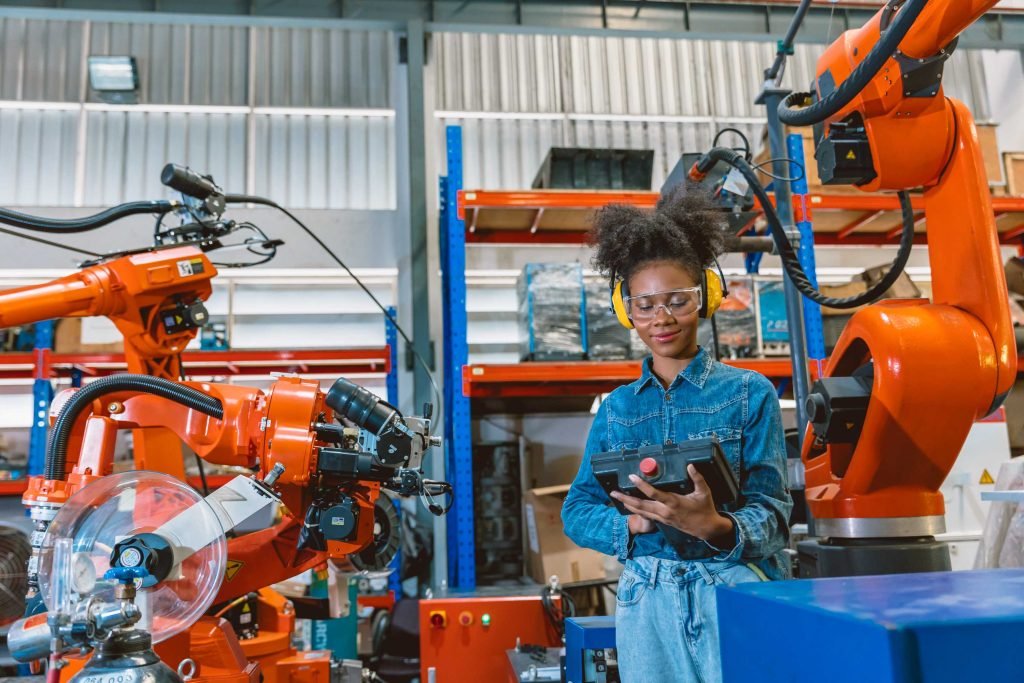
Based on these characteristics, here’s a list of job categories likely to see a significant reduction or complete overhaul due to AI by 2035:
- Data Entry and Clerical Roles.
- The Why: AI, particularly through Optical Character Recognition (OCR), Natural Language Processing (NLP), and Robotic Process Automation (RPA), excels at ingesting, transcribing, categorizing, and validating data far faster and more accurately than humans. Tasks like inputting customer information, processing invoices, or digitizing records are prime candidates for full automation.
- The Impact: The traditional data entry clerk role is one where we will see jobs disappear almost entirely. Administrative assistant roles will also transform, shedding data entry and basic scheduling tasks (which AI can manage seamlessly) to focus on more complex, interpersonal, and strategic support.
- Basic Customer Service Representatives.
- The Why: AI-powered chatbots and virtual assistants are becoming incredibly adept at handling a vast range of customer inquiries, from simple FAQs to more complex troubleshooting. They can operate 24/7, manage multiple interactions simultaneously, and learn from each interaction to improve performance.
- The Impact: Many Level 1 and Level 2 customer support positions, especially those reliant on scripted responses or information retrieval, will be automated. Human agents will likely shift to handling highly complex, emotionally charged, or novel customer issues that require nuanced understanding and empathy beyond current AI capabilities. The sheer volume of basic support jobs disappearing will be notable.
- Telemarketers and Routine Sales Outreach:
- The Why: AI can analyze vast datasets to identify high-potential leads, personalize outreach scripts, and even conduct initial automated calls or email campaigns. AI-driven voice agents can sound increasingly natural and respond dynamically.
- The Impact: The need for large teams of human telemarketers for cold calling and basic lead qualification will significantly diminish. Sales roles will evolve to focus on strategic relationship building, complex negotiations, and closing high-value deals where human intuition and persuasive skills are paramount.
- Assembly Line and Repetitive Manufacturing Workers:
- The Why: Industrial robots, guided by increasingly sophisticated AI for quality control, adaptability, and task optimization, have been a feature in manufacturing for decades. AI is making these robots more versatile, capable of handling intricate assembly tasks, and working collaboratively (cobots).
- The Impact: Many manual assembly and quality inspection jobs disappear as automation becomes more cost-effective and capable. Human roles will shift towards programming, maintaining, and overseeing these complex robotic systems, requiring a higher skill set.
- Proofreading and Basic Content Generation (Formulaic Content):
- The Why: AI writing assistants and generative AI models (like advanced versions of GPT) are already proficient at checking grammar, style, and tone. They can also generate routine content such as product descriptions, simple news summaries, financial reports from structured data, or basic marketing copy.
- The Impact: While roles requiring deep creativity, nuanced storytelling, investigative journalism, or specialized expertise will persist, positions focused solely on proofreading for errors or generating formulaic content will see a sharp decline. Many freelance and in-house positions dedicated to these tasks will see jobs disappear or merge into broader content strategy roles where AI is a tool, not a replacement.
- Bank Tellers and Basic Financial Clerical Staff:
- The Why: The proliferation of ATMs, online banking, and mobile payment apps has already reduced the need for traditional tellers. AI will further automate back-office financial tasks like fraud detection, basic loan application processing, account reconciliation, and compliance checks.
- The Impact: The transactional role of a bank teller will largely jobs disappear, with remaining branch staff focusing on complex financial advisory, wealth management, and building customer relationships. Many entry-level financial analysis roles focused on data gathering may also be impacted.
- Certain Transportation and Logistics Roles:
- The Why: Autonomous vehicle technology is advancing rapidly. While fully autonomous passenger cars on all public roads face regulatory and societal hurdles, AI-driven vehicles in controlled environments (like warehouses, ports, or mines) and for specific logistics tasks (short-haul trucking, last-mile delivery drones/robots) are becoming viable. AI also excels at route optimization and warehouse management.
- The Impact: Jobs like forklift operators in automated warehouses, some delivery drivers for predictable routes, and dispatchers may see significant reduction. The timeline for long-haul truck drivers is more debated but remains a long-term concern.
- Stock Traders (Floor Traders and Basic Analysts):
- The Why: Algorithmic trading, powered by AI, already dominates financial markets. AI can analyze market data, predict trends, and execute trades in microseconds – far beyond human capacity.
- The Impact: The image of a bustling trading floor is largely a relic. While high-level strategists and quantitative analysts who design and oversee these AI systems will remain, the traditional floor trader and many entry-level analyst jobs disappear or have already done so.
- Radiologists (Specific Task Automation):
- The Why: AI, particularly machine learning and computer vision, has shown remarkable proficiency in analyzing medical images (X-rays, CT scans, MRIs) to detect anomalies like tumors or fractures, often with accuracy rivaling or exceeding human radiologists for specific, well-defined tasks.
- The Impact: This doesn’t mean radiologists as a profession will entirely disappear. However, AI will likely automate the initial screening and detection phases, allowing radiologists to focus on more complex cases, diagnosis confirmation, treatment planning, and patient interaction. The nature of the job will change, and the demand for radiologists focused solely on routine image interpretation might decrease.
Will AI Increase Unemployment?
This is the multi-trillion-dollar question. Historically, technological advancements have led to job displacement in some sectors. Also created new jobs and industries, often resulting in a net neutral or positive effect on employment over the long term (e.g., the Industrial Revolution, the rise of the internet).
However, the speed and breadth of the AI revolution may present unique challenges:
- Pace of Change: AI is evolving much faster than previous technological shifts. AI is potentially outpacing society’s ability to adapt, reskill, and create new roles.
- Scope of Impact: AI has the potential to affect a wider range of cognitive tasks across many industries simultaneously, unlike previous technologies that were often sector-specific.
- Skills Gap: The new jobs created by AI (e.g., AI ethics officers, AI trainers, AI system maintenance) often require advanced skills that the displaced workforce may not possess without significant retraining.
Therefore, while AI will undoubtedly create new roles and augment human capabilities, a period of increased “frictional unemployment” or even structural unemployment is a significant risk if proactive measures are not taken. The overall impact will depend on:
- Investment in education and retraining programs.
- Government policies supporting workforce transition (e.g., social safety nets, incentives for AI adoption that complements labor). The ability of businesses to innovate and create new products, services, and markets leveraging AI.
- In the short to medium term (the next 10 years), it is plausible that we will see a net increase in unemployment or underemployment in specific demographics or regions if the transition is not managed effectively. The fear isn’t just that jobs disappear, but that new ones don’t emerge quickly enough or aren’t accessible to those displaced.
Which Companies Will Lay Off the Most Workers?
Predicting specific companies is speculative, but we can identify sectors and types of companies likely to see significant AI-driven layoffs:
- Large Customer Service Operations: Telecommunications companies, banks, insurance firms, and large e-commerce retailers that employ vast numbers of call center agents are prime candidates for workforce reduction as AI chatbots and virtual assistants become more capable.
- Traditional Manufacturing Firms: Companies with extensive, older assembly line operations that haven’t yet fully automated will face pressure to adopt AI and robotics to remain competitive, leading to layoffs of manual laborers.
- Logistics and Supply Chain Companies: Large warehousing and delivery companies will increasingly implement AI for sorting, packing, inventory management, and autonomous vehicles, impacting manual labor roles.
- Media and Content Farms: Organizations producing high volumes of formulaic content (e.g., basic news aggregation, simple product descriptions) may reduce editorial and writing staff as generative AI improves.
- Business Process Outsourcing (BPO) Firms: Companies that specialize in providing outsourced data entry, customer service, and other administrative tasks will be heavily impacted as their core services become automatable.
It’s important to note that layoffs are complex decisions influenced by market conditions, competition, and strategic shifts, not solely AI adoption. However, AI will be a significant contributing factor to workforce restructuring in these sectors.
Which Companies Will Use the Most AI?
Conversely, some companies will be at the forefront of AI adoption, not necessarily for layoffs, but for innovation, efficiency, and competitive advantage. These often overlap with those who might also lay off workers in certain departments while hiring in others.
- Big Tech (Alphabet/Google, Microsoft, Amazon, Meta, Apple): These companies are not only developing foundational AI models but are also integrating AI deeply into all their products, services, and internal operations.
- Financial Services and FinTech: Banks, investment firms, and insurance companies will leverage AI for fraud detection, algorithmic trading, risk assessment, customer personalization, and process automation.
- Healthcare Providers and Pharmaceutical Companies: AI will be used for diagnostics, drug discovery, personalized medicine, robotic surgery, and administrative efficiency.
- E-commerce and Retail: Companies like Amazon already use AI extensively for recommendation engines, supply chain optimization, demand forecasting, and personalized marketing. Others will follow suit.
- Automotive and Advanced Manufacturing: From designing vehicles to powering autonomous driving systems and optimizing factory floors, AI will be central.
- Consulting and Professional Services Firms: Companies like Accenture, Deloitte, and IBM will be major users of AI both internally and in developing AI solutions for their clients across various industries.
Conclusion: Navigating the Inevitable Transition
The prospect of jobs disappearing due to AI is a legitimate concern that requires proactive and thoughtful responses from individuals, businesses, and governments. While the next decade will undoubtedly witness significant shifts in the labor market, it also presents an opportunity to redefine work, enhance human capabilities, and focus on roles that leverage uniquely human skills: creativity, critical thinking, complex problem-solving, emotional intelligence, and interpersonal collaboration.
The challenge lies not in stopping the tide of AI, but in navigating its currents wisely – investing in lifelong learning, fostering adaptability, and ensuring that the benefits of this technological revolution are shared broadly, mitigating the negative impacts of job displacement and paving the way for a future where humans and AI work in synergy.
Read Also:
Benefits of AI and Art Creation – Your 7 Essential AI Art Tips!
7 Effective AI Art Tips From New York Artists You Need To Know
