


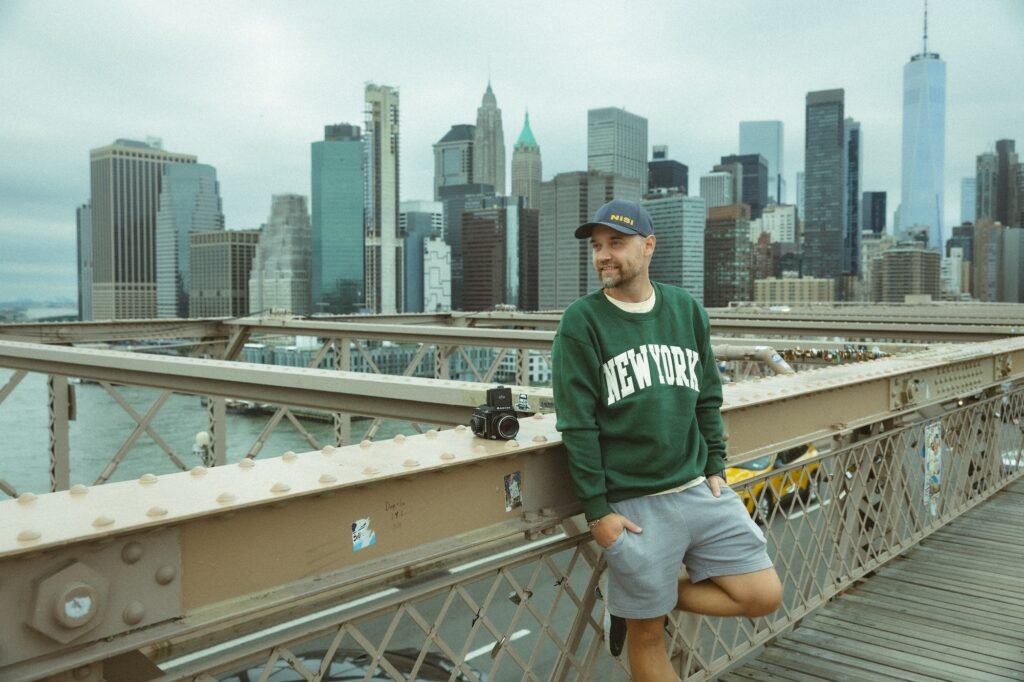
Some creators chase numbers. Meanwhile, Nikita Miroshnikov chases the right eyes. He spent years working behind the camera as a photographer, videographer, and filmmaker. Today, that chapter fuels a new one: he creates content about camera gear, reviews, and photo and video tips for a rapidly growing audience. From his base in Honolulu, he has built a following of roughly 123,000 across Instagram, TikTok, YouTube, and Facebook. However, the number that interests him most is not the total. Instead, he focuses on who those followers are. His community includes photographers, videographers, filmmakers, and Directors of Photography. In his view, that concentration matters far more than raw scale.
His path to this point was anything but direct. Before moving to the United States, he worked professionally in Moscow from 2015 through 2018. During those years, he produced commercial photography, branded films, drone footage, and social media campaigns for agencies and clients across the food, fashion, automotive, hospitality, and real estate sectors. Then life intervened. A pandemic, health challenges, and a shifting political landscape rewrote his plans. Yet the setback became a beginning. In February 2024, he started making educational and entertaining videos about cameras and filmmaking. Since then, more than 20 of his videos have passed one million views. Moreover, his strongest work has reached roughly eight million viewers.
The industry noticed. In 2025, SmallRig invited him to the NAB Show in Las Vegas. Additionally, Hollyland, Tilta, and NiSi welcomed him to a creator networking event in the same city. He returned to NAB in 2026, and later that June he walked the Universal Studios Lot at Cine Gear Expo LA. Along the way, he has heard from companies such as DJI, Insta360, Godox, Sirui, Laowa, and Sony Professional Filmmaking. Beyond video, he also authored a practical guide to color grading and color correction for the color software company Dehancer.
What makes his perspective valuable isn’t just the growth. It’s the thinking behind it. Nikita treats content creation like a professional discipline, with documents full of scripts, references, and video ideas, plus a weekly rhythm of posting and analysis. As a result, his answers read less like influencer talk and more like a working manual for creators in specialized fields.
In this conversation, Nikita talks about starting over in a new country, the myths creators believe about virality, the scams targeting large accounts, and why a smaller audience can carry bigger influence. Above all, he explains a philosophy captured in his favorite line: you’re crazy until you’re successful. Then you’re a genius.
Starting Over: From Moscow Sets to Hawaiian Shores
You worked as a photographer and videographer in Russia from 2015 to 2018, but you did not start making educational content until February 2024. What changed? Why teach after years of just shooting?
Nikita Miroshnikov: After coming to the United States, I mostly studied English. Meanwhile, I planned to prepare for a filmmaking academy in Los Angeles. Then COVID arrived, health problems followed, and the political situation in Russia changed everything. As a result, my plans changed too.
Since I could not work but still loved photography, filmmaking, and social media, I started learning to make viral videos on the topics I love. Suddenly, I realized I felt alive again. I have fun making those videos. Additionally, when a video goes viral, you feel proud, and honestly, you get a lot of dopamine. I guess that is why it becomes addicting in a way.
At the same time, I have always been able to explain complicated things in simple terms, and I knew I wanted to help others. With social media today, I can reach millions of people in a single day. In fact, I think this is a peak moment for education. Because of these platforms, people who want to learn can now learn more easily than ever.
What did commercial client work, the drone jobs, the branded content, and the deadlines teach you that shows up in your videos now, even when you are not talking about it?
Nikita Miroshnikov: When I quit my full-time office job back in Moscow and went freelance, I actually felt like I finally started working. Suddenly, I was doing more than I ever did at a desk. When you work for yourself, you either hit your deadlines or you lose money and lose face. So you cannot afford excuses anymore. Your name becomes your responsibility.
Freelance life forces you to grow up fast. For example, you learn to read contracts, take responsibility, and juggle ten different jobs at once, from writing scripts to negotiating terms. The same discipline applies directly to content creation. Because you already know how to stay motivated and organized, you have a real advantage.
Today, I keep separate documents with all my ideas, scripts, and references for future videos. That includes even the pure ten-second comedy clips about cameras. Moreover, I try to stay consistent and post a couple of videos each week. Afterward, I analyze what performed well and what did not. Above all, I always keep a strategic sense: why I am posting, who my audience is, and where I want this to go.
You started this while in the United States on a student visa, essentially building a second career alongside your studies. What did the first six months actually look like?
Nikita Miroshnikov: As a student, I studied English for 20 hours a week. So I actually have plenty of time for content creation. Still, the beginning was humbling. During the first four weeks, I posted about 23-25 Instagram reels. My top-performing video reached maybe five thousand views. Honestly, I wanted to give up. Instead, I decided to keep going.
Then, on week six, one video finally hit 500,000 views, and something clicked. Over the next four months, I gained about 10,000 followers every month, steady as clockwork. That gave me a lot of endorphins for sure. Meanwhile, I kept the machine fed. Every weekend, I took my friends out when they were off work, and we captured as much content as possible for the upcoming week.
Along the way, I also realized people were supporting me on this journey. Old friends called out of the blue to say they saw my video, then were shocked to realize I made it. Every one of them was supportive. Eventually, a friend even brought me a cake decorated with the words one million views, right after my first video crossed that mark. Today, that same video sits at eight million.
The Case for a Smaller, Sharper Audience
You have argued that 50,000 to 100,000 highly relevant followers can mean more influence than a far larger general audience. Make the case. What can a creator with a targeted following do that a big generalist account cannot?
Nikita Miroshnikov: My dream is to become an ambassador, or at least to get noticed, by big brands like Canon, Sony, RED, and DJI. In my industry, that is the peak. However, those brands, like any major company, do not want to associate with silly videos that reach millions of irrelevant viewers.
For example, I can create a video showcasing an interesting iPhone technique. That video will reach millions of people, which looks great on paper. Yet maybe only one percent of those viewers care about cameras and professional filmmaking. So the reach means very little to the brands I admire.
Early on, I used that broad strategy on purpose. Now, however, I am far more targeted. Instead, I try to produce high quality content that will reach, let’s say, a Director of Photography. That audience is very narrow, but being seen by them means everything. Consequently, I accepted slower growth in exchange for higher-quality followers, and big brands genuinely value that.
Recently, the Sony Professional Filmmaking account followed me on Instagram. I also received an email from DJI, a major player in this industry. That happened because I attended NAB and Cine Gear in 2026, which focus on camera gear and filmmaking, and I created viral content at those exhibits.
Your audience includes working DPs and camera industry professionals, but your videos also reach people who have never held a cinema camera. How do you make a technical conversation about gear watchable for both?
Nikita Miroshnikov: Honestly, I am trying to shift more toward professionals. Meanwhile, the dopamine keeps tempting me to create viral videos that reach millions. I also know the math. If I choose only professionals, I might cap out at around 100,000 followers, or somewhere near that number.
So I try to find a balance. One day, I post a more viral concept video. Then, on another day, I post something more technical. That rhythm matters. When the algorithm shows someone my viral video, that person becomes more likely to see my next video, which might be the technical one.
As a result, the strategy helps with views on both sides. More importantly, it also pulls casual viewers toward professional creation. Because of that bridge, someone who came for a fun clip might leave curious about cinematography. In my opinion, that is the best outcome a technical creator can hope for.
Strategy Before Growth
You say creators need a clear strategy before they chase growth. What is the question someone should be able to answer before they post anything?
Nikita Miroshnikov: Why are you doing that? Honestly, it applies to every single post and every single video. Additionally, you should know how each piece of content will help you achieve your future goals.
For me, the answer is clear. My goal is to build a life where I can work in the United States and travel. Therefore, building an online presence, essentially my own brand, matters enormously to me. Every video either serves that goal or it does not. Once you can answer that question honestly, your content stops being random. Instead, it becomes a directed body of work. Without that clarity, you are just feeding an algorithm and hoping for luck.
What is the most persistent myth about virality in short-form video, the thing creators obsess over that you have found does not matter much?
Nikita Miroshnikov: There are actually a few. First, the classic complaint: the algorithm hates me and gives me fewer views. No. Something is off with your content. Every platform wants you to create a viral video that people will love. If you succeed, then the platform shows it to everyone, because viewers stay longer and watch more ads, which means profit. So if your views disappear, double-check what changed, even if you copied someone else’s viral video exactly.
Second, viral music. A trending song is just a vibe, not a guarantee. If people like your song but your video is boring, then they will swipe away, sorry. Meanwhile, some of my videos have no music at all. Yet people stay and watch, because the video itself holds their interest.
Third, peak posting hours. That myth falls apart for the same reason. My peak hours happen while I sleep, because I live in Hawaii. When you post a good video during your worst hours, it simply starts slow. For the first five or six hours, my off-hour videos performed poorly. However, viewers still watched to the end, shared, and commented, and Instagram loves that. Then, once my peak hours arrived, those videos skyrocketed anyway.
Funny enough, I even had a complimentary 10-minute call with a Meta expert during my first 5 months of rapid growth. Even that expert suggested posting right before peak hours. Still, I am completely sure it is not a necessity.
And the inverse: what is the metric you actually watch?
Nikita Miroshnikov: Right now, the number one metric on Instagram is the share chain. Specifically, did the person who watched your video send it to a friend? Then, did that friend open it and watch it? In the best case, did they text each other about it afterward? That whole sequence tells the platform your video was genuinely great.
Additionally, I track how many followers each video brings in. That comparison teaches me something important. Some videos are purely for fun and spread widely without converting anyone. Meanwhile, other videos actually help me grow, because viewers decide they want more. Both types have a place in my strategy. However, only one of them builds the audience I need for the long term. So I read those two numbers together, and then I plan the next week of content around what they tell me. Over time, that simple habit has shaped my channel more than any single viral hit.
You ran an experiment using a fictional AI-generated product, pitching other creators to see how they would price the work. What did you find, and what does it say about how creators value themselves?
Nikita Miroshnikov: I wanted to know whether this journey could become a full-time career. So I ran the experiment to gather real numbers. The general rule of thumb is that a creator can ask for about $ 100 per 10,000 Instagram followers.
However, my niche behaves differently. Because the audience is narrow and camera gear is expensive, creators in my industry ask for roughly $ 200 per 10,000 followers. That premium reflects viewers’ buying power, not just their volume.
Honestly, I find the market refreshingly fair. If you want to charge brands more in the future, then you simply have to grow your following and earn more views. After that, the brands will reach out to you. Trust me on that. The system rewards creators who understand exactly who they serve. So the smartest move isn’t chasing scale for its own sake. Instead, it is building an audience that brands cannot find anywhere else.
Brands, Trust, and Honest Reviews
Brands like DJI, Insta360, SmallRig, and Hollyland now come to you. How do you think about those relationships, and how does a creator protect honesty in a world of gear reviews?
Nikita Miroshnikov: Brands reach out to me every single day, and I receive emails constantly. For now, I prefer to keep building my online presence until the day I can officially work as a content creator in the United States. So I am patient about those relationships.
However, I will say something important about the psychology involved. As soon as a company sends a creator anything, even with no obligation to post, that creator feels a pull. Suddenly, you feel like you should say something good, or else say nothing at all. That pressure is real, and it shapes the content you see everywhere.
Because of that, I personally take gear reviews on YouTube with a grain of salt. I would advise viewers to do the same. When you watch a review, ask yourself what relationship might exist behind the camera. Meanwhile, creators should protect their credibility fiercely. In a niche like mine, trust is the entire product. Once your audience of professionals doubts you, no brand deal can buy back that trust.
Security in the Creator Economy
You have told creators their public contact email should never be the one securing their accounts. What made that advice feel urgent?
Nikita Miroshnikov: I know a lot of stories about creators who used the same email for their accounts, and then people tried to steal those accounts. Think of it this way. Your email works like a login, which is 50 percent of what someone needs to enter and steal the account. So do not hand strangers that half for free.
Additionally, account theft has become a real market. Right now, I see many messages from creators whose accounts were stolen or hacked. Afterward, the thieves demand $ 1,000 or more to restore access. Meanwhile, platform support often does nothing. Therefore, be careful, separate your emails, and treat your login address like a password. The public inbox is for collaborations. However, keep the security email private forever.
What does the newest generation of creator-targeted scams look like, the ones people are not watching for yet?
Nikita Miroshnikov: The scariest one targets large accounts, usually with 250,000 or more followers. Groups from other countries organize mass reports of violations against the account. Then Instagram or Facebook immediately blocks the account. Shockingly, this happens even if you pay for the blue badge, which in theory gives you faster support from Meta.
Afterward, the attackers contact the creator and demand 1,000 dollars or more. Otherwise, they threaten to do it again. I see many complaints about this online, on Threads, and across other platforms. Unfortunately, there is no fix for the problem right now.
So what can a creator do? Honestly, the only protection I can suggest is redundancy. Create multiple accounts, so a single takedown cannot erase your entire presence. Additionally, document everything and back up your content elsewhere. Until the platforms build a real defense, creators have to assume the risk themselves.
In the Room Where the Tools Get Built
You went to NAB in 2025 on a pass from SmallRig, returned in 2026, and attended Cine Gear at the Universal lot. What shifts when you go from covering an industry online to standing in the room with the people building the tools?
Nikita Miroshnikov: Beyond the obvious joy of talking about camera gear all day, these shows bring the latest equipment together in one place. Additionally, you meet like-minded people, including working DPs, which is priceless. However, the most practical benefit surprised me. These events are the perfect place to test anything you plan to buy later.
For me, the biggest win this past year was lenses. I tested every lens on my wish list, as well as all the lighting equipment. You see it in person, touch it, and watch exactly how it works. No spec sheet can replace that experience.
Plus, you can give companies direct feedback on their products, and they actually listen. Online, your feedback usually drowns in the flood of emails and messages those companies receive. In person, however, a conversation lands. Finally, you meet the same people every year, and those repeated meetings build real personal connections. Over time, those relationships will absolutely help your career.
Crazy Until Successful
Your line is: you’re crazy until you’re successful. Then you’re a genius. Who called you crazy, and what were they reacting to?
Nikita Miroshnikov: Honestly, nobody called me crazy in those exact words. However, people can react to your ideas as if you were a weirdo. They ask why you are doing what you are doing. Because they do not see the whole picture of your plan, their confusion makes sense, and that is totally okay.
You cannot explain a five-year vision in a thirty-second conversation. So you stop trying to convince people, and instead you let the results speak. Eventually, the same ideas that once looked strange start to look obvious. Now, I see a lot of support from my friends, and honestly, that is the only thing that matters to me. People close to you come around once they see you commit. Until then, keep going anyway.
Last question. Where does this go next for you? What does success look like five years from now?
Nikita Miroshnikov: The dream stays the same. I want to work in the United States as a content creator, travel, and eventually partner with the biggest names in this industry as an ambassador. Brands like Canon, Sony, RED, and DJI represent the summit for someone in my niche. So every video I make today is a step toward that room.
Meanwhile, I want to keep the balance that got me here. One side of my work entertains millions, and the other side genuinely teaches photographers and filmmakers. I also plan to keep showing up at NAB, Cine Gear, and other industry gatherings every year, because those relationships grow slowly and pay off enormously.
Above all, I want to keep feeling the way I felt when that first video hit 500,000 views. This work brought me back to life during a difficult chapter. For me, success isn’t just a follower count or a brand deal. Instead, it is the freedom to keep creating, keep teaching, and keep proving that the crazy idea was genius all along.
Follow Nikita Miroshnikov on Instagram, TikTok, and YouTube
