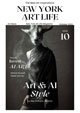


The intersection of botanical science, artificial intelligence, and artistic expression has never felt more culturally urgent. As global ecosystems face unprecedented threats, the imperative to understand our relationship with the natural world has catalyzed a profound movement across academic disciplines, historical archives, and the fine arts. At the absolute forefront of this vital movement is Dr. Lucas Mertehikian, a scholar whose extraordinary trajectory seamlessly bridges literature, landscape architecture, photography, and botany.
Dr. Mertehikian’s recent and groundbreaking explorations into the realm of artificial intelligence and plant humanities stem directly from his ongoing collaboration with Debora Hirsch. Introduced from the very get-go of his recent academic endeavors, Hirsch is a visionary Brazilian-born, Milan-based visual artist whose work explores the profound intersection of biodiversity, technology, and cultural memory. She seamlessly blends traditional painting with cutting-edge digital media and artificial intelligence. Her critically acclaimed work, which is held in prestigious public and private collections, including the MOCAK Museum of Contemporary Art in Krakow and the MAXXI, treats plants as “biocultural entities” carrying historical and ecological narratives.
Having served as the Director of the Humanities Institute at the New York Botanical Garden from October 2023 through July 2025, and continuing his vital work there today as a Researcher and Research Scholar, Dr. Mertehikian has consistently championed interdisciplinary initiatives that illuminate the deep connections between plants and human societies.
Our publication recently had the distinct pleasure of speaking with Dr. Mertehikian at his office to explore his multifaceted career. As an intellectual who earned his doctorate in Romance Languages and Literatures from Harvard University, his scholarly roots trace back to his native Argentina, where he received his Master of Arts in Latin American Literary Studies from the National University of Tres de Febrero and his Licenciado en Letras from the University of Buenos Aires. His academic pedigree is profoundly impressive, yet it is his application of this literary and historical framework to the botanical and technological world that truly distinguishes his practice today.
From his postdoctoral tenure in Plant Humanities at Dumbarton Oaks in Washington DC, to his current roles as a Research Scholar at the New York Botanical Garden and Visiting Assistant Professor in the Master of Landscape Architecture program at Pratt Institute, he continues to redefine how we interact with our environment. Although he stepped down as Director of the Humanities Institute in July 2025, he remains deeply engaged with institutional initiatives; he still coordinates the Larry Lederman Landscape Photography Fellowship at the NYBG, and he continues to contribute externally to Dumbarton Oaks’ Plant Humanities Initiative, providing ongoing insights into the development of public programming and editorial content.
His scholarly output is remarkably prolific. He is currently celebrating the recent release of his book, The Boom of Natural History in Latin American Culture, published by the University of Florida Press in January 2026. He is additionally developing two other ambitious manuscripts: Unpredictable Architectures: The Politics and Aesthetics of Gardening in Latin America, under contract with Brill, and Fake Originals: Collecting Latin America. His academic research continually brings fresh, critical perspectives to historical texts, which is highly evident in his widely discussed essay on the anti-botany of Jorge Luis Borges.
Furthermore, Dr. Mertehikian recently contributed pivotal scholarly texts to Debora Hirsch’s acclaimed art exhibition, Vanishing Trees, currently captivating audiences at Palazzo Citterio in Milan from January 15 to April 15 of this year. This magnificent exhibition has already garnered immense praise from prestigious publications, including Rivista Arte Mondadori, Il Giornale dell’Arte, ARTUU, Il Giorno, Il Giornale, Dentro Casa, Ansa, and Chiasmo Magazine.
In the following comprehensive interview, we discuss his transition from Latin American literary studies to plant humanities, the paramount importance of historical botanical collections, his ongoing stewardship of the Larry Lederman Photography Fellowship, and his views on the future of the environmental arts. We sit down with Dr. Mertehikian to unpack his remarkable intellectual journey, his profound institutional collaborations, and his vision for the future of our relationship with the natural world.
New York Art Life Magazine: Dr. Mertehikian, it is an absolute honor to speak with you today. Your academic journey began in Buenos Aires with degrees in Latin American Literary Studies and Letters before leading you to a doctorate in Romance Languages and Literatures at Harvard University. How did your deep background in literature ultimately guide you toward the botanical world and landscape architecture?
Dr. Lucas Mertehikian: Thank you for having me. It is truly a pleasure. My transition from literary studies to the botanical world was organic rather than abrupt. During my graduate studies, I became fascinated by how Latin American writers and intellectuals historically engaged with their natural environments. In Latin America, the landscape is never merely a backdrop. It is an active participant in history, politics, and culture.
Literature from the region is fundamentally saturated with natural history. I began to realize that one cannot fully grasp the cultural narratives of the Americas without understanding the ecological realities that shape them. My literary research naturally led me into historical archives, where I found myself studying the written accounts of botanists, explorers, and landscape designers. By treating these scientific and environmental documents as cultural texts, I was able to bridge the humanities and the natural sciences, which ultimately brought me to my current focus on plant humanities.
New York Art Life Magazine: There is one very specific episode in your career that you have previously identified as a defining moment for your passion. Could you tell us about your initial encounter with historical botanical collections?
Dr. Lucas Mertehikian: That is a wonderful question, as it truly represents a turning point in my life. One thing that defined my passion and interest in plants and the arts was my encounter with botanical collections. I am speaking of pressed plants and herbarium specimens that have survived for centuries in some cases and are carefully stored in botanical gardens and research institutions around the world.
When I first viewed these historical specimens, it was a revelation. It made me think of how nature can also be art, and how the world is intricately interconnected through a history of natural and human exchanges. A pressed plant from three hundred years ago is not just a scientific record of a species. It is an artifact of human curiosity, a relic of global trade routes, and a testament to the aesthetic care taken by the person who mounted it. That realization forever changed how I view the boundaries between scientific preservation and artistic expression.
New York Art Life Magazine: This brings us perfectly to your time at Dumbarton Oaks, where you served as a Postdoctoral Fellow in Plant Humanities. For our readers who might be unfamiliar with the term, how exactly do you define Plant Humanities?
Dr. Lucas Mertehikian: Plant Humanities is an incredibly dynamic and burgeoning interdisciplinary field. At its core, it seeks to explore and communicate the vital cultural, historical, and artistic significance of plants to human societies. For a very long time, the study of plants was relegated strictly to the biological and agricultural sciences. However, plants have profoundly shaped human civilization. They have driven global economic systems, inspired immense artistic movements, and functioned as crucial agents in cultural exchange. Plant Humanities brings the critical methodologies of history, literature, art, and philosophy to the study of the botanical world. During my fellowship at Dumbarton Oaks, an affiliated institution of Harvard University, I collaborated with an extraordinary network of experts. My focus was to uncover the untold narratives of how plants have influenced human thought and how humans, in turn, have altered the botanical landscape over the centuries.
New York Art Life Magazine: You served as the Director of the Humanities Institute at the New York Botanical Garden from October 2023 through July 2025, and you now continue your work there as a Research Scholar. During your tenure as Director, what was your primary mission for the Institute, and how does that inform your current research?
Dr. Lucas Mertehikian: During my directorship, my primary mission was to firmly establish the New York Botanical Garden as a premier center for interdisciplinary research where the arts, humanities, and sciences converse freely. The New York Botanical Garden is a profound cultural institution. We house the LuEsther T. Mertz Library, one of the most comprehensive botanical libraries in the world. As Director, my goal was to invite scholars, visual artists, landscape architects, and community leaders into our archives and gardens. I wanted to demonstrate that botanical gardens are not just repositories of living plants, but vibrant cultural spaces where we can critically address contemporary environmental issues. Fostering specific collaborations between artists and plant scientists was the true purpose of my time leading the Humanities Institute, and it is a mission I continue to champion.
New York Art Life Magazine: A major part of your institutional work includes the Plant Humanities Conversations. You organized a particularly notable online series with Dumbarton Oaks. Could you share your experience organizing these conversations?
Dr. Lucas Mertehikian: The Plant Humanities Conversations series has been a tremendously rewarding endeavor. I organized the series alongside Dr. Yota Batsaki at Dumbarton Oaks. Because Dumbarton Oaks is another incredible garden museum where I previously worked, the collaboration felt deeply synergetic. In fact, I still contribute externally to Dumbarton Oaks’ Plant Humanities Initiative today, providing insights and support for the development of their public programming and editorial content. For the conversation series, our focus was on bringing together plant experts from vastly different backgrounds to discuss biodiversity and human diversity.
For example, our spring session last year, held on May 14, 2025, focused on Plant Extinction and Resurrection. We invited award-winning artists Alexandra Daisy Ginsberg and Debora Hirsch to discuss how their work draws from scientific research to explore plant conservation through art installations and AI-trained models. Having author Matthew Battles moderate that session elevated the discourse remarkably. It is through these public programs that we can expand the dynamic network of experts contributing to the field.
New York Art Life Magazine: You mentioned the artist Debora Hirsch in our introduction, and her magnificent exhibition Vanishing Trees is currently on view at Palazzo Citterio in Milan until April 15 of this year. How did you contribute to this project, and how does her technological approach influence your own work?
Dr. Lucas Mertehikian: I must state from the outset that my entire foray into the issue of artificial intelligence and plants stems directly from my collaboration with Debora. She is a pioneer in this space. Her practice heavily focuses on “Plant Humanities,” viewing flora as biocultural entities carrying colonial, historical, and ecological narratives. When she was conceptualizing Vanishing Trees (2026)—which is a breathtaking site-specific digital installation featuring generative imagery of three endangered trees: Ginkgo biloba, Pterocarya fraxinifolia, and Torreya taxifolia—we engaged in profound dialogues regarding the cultural weight of these vanishing species.
My texts aimed to provide historical and literary grounding for her artistic vision, often stemming from deep dives into botanical archives like those at the NYBG and the Orto Botanico di Brera. Debora’s technological integration is brilliant; beyond AI, she utilizes blockchain technology as a “permanent herbarium” to record and preserve digital representations of endangered species. We also explored these themes in her PLANT Series (2023–ongoing), which uses AI to create fragile ecological snapshots that question the ethical dimensions of nature’s exploitation, as well as her previous series Firmamento (2020–2021) and her solo exhibition Herbaria (2024–2025) at Hutchinson Modern & Contemporary in New York. Working alongside her has entirely reframed how I view the potential of technology to archive and resurrect botanical memory.
New York Art Life Magazine: Moving to another highly significant aspect of your ongoing work, you have coordinated the Larry Lederman Photography Fellowship at the New York Botanical Garden for three years now, a role you continue to hold. The application period for the 2026 cycle recently closed a little over a week ago on February 15. Could you outline the core philosophy of this fellowship?
Dr. Lucas Mertehikian: The Larry Lederman Photography Fellowship is a truly unique initiative, and I am thrilled to continue coordinating it. Each year, we award a $20,000 grant to an established or emerging photographer whose work focuses on gardens or landscapes. The core philosophy is to explore the landscape as a complex and constantly evolving relationship between people and the natural world. We specifically ask applicants to approach the landscape as a social and cultural construct shaped by history, use, and perception, rather than focusing purely on botanical or close-up studies. We want to see the broader environmental dimensions. The selected fellow receives complimentary access to the 250-acre landscape and the historical collections of the NYBG for a nine-month term, running from March 15 through December 15, to develop a profound portfolio.
New York Art Life Magazine: As the Fellowship Coordinator, you work closely with the selected photographers and a distinguished advisory committee. How does this collaborative process shape the final body of photographic work?
Dr. Lucas Mertehikian: The collaborative aspect is the most rewarding part of the fellowship. I have had the privilege of working with phenomenal landscape photographers, including Benjamin Swett and Daniel Willner. Over the course of their nine-month term, I hold multiple meetings with the fellow alongside our committee members, which include extraordinary figures such as Todd Forrest, the Arthur Ross Vice President for Horticulture and Living Collections at the New York Botanical Garden, and Jay A. Levenson, the Director of the International Program at the Museum of Modern Art.
We also have Rhonda Evans, the Director of our LuEsther T. Mertz Library, Bryan Whitney from the International Center of Photography, and the acclaimed photographer John Maggiotto. These meetings are designed as open exchanges. We do not dictate the artistic direction of the fellow. Instead, we provide a supportive space for them to discuss their work-in-progress, receive constructive feedback, and deepen their engagement with the site.
The final portfolio of signed prints eventually becomes a permanent part of the Larry Lederman Fellowship Collection in our library, ensuring that their artistic vision contributes to our enduring historical archive.
New York Art Life Magazine: Between 2023 and 2024, you also oversaw the execution of the African American Garden at the New York Botanical Garden. This project was curated by Dr. Jessica B. Harris, a leading scholar in food studies in the United States. Could you discuss your role in this monumental project and its historical importance?
Dr. Lucas Mertehikian: Overseeing the execution of the African American Garden was an extraordinary honor and a profoundly educational experience. Dr. Jessica B. Harris is a visionary scholar, and her curation brought to light the immense and often overlooked contributions of African Americans to the botanical and agricultural history of the United States. The garden was designed to document and celebrate the history of African Americans through plants, tracing lineages from the transatlantic slave trade to the present day.
My role involved coordinating the complex layers of historical research, horticultural execution, and public humanities programming that such a project demands. In fact, I recently presented on this very topic alongside Rhonda Evans at the Council of Botanical and Horticultural Libraries Conference at Michigan State University. We discussed the importance of remembrance and resilience, and how botanical spaces can serve as living archives that honor marginalized histories. Plants like cotton, rice, okra, and various medicinal herbs tell a story of survival, ingenuity, and cultural retention. Bringing that story to life in a physical, living garden was a transformative milestone for our institution.
New York Art Life Magazine: Let us pivot to your academic publications. You are currently celebrating the publication of your edited book, The Boom of Natural History in Latin American Culture, which was just released by University of Florida Press last month, in January 2026. What central thesis does this book explore regarding Latin American culture?
Dr. Lucas Mertehikian: The Boom of Natural History in Latin American Culture, which I co-edited with Nicolas Campisi, examines how contemporary Latin American literature and visual arts are increasingly turning toward natural history to make sense of our current ecological and political crises. We argue that there is a clear boom in cultural production on nature, botany, and zoology in the region. For decades, the defining literary mode of Latin America was often seen as magical realism or the political novel of dictatorship. However, as the climate crisis accelerates and the exploitation of natural resources reaches unprecedented levels, artists and writers are adopting the languages of science, taxonomy, and botanical exploration to critique environmental degradation.
The book brings together brilliant scholars who analyze how Latin American creators are dismantling colonial hierarchies of knowledge and offering new ways to rethink our understanding of the natural world. It has been thrilling to finally see this book in print after years of rigorous research and collaboration.
New York Art Life Magazine: In addition to the book you just published, you are working on two other major academic monographs: Unpredictable Architectures: The Politics and Aesthetics of Gardening in Latin America, which is under contract with Brill, and Fake Originals: Collecting Latin America, which is currently under review. Could you give us a preview of Unpredictable Architectures?
Dr. Lucas Mertehikian: Certainly. Unpredictable Architectures is a project very close to my heart because it merges my literary background with landscape design. The book investigates the politics and aesthetics of gardening in Latin America from the late nineteenth century to the present. Traditionally, the history of landscape architecture has been dominated by European and North American paradigms, such as the French formal garden or the English landscape garden. I am interested in how Latin American intellectuals, state builders, and artists appropriated and subverted these models. Gardening in Latin America is inherently unpredictable because the tropical and subtropical environments constantly resist rigid architectural control.
The book looks at historical parks, private literary gardens, and modern landscape designs to show how the act of planting a garden is deeply tied to ideas of national identity, racial politics, and social control. It argues that the Latin American garden is a contested political space where the wildness of nature and the state’s civilizing impulses are constantly in negotiation.
New York Art Life Magazine: Your research into specific literary figures is fascinating. You have an upcoming article titled “The Quiet Science: Borges’s Anti-Botany,” slated for the Plant Humanities Handbook by Harvard University Press. You also presented on Borges at Columbia University and the Modern Language Association Conference. How does Jorge Luis Borges, a writer usually associated with labyrinths and urban spaces, relate to botany?
Dr. Lucas Mertehikian: That is precisely the paradox that drew me to the topic. Jorge Luis Borges is universally celebrated as the quintessential urban writer of Buenos Aires, an architect of infinite libraries, mirrors, and metaphysical labyrinths. Nature and plants seem almost entirely absent from his most famous fictions.
However, my research reveals that this absence is not an oversight, but a deliberate literary strategy that I call his anti-botany. By examining his early poetry, essays, and lesser-known writings, I uncovered a profound, albeit antagonistic, engagement with the natural world. In his early depictions of Buenos Aires, he frequently references invasive species like the madreselva, or honeysuckle, and other weeds that blur the boundaries between the city and the untamed pampa.
His later retreat into purely intellectual, abstract spaces was a conscious rejection of the romanticized, agrarian nationalism that dominated Argentine literature at the time. Borges constructed his literary universe in opposition to the organic world, making anti-botany a vital yet overlooked component of his genius.
New York Art Life Magazine: Beyond your specialized academic research, you have a talent for translating complex botanical histories for the general public. You have authored several highly engaging articles for JSTOR Daily on specific plants, such as Guarana, Yerba Mate, and the Sunflower. Why is it important for you to write for these more accessible platforms?
Dr. Lucas Mertehikian: Academic research is essential for advancing our collective knowledge, but if that knowledge remains locked behind paywalls or confined to specialized university seminars, its impact is severely limited. Writing for platforms like JSTOR Daily allows me to reach thousands of readers who might never pick up a peer-reviewed journal. Plants like Guarana and Yerba Mate are consumed globally every single day.
Millions of people drink mate or consume guarana-based energy drinks without knowing the violent, fascinating, and deeply indigenous histories behind these botanicals. In my JSTOR Daily articles, I explore how Guarana provided stimulation from the Amazon to the world, and how the Sunflower travels through art history and agriculture. By telling the stories of everyday plants, I hope to foster a sense of botanical literacy in the general public. When people understand the historical and cultural weight of the plants they eat, drink, or put in a vase, they develop a deeper respect for the natural world and the indigenous communities that first cultivated these species.
New York Art Life Magazine: You have been a Visiting Assistant Professor in the Master of Landscape Architecture program at Pratt Institute since 2024. Teaching landscape architecture students requires a different pedagogical approach compared to teaching literature students. How do you bridge your humanities background with the practical, design-oriented mindset of your students at Pratt?
Dr. Lucas Mertehikian: Teaching at Pratt Institute has been one of the most intellectually invigorating experiences of my academic career thus far. Landscape architecture students are inherently trained to think spatially, materially, and ecologically. They are deeply pragmatic and visually driven, often focusing on soil composition, water management, spatial flow, and the physical constraints of an urban site. My role as a Visiting Assistant Professor is to introduce a profound layer of cultural and historical consciousness into their design process. I challenge them to understand that a landscape is never just a physical space; it is an incredibly complex cultural text. When a landscape architect chooses a specific plant palette, they are not merely making an aesthetic or ecological decision. They are making a historical statement.
I try to bridge my humanities background with their design-oriented mindset by introducing them to literature, archival documents, and critical theory. For example, I have my students read about the sensuous arboretum of the Argentine writer Silvina Ocampo, a topic I recently presented on at the Association for the Study of Literature and the Environment Conference in Portland. Ocampo used the imagery of trees to queer traditional domestic spaces and challenge societal norms.
I also bring in the work of the Brazilian modernist Flávio de Carvalho, specifically his radical urban theories, which I explored in my peer-reviewed article “Nude, Color, Race in Flávio de Carvalho: A cidade do homem nu,” published in the Journal of Latin American Cultural Studies. By analyzing how writers and artists have historically politicized and conceptualized the landscape, my students learn to view their own design interventions as narrative acts. They begin to see that planting a garden, designing a public plaza, or restoring a wetland involves navigating deep historical traumas, colonial legacies, and social inequities. The goal is to produce landscape architects who are not just technically proficient but also profoundly sensitive cultural thinkers, equipped to design more equitable and inclusive public spaces.
New York Art Life Magazine: That is a truly visionary approach to architectural pedagogy. As we look toward the future, you have another fascinating book under review titled Fake Originals: Collecting Latin America, and you continue to expand your community outreach. Your resume highlights your volunteer experience teaching English as a Second Language at the Cambridge Public Library to vulnerable populations, and you are fluent in Spanish, English, Portuguese, and French, with reading proficiency in Latin. How do these diverse linguistic and community experiences shape your ultimate vision for your ongoing research and community initiatives at the New York Botanical Garden?
Dr. Lucas Mertehikian: That is a wonderful and incredibly comprehensive final question. My linguistic background and community experiences are the foundation of everything I do. Let me begin with the book project you mentioned, Fake Originals: Collecting Latin America, which is currently under review by the University of Florida Press. That manuscript examines the complex dynamics of cultural appropriation, the global art market, and the commodification and institutional collection of Latin American identity. It questions the very nature of authenticity in archives and museums. That critical lens directly informs my work as a Researcher at the New York Botanical Garden.
A botanical garden is, fundamentally, a living museum and an archive of collected nature. My goal is to ensure that our collections are not passive or exclusionary, but active, transparent, and engaged with the communities they serve. My time volunteering at the Cambridge Public Library from 2021 to 2022, where I taught English as a Second Language to vulnerable populations, taught me the profound importance of accessibility and meeting people where they are. Language is the primary tool we use to organize our understanding of the world, which is why my fluency in Spanish, Portuguese, French, and Latin is so crucial. The entire scientific taxonomy of the botanical world relies on Latin, yet the lived, everyday experience of those plants is expressed in a multitude of indigenous and modern languages.
In an incredibly diverse city like New York, and specifically in the Bronx, where the Garden is located, we are surrounded by diverse communities from Latin America, the Caribbean, and beyond. My ultimate vision, which guided my tenure as Director and continues to drive my work as a Research Scholar today, is to use the plant humanities to break down institutional barriers and invite these communities into our spaces.
I want to create programming that connects the scientific names of plants with the colloquial names and the cultural memories brought here by diverse populations. I envision a future where art, literature, and botanical science are not isolated disciplines, but are entirely integrated to foster a deeply inclusive environmental consciousness. When we democratize access to these historical collections and support artists who critically reframe our relationship with the natural world, we empower the public to become active stewards of our shared ecological future.
New York Art Life Magazine: Dr. Mertehikian, this has been an absolutely enlightening and deeply inspiring conversation. Your remarkable ability to weave together Latin American literature, historical archives, artificial intelligence, landscape architecture, and the visual arts is fundamentally reframing how we understand the natural world. We highly encourage our readers to explore your recent publications, to look forward to the announcement of the 2026 Larry Lederman Photography Fellow this upcoming March, and to experience the magnificent visual translations of the plant humanities in Debora Hirsch’s exhibition Vanishing Trees, currently on display at Palazzo Citterio in Milan until April 15. Thank you so much for welcoming us into your office today and for sharing your profound insights with our readers.
Dr. Lucas Mertehikian: The pleasure has been entirely mine. Thank you to New York Art Life Magazine for providing such a thoughtful platform to discuss these vital intersections of art, nature, and community.
