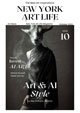


September 2026 brings major names, ambitious new exhibitions and a renewed gallery-season energy to Manhattan
Discover Hook:
After a summer pause, New York’s gallery world is coming back at full volume. From Chelsea and the Upper East Side to Tribeca and SoHo, September 2026 is delivering an unusually concentrated wave of major exhibitions—while The Armory Show prepares to turn the city into the international center of the art market once again.
New York’s September art season has always been a cultural reset. This year, however, the scale and density of programming suggest something larger: a renewed confidence among galleries, artists and collectors in the city’s ability to remain the defining meeting place for contemporary art.
Recent previews of the fall calendar describe an exceptionally crowded international art season, with major fairs, museum exhibitions and gallery weekends compressed into a few intense months. In New York, the momentum is already visible in gallery listings across Chelsea, Tribeca and SoHo.
Chelsea Reawakens
Chelsea remains at the center of the September resurgence, and several of the art world’s most established galleries are using the month to introduce significant new projects.
At Gagosian, September brings a particularly strong sequence of exhibitions. Deana Lawson opens her first solo exhibition with the gallery on September 10 at 541 West 24th Street. Edge Control brings together mirror-framed photographs and holograms examining personhood, surveillance and control. The exhibition runs through October 24.
The gallery will also present Brice Marden: I Am Plane Image beginning September 15 at its West 21st Street location. The exhibition offers a comprehensive survey of Marden’s paintings and remains on view through December 12.
Meanwhile, Hauser & Wirth is preparing a major September program across its Manhattan locations. Rita Ackermann’s The Chemical Alphabet opens September 9 at the gallery’s new Wooster Street space in SoHo, while Lee Bul, Arp, George Rouy and Anna Maria Maiolino headline additional exhibitions beginning September 10 across the gallery’s Chelsea spaces.
The concentration is significant. Rather than a single blockbuster exhibition defining the month, New York is seeing multiple established artists debuting new work almost simultaneously.
Pace Brings Sculpture, Painting and Perception Together
At Pace Gallery, September’s program reflects the breadth of contemporary practice.
Lynda Benglis’ KNOTTING, TYING, FOLDING opens September 11 at 540 West 25th Street, bringing together sculptures in glazed ceramic, bronze, pleated materials and paper, alongside rarely exhibited glass works.
On the same date, Torkwase Dyson’s Seeing in Blue opens at Pace. The exhibition explores water, perception, distance and planetary transformation through a new series of paintings informed by Dyson’s experiences as a deep-sea diver.
Arlene Shechet’s She Said She Said also opens September 11, presenting monumental metal sculptures alongside smaller ceramic works. The exhibition marks Shechet’s first New York show with Pace since 2020.
Together, the exhibitions demonstrate something essential about this September: the gallery season is not simply returning with recognizable names. It is returning with ambitious, materially diverse work that asks audiences to reconsider how painting and sculpture can operate today.
Tribeca Becomes Impossible to Ignore
The story of New York’s gallery resurgence is no longer limited to Chelsea.
Tribeca continues to strengthen its position as one of Manhattan’s most dynamic gallery districts. Its September calendar includes openings by Bortolami, P·P·O·W, Chapter NY, Charles Moffett, GRIMM, Marian Goodman and others.
Among the notable openings is Gordon Parks’ Voices in the Mirror at Jack Shainman, beginning September 18. Other September exhibitions include work by Tony Cragg, Edith Dekyndt, Claire Falkenstein, Melissa Joseph and Hew Locke.
The movement reflects a broader evolution in Manhattan’s gallery geography. While Chelsea remains indispensable, Tribeca, SoHo and the Lower East Side increasingly form a connected network of exhibition spaces rather than secondary alternatives.
That decentralization may ultimately be one of the most important developments of the current New York art scene.
SoHo’s New Chapter
Hauser & Wirth’s Wooster Street location is particularly symbolic.
The gallery’s new SoHo site occupies a 1920 truck garage at 134 Wooster Street, connecting a contemporary international gallery operation with a neighborhood deeply embedded in New York’s art history. The space will reopen September 9 with Ackermann’s The Chemical Alphabet.
Its arrival illustrates the continuing transformation of downtown Manhattan. SoHo’s relationship with art is historically complicated—once a center of pioneering galleries and artist studios, later dominated by retail—but September’s programming suggests that the neighborhood can again function as an important part of the city’s contemporary art infrastructure.
The Armory Show Raises the Stakes
The month reaches its major commercial climax with The Armory Show, scheduled for September 24–27 at the Javits Center.
The fair is expected to bring roughly 230 galleries from more than 30 countries to New York, with expanded Presents and Solo sections and a particular curatorial emphasis on the Caribbean and its diasporas.
The Armory Show does more than occupy four days on the calendar. Its arrival traditionally accelerates gallery openings, collector visits, institutional programming, dinners, talks and cultural events throughout Manhattan.
Tribeca Arts District explicitly describes the fair as driving citywide gallery openings, underlining how September’s commercial and cultural activity extends well beyond the Javits Center.
A New York Art Season With Something to Prove
The significance of September 2026 is therefore not simply the number of exhibitions.
It is the sense of concentration.
Established galleries are unveiling major projects. Artists are returning with ambitious bodies of work. New spaces are occupying historically important neighborhoods. Tribeca continues to grow. SoHo is reclaiming some of its gallery identity. Chelsea remains a powerhouse. And The Armory Show is preparing to connect New York’s gallery ecosystem with the international market.
Even the diversity of September’s exhibitions is telling. Deana Lawson examines surveillance and identity. Torkwase Dyson considers water and planetary transformation. Lynda Benglis revisits the possibilities of sculptural materials. Rita Ackermann turns an alphabet into a framework for painting. Brice Marden’s work returns to the center of a major survey.
These are not identical artistic conversations. That is precisely the point.
New York’s strength has never depended on one aesthetic movement dominating the city. Its power comes from collision: generations, materials, markets, ideas and neighborhoods existing simultaneously.
September 2026 appears ready to deliver that collision at extraordinary scale.
Key September Dates
- September 9: Rita Ackermann, The Chemical Alphabet, Hauser & Wirth, Wooster Street.
- September 10: Deana Lawson, Edge Control, Gagosian, 541 West 24th Street.
- September 11: Lynda Benglis, Torkwase Dyson and Arlene Shechet exhibitions open at Pace.
- September 15: Brice Marden, I Am Plane Image, Gagosian, West 21st Street.
- September 18: Gordon Parks, Voices in the Mirror, Jack Shainman Gallery.
- September 24–27: The Armory Show, Javits Center.
For New York, the message is clear: the fall gallery season is no longer waiting to begin.
The giants are back—and the city is ready for them.
