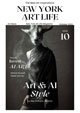


In the crucible of New York City’s art scene, true talent is distinguished not just by skill, but by an unwavering commitment to one’s creative philosophy. Actress Fanny Vega is a striking example of this principle in action. A multicultural artist with French, Swiss, and Argentinian roots, Vega brings a unique emotional depth and formidable discipline to the independent film world. Her journey—from a small French town near Geneva to the prestigious stages of Paris and now to the vibrant, demanding sets of New York—is a testament to her lifelong conviction in her path.
After honing her craft under the legendary French director Daniel Mesguich and later immersing herself in The Method at the Lee Strasberg Theatre & Film Institute, Vega has cultivated a process grounded in absolute authenticity. Unwilling to wait for opportunities, she began creating her own, producing and starring in award-winning short films. This proactive ethos defines her New York presence, where she has delivered powerful lead performances in films like the upcoming feature Before You and the poignant short Brillar. Fanny Vega is not just an actress; she is a creator, a producer, and a powerful voice dedicated to exploring the complex truths of the human condition.
NY Art Life: Fanny, your heritage is a rich blend of French, Swiss, and Argentinian cultures. How does this unique background inform you as an artist and shape your approach to character?
Fanny Vega: It’s the very foundation of my artistic identity. I see it as having access to three different emotional languages. My French side gives me a love for the intellectual and poetic dimensions of a script. My Swiss heritage provides a framework of discipline and precision, a meticulousness in how I build a character layer by layer. And my Argentinian roots connect me to a deep well of passion, drama, and a certain romantic soulfulness. When I approach a role, I’m not just drawing from one well; I have this entire internal landscape of blended cultures, which allows for a much richer, more nuanced interpretation of human nature.
NY Art Life: You were a competitive gymnast for eight years before fully dedicating yourself to acting. What did the intense physical and mental discipline of gymnastics teach you that you now apply to your craft?
Fanny Vega: Gymnastics was my first real training in discipline and resilience, which are cornerstones of an acting career. It taught me about the profound connection between the body and mind—how physical control can channel and focus mental energy. I also learned how much I can bend my body and make it go where I wanted it to go. That awareness is a great asset for embodying characters and physicalizing emotion. Performing a routine under pressure is not unlike delivering a performance on set or stage. It also taught me to embrace repetition and rigor as a path to freedom. The countless hours of training for a single movement is similar to the detailed work on a single moment in a scene. That physical intelligence and work ethic are invaluable to me today.
NY Art Life: You had the opportunity to work and perform under the legendary Daniel Mesguich in Paris, tackling major classical roles. What was the most significant lesson you took from working with a master of French theater?
Fanny Vega: Working with Daniel Mesguich was a masterclass in respecting the text while simultaneously breathing raw, contemporary life into it. The most significant lesson was that classical language is not a barrier to emotion but a powerful, structured conduit for it. He taught me to find the character’s heartbeat within the verse, to treat the words with musicality and intention, so they don’t sound recited but are truly lived. He showed me how to bridge the technical demands of classical theater with the visceral truth of the human experience.
NY Art Life: During the pandemic, you took the initiative to create your own work, leading to the award-winning short film Am I?. How did this experience of producing and starring shift your perspective on your own agency as an artist?
Fanny Vega: It was a complete paradigm shift. It transformed me from an actor waiting for permission to an artist who grants her own. The experience of gathering a team, leading a creative vision, and seeing it through to a successful, award-winning final product was incredibly empowering. It proved to me that my voice was not limited to interpreting a role but could extend to shaping the entire narrative. It solidified a core belief I now carry I am here to create, not just to be cast.
NY Art Life: Upon moving to New York, you enrolled at the Lee Strasberg Theatre & Film Institute. You’ve said The Method “magnified something already alive in me.” Can you expand on what that means?
Fanny Vega: I’ve always believed that acting must originate from a place of genuine emotional truth. Before Strasberg, I was accessing this intuitively, but without a clear technique. The Method provided the structure and the tools—like sensory memory and emotional recall—to access those deep parts of my soul in a way that was safe, repeatable, and technically sound. It didn’t teach me how to feel, but it gave me a reliable and sophisticated roadmap to connect my humanity to that of a character. It took my raw, intuitive impulses and helped me refine them into a powerful, controlled instrument.
NY Art Life: Your lead role in the feature film “Before You” sounds emotionally grueling. Could you walk us through your Method-based process for preparing for such an intense character?
Fanny Vega: “Before You”—it’s a short. However, working together on it with the director was a genuinely enriching experience. He told me he wants to develop it into a feature soon, probably next year. We enjoyed collaborating, and he trusted me a lot with the role. Preparing for Sophie was an immersive deep dive. Since she’s a woman trapped in an ‘invisible emotional triangle,’ her conflict is almost entirely internal.
My work was to build that inner world with painstaking detail. I used extensive sensory work to create her emotional state—the specific feeling of loneliness in her apartment, the scent that triggered a memory, the sound of her breathing in silence. I journaled as her daily to map her thoughts.It required a high level of vulnerability, but our director, Nikita Gorlov, created an incredibly safe and trusting environment. He made that deep exploration possible. It was draining, yet also artistically exhilarating.
NY Art Life: You were also part of the cast for Traffic, directed by Caroline Milcent, alongside established indie actors. What do you learn from being on a set with artists at that level?
Fanny Vega: You learn so much through observation. Even in a supporting role, being on a set like that is an invaluable education. Working with Louise Leroy was interesting—they each bring something distinctive to the set and their process. There’s a sense of quiet confidence, and it was inspiring to see their commitment to the director’s vision. This film represents a bit of the story of all those who move to New York for various reasons. Lilli is a French woman who arrives in New York. New York is in turmoil due to the presidential elections. It reinforces your standards and provides a clear picture of the collaborative energy required to make meaningful cinema.
NY Art Life: For the short film Brillar, you tackled themes of grief, and the director entrusted you with emotional improvisation. How do you navigate the freedom of improv while ensuring you stay true to the character’s emotional arc?
Fanny Vega: Successful improvisation is always born from rigorous preparation. To be free in the moment, I had to know Luisa inside and out—her history, her fears, her deepest desires. I also related to her a lot; we share many similarities, which helped me convey her truth onscreen more effectively. The director, Katherine Eimers, created a strong emotional and narrative framework. My freedom existed *within* that structure. My job was to live truthfully as Luisa in the given circumstances, not to invent new ones. That trust from Katherine was liberating; it led to authentic, unscripted moments of discovery that often became the most potent parts of the film.
NY Art Life: You’ve stated that “New York brought me clarity.” What is it about this city’s specific energy that helps an artist define their purpose?
Fanny Vega: New York is a powerful mirror. It reflects your own ambition and drive back at you with immense intensity. In a city with so much noise and competition, you are forced to become very clear about what you want and why you are here. There is no room for half-measures or ambiguity. It strips away everything that isn’t essential to your core purpose. For me, it burned off any remaining uncertainty and crystallized my mission: to create authentic, emotionally resonant work. It’s a demanding clarity, but it’s incredibly focusing.
NY Art Life: You describe the artist’s life in New York as surfing a “wave of ups and downs.” What are your strategies for resilience during the inevitable lows?
Fanny Vega: My primary strategy is to always return to the work itself. The ‘lows’—rejection, uncertainty—are external. The craft is internal, and it’s something I can always control and nurture. When I face a setback, I return to class, read a play, write, or collaborate on a small project with friends. This keeps my artistic muscles engaged and reminds me why I started. My community of fellow artists is also a vital anchor; we support each other because we all understand the wave. And my physical discipline from gymnastics is still a tool that can completely shift my mental state.
NY Art Life: Looking at your recent roles, from Am I? to Brillar and Before You, you seem drawn to characters with deep psychological and emotional complexity. What attracts you to these women?
Fanny Vega: I’m attracted to their wholeness. I don’t see them as ‘complex’ for the sake of drama; I see them as realistic portrayals of women. Women are rarely just one thing—we are a blend of strength and vulnerability, certainty and doubt, light and shadow. I am drawn to stories that explore this inner territory without judgment. I want to give voice to characters who are navigating the messy, beautiful, and often contradictory realities of being human. Those are the stories that feel urgent and necessary to me.
NY Art Life: Given your success in producing your own projects, do you see directing in your future?
Fanny Vega: Yes, directing feels like a natural and inevitable evolution for me. Producing “Am I”? ignited a passion for the entire filmmaking process, from the initial concept to the final cut. My training as an actor, particularly with The Method, gives me a unique language to communicate with other actors and to help guide them toward truthful performances. I love building a world and shaping a story from a holistic perspective. Directing is a path I intend to pursue. I’m also currently working on another project of mine, which I’m excited about.
NY Art Life: What is the single greatest challenge of working with Method acting, and what is your personal ritual for stepping away from a complicated character at the end of the day?
Fanny Vega: The greatest challenge is maintaining a clear boundary between the character’s emotional life and my own. Method acting can be stiff because it allows you to stay deeply immersed in your feelings, and it can amplify how your body reacts. Emotions can feel very strong, sometimes overwhelming. You need to find an anchor in the external world and learn how to channel it simultaneously. My de-roling process is a conscious ritual. It always starts with a physical shift run, a dance class, something to get my body out of the character’s posture and back into my own. Then, I changed my sensory environment. I will deliberately stop listening to the character’s music and put on my own playlist, something that feels distinctly ‘Fanny.’ It’s a way of thanking the character for the experience and respectfully letting her go until the next day’s work.
NY Art Life: What do you hope to achieve with your body of work? When an audience member sees a Fanny Vega performance, what do you want them to feel?
Fanny Vega: I hope to build a body of work grounded in emotional honesty. My goal is to foster empathy. I want an audience to see a character I play and feel a flicker of recognition, a sense of shared humanity, even if the character’s life is entirely different from their own. I want them to be moved, to be provoked into thought, and to leave feeling a little more connected to the world and the people in it. If my performance can act as a bridge of empathy between one human and another, then it has served its purpose.
NY Art Life: With a new feature film scheduled for this summer and other projects on the horizon, what excites you most about the next chapter of your career here in New York?
Fanny Vega: What excites me most is the potential for more profound and more ambitious collaborations. I am now connected with filmmakers and artists whose work I deeply admire and whose creative visions challenge me to grow. I’m excited to continue tackling roles that demand every part of me, to explore new facets of storytelling, and to keep building my career on my own terms. The future feels less like a path I’m following and more like a world I am actively helping to create. I’m ready for whatever comes next.
Read Also:
Katherine Pound: The Versatile and Multifaceted Performer
Tim Morrison: The Artist Breathing Life into Healing
Exclusive Interview with Simon Catillon: Talented French Artist in New York
