


A City Still Setting the Conversation
New York has never been simply a destination for contemporary art. It is an ecosystem—one where galleries, museums, artists, collectors, curators, independent spaces and cultural institutions constantly influence one another.
In 2026, that ecosystem is changing again.
The city’s traditional art districts remain powerful, but the contemporary New York scene is no longer defined by a single neighborhood or a single artistic establishment. Chelsea continues to attract major international galleries, while Tribeca, SoHo, the Lower East Side, Brooklyn and other emerging areas contribute increasingly important voices.
At the same time, New York’s influence exists within a much larger global network. Artists and galleries are moving between cities, exhibitions are increasingly international in scope, and major fairs have become meeting points where different artistic cultures intersect.
The result is a contemporary art landscape that feels simultaneously local and global.
New York’s Gallery Landscape Enters a New Season
September is particularly significant for New York’s art calendar.
The city’s fall season brings a dense concentration of gallery openings, museum exhibitions and art-world gatherings, culminating later in the month with The Armory Show.
The 2026 edition of The Armory Show runs September 24–27 at the Javits Center and brings approximately 230 galleries from more than 30 countries to New York. Its expanded Presents and Solo sections place additional emphasis on individual artists and emerging programs, while Caribbean-focused presentations add another layer to the fair’s international perspective.
The significance extends beyond the Javits Center. Armory Week effectively transforms New York into a citywide exhibition platform, encouraging galleries, museums and independent spaces to coordinate openings and special projects.
That makes New York particularly distinctive: the art fair is only one component of the experience.
Museums Are Expanding the Definition of Contemporary
New York’s museums are also demonstrating how contemporary art can engage with history, identity and social experience without being confined to a single medium.
The 2026 Whitney Biennial, for example, brought together 56 artists, duos and collectives from across the United States and internationally. The exhibition examines subjects including interspecies relationships, family, geopolitics, technology, infrastructure, ecology and mythology.
Its international dimension is especially important. Artists connected to places ranging from Afghanistan to Vietnam appear alongside artists working throughout the United States, reflecting a contemporary understanding of American art that is increasingly connected to global histories and networks.
This broader definition of contemporary art is becoming increasingly visible worldwide.
Artists are addressing migration, climate, technology, memory, political power and belonging—not simply as abstract concepts, but through personal experiences and specific communities.
Beyond the Traditional Art Capitals
The global contemporary art scene is also becoming less dependent on a small number of traditional centers.
London, Paris, Hong Kong, Seoul, Los Angeles, Mexico City, São Paulo, Lagos, Dubai and other cultural hubs are developing increasingly influential ecosystems of galleries, museums, collectors and artist-led initiatives.
Recent developments illustrate this decentralization. Chicago Exhibition Week, for example, has expanded into a full week in September 2026, with more than 70 galleries and art spaces participating across the city. The program includes exhibitions, performances, panels and workshops, bringing established institutions together with emerging spaces.
The broader lesson is significant: contemporary art no longer requires every important conversation to pass through one traditional art capital.
Instead, the international scene increasingly operates as a network.
A Global Art Market in Recalibration
The market itself is changing alongside artistic production.
According to the Art Basel and UBS Global Art Market Report 2026, global art-market sales increased 4 percent year-on-year to an estimated $59.6 billion, marking a return to growth after two consecutive years of decline. Yet the recovery remained below the market’s 2022 peak.
The United States remains the world’s largest art market, representing 44 percent of global sales by value. The UK and China remain major centers as well, meaning that the international art economy continues to be concentrated in several powerful markets even as artistic production becomes more geographically diverse.
This creates an interesting tension.
Artists are becoming more globally connected, while the commercial infrastructure surrounding art remains concentrated in established financial and cultural centers.
New York sits directly at that intersection.
Human Identity in the Age of Technology
Technology is another defining force.
Artificial intelligence, digital image-making, virtual environments and new forms of media have become unavoidable parts of contemporary artistic discussion. Yet the increased presence of technology has also produced renewed interest in handmade processes, individual authorship and the physical experience of art.
That tension is increasingly visible in galleries and museums.
The question is no longer simply whether technology can make art. It is whether technology changes how audiences understand originality, labor, authorship and artistic identity.
For many contemporary artists, the answer is being explored through the work itself.
Some embrace digital tools. Others emphasize painting, sculpture, photography, ceramics, textiles or performance. Still others combine traditional techniques with new technologies.
Rather than replacing older forms, the technological era is creating new arguments about why those forms still matter.
The Return of the Physical Experience
Perhaps one of the strongest characteristics of the contemporary scene is the continued importance of physical space.
Despite the growth of online viewing rooms and digital platforms, audiences continue to seek immersive experiences inside galleries, museums and artist-run spaces.
New York remains particularly powerful in this respect because visitors can move from one exhibition to another within a single afternoon.
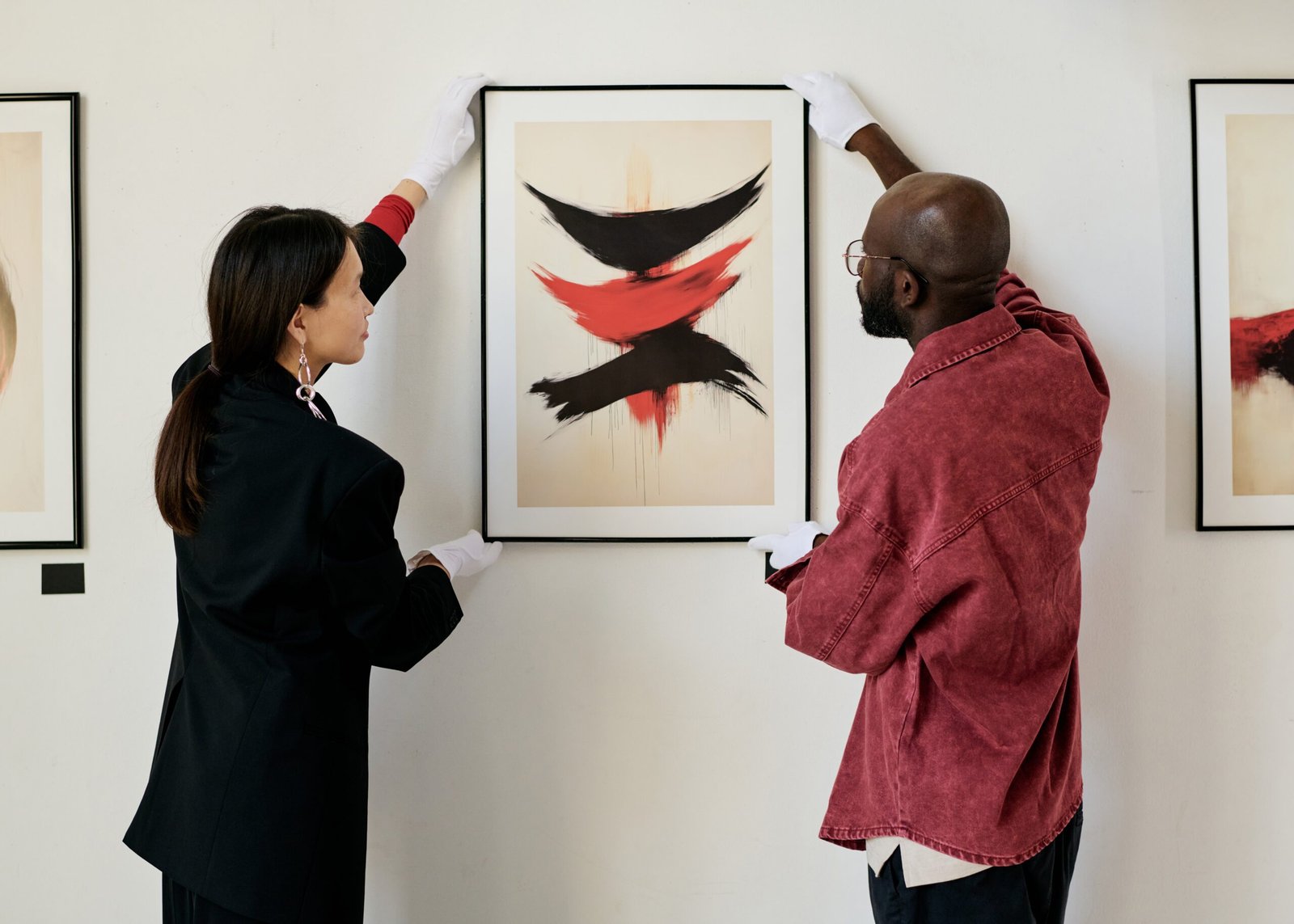
A major museum exhibition can exist alongside a young artist’s project in a small Tribeca gallery. A commercial gallery can operate a few blocks from an experimental performance space. An international art fair can bring together hundreds of galleries while independent artists organize their own parallel exhibitions.
This density creates something that cannot easily be reproduced online: cultural proximity.
New York as a Global Conversation
The contemporary NYC art scene therefore represents something larger than the city’s gallery economy.
It is a meeting point.
Artists arrive in New York from different countries. International galleries establish permanent or temporary presences in the city. American artists participate in biennials and fairs abroad. Collectors move between markets. Curators develop exhibitions that cross geographic boundaries.
The city absorbs these influences and sends them back into the international art world.
That exchange is one reason New York remains so important.
The contemporary art scene of 2026 is not defined by one dominant style or ideology. Instead, it is characterized by plurality: multiple generations, multiple geographies, multiple media and increasingly complicated ideas about identity and authorship.
What Comes Next
The next chapter of contemporary art will likely be shaped less by a single movement than by competing ideas.
Technology versus craftsmanship.
Globalization versus local identity.
Commercial success versus artistic independence.
Institutional visibility versus community-based practice.
Digital circulation versus physical experience.
New York will continue to sit at the center of these debates, but the conversation itself is increasingly global.
As the 2026 fall season unfolds, the city once again demonstrates why it remains one of the world’s most important places for contemporary art—not because it controls the global conversation, but because it provides a place where many different conversations can happen at once.
And that may be the defining characteristic of contemporary art today: not one center, but an increasingly interconnected constellation of artists, cities, institutions and communities.
