


Students from New York and Utah will soon have a unique opportunity to connect with NASA astronauts aboard the International Space Station (ISS). In two special events, astronauts Nichole Ayers and Anne McClain will answer prerecorded questions from eager young learners, sharing their experiences and inspiring the next generation of space explorers.
The first event will take place at 11:30 a.m. EDT on Monday, June 23, when students from P.S. 71 Forest Elementary School in Ridgewood, New York, will tune in to hear Ayers and McClain respond to their submitted questions. This exciting virtual encounter will engage students from kindergarten through fifth grade, giving them the chance to interact with real astronauts and learn about life in orbit.
Members of the media interested in covering the New York event are asked to RSVP to Regina Beshay by 5 p.m. on Friday, June 20. She can be reached at rbeshay2@school.nyc.gov or by phone at 347-740-6165.
The second event is scheduled for 11:05 a.m. on Friday, June 27. When students from the Douglas Space and Science Foundation, Inc., in Layton, Utah, will connect with the astronauts. These participants are part of the Science, Technology, Achievement Research (STAR) Camp, and they’ll get to ask their most curious questions about space, technology, and exploration. Media wishing to cover the Utah event should RSVP by 5 p.m. Wednesday, June 25, by contacting Sarah Merrill at sarahmonique@gmail.com or 805-743-3341.
Both events will be broadcast live and can be watched on the NASA STEM YouTube Channel. Each interactive call will last about 20 minutes, giving students and viewers a behind-the-scenes look at life aboard the ISS.
Organized with the goal of sparking interest in science, technology, engineering, and mathematics (STEM). These calls are part of NASA’s ongoing commitment to education. Through mentorship, hands-on experiences, and outreach. NASA hopes to inspire young minds to imagine themselves as the scientists, engineers, and explorers of tomorrow.
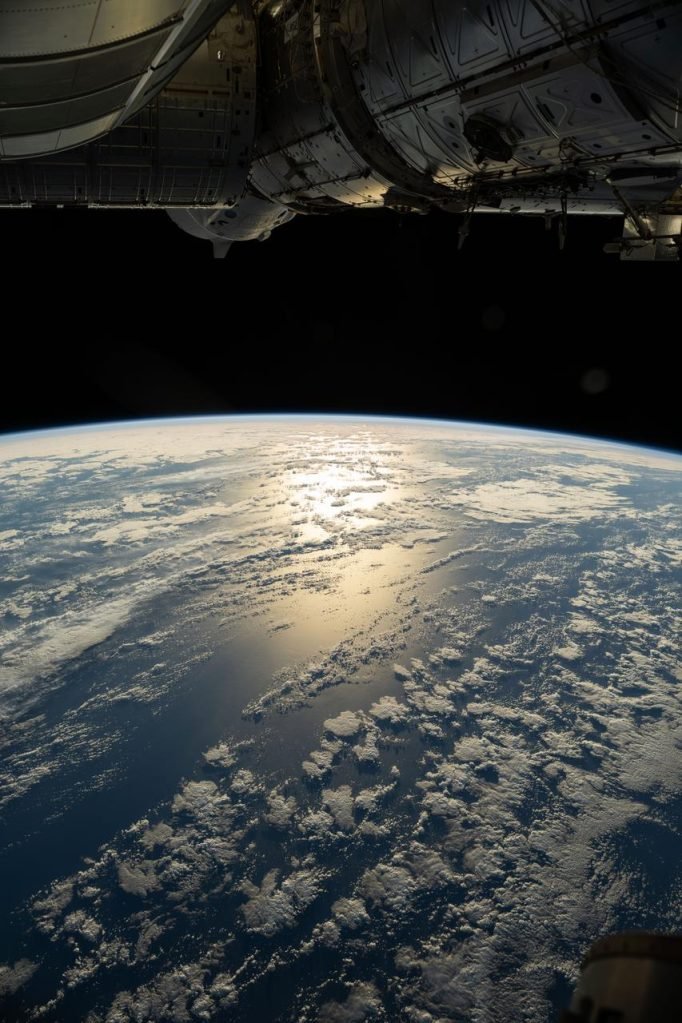
For nearly a quarter of a century, astronauts have been living and working aboard the International Space Station, conducting vital research and testing new technologies. Their work supports space exploration further from Earth and brings benefits to people right here at home. The Space Communications and Navigation (SCaN) Near Space Network allows the station’s crew to communicate with NASA’s Mission Control in Houston 24/7.
The research conducted on the space station not only advances our understanding of science and technology. But also prepares NASA for future missions—like those under the Artemis program, which aims to return humans to the Moon and pave the way for journeys to Mars. Through these student events, NASA hopes to ignite a passion for discovery and ensure that the United States continues to lead the way in space exploration.
Don’t miss this opportunity to see astronauts in action and hear real questions from tomorrow’s explorers!
5 Questions:
1. What do you eat in space?
On the International Space Station, we eat a variety of foods that NASA specially prepares for space travel. They seal our meals in packages and either freeze-dry or thermostabilize them—sort of like making canned food, just without the can! We add water to some foods, like soups or scrambled eggs, and heat up others in a small space oven. We enjoy fruits, pasta, beef stew, and even treats like brownies. Eating in microgravity is fun—you have to be careful your food doesn’t float away!
2. How do you sleep in space?
Our bodies still need rest in space, even though there’s no up or down like on Earth. Each astronaut has a small sleeping pod for privacy, with a sleeping bag attached to the wall. We zip ourselves inside to keep from floating around. Astronauts follow a regular sleep schedule to stay healthy, but sleeping without gravity feels strange at first—it’s like floating in the most comfortable hammock ever!
3. How do you stay clean on the space station?
There’s no shower on the ISS, so we use wet wipes, rinseless body soap, and a little shampoo to keep clean. To wash our hair, we use a special no-rinse shampoo and a towel. We change clothes and use air filters to help control odors. Staying clean keeps us healthy and comfortable, even on long missions!
4. What kind of experiments do you do on the International Space Station?
We conduct experiments in biology, physics, Earth sciences, and more! For example, we study how plants grow in microgravity, how fluids behave without gravity, and how our bodies change over time in space. Some experiments help create new medicines or materials for use on Earth, while others help us prepare for future missions to the Moon or Mars.
5. What do you do for fun in space?
After work, astronauts relax just like people on Earth! We read books, watch movies, listen to music, and chat with our families back home. We also take photos of Earth, play games, and sometimes watch out the window for shooting stars or auroras. Sharing meals and having a laugh together helps keep everyone in good spirits on the station.
Read Also
7 Types of Awesomely Best Art Magazines for Every Artist in 2023
