

Jimi Hendrix in a tangle of colored cables, David Bowie in double exposure, Gorbachev’s war on vodka in the lobby: Poster House in Chelsea opened two new exhibitions on November 12, joining its two big fall shows. Here is what to see, and how to visit for free.
Poster House, the first and only museum in the United States dedicated to posters, has a full building this season. On November 12, 2026, it opened two new exhibitions that run through April 11, 2027: a survey of the sculptural music posters of West German designer Günther Kieser, and a selection of late-Soviet posters that tried, and failed, to stop a nation from drinking.
They join the museum’s two major fall exhibitions, on view through February 21, 2027. Together, the four shows make Poster House one of the most varied museum visits in Chelsea this winter, and one of the easiest on the wallet.
Quick answer: the new shows are Sculpting Sound: Günther Kieser’s Music Posters and Just Say Nyet: The Soviet Battle Against Booze, both through April 11, 2027, at 119 West 23rd Street. The museum is open Thursday to Sunday, and admission is free every Friday (10 a.m. to 9 p.m.) and on every third Sunday.
Sculpting Sound: Günther Kieser’s Music Posters
Günther Kieser (1930–2023) worked in a divided Germany. Under the Nazi regime, American and British popular music had been banned as “degenerate”. When it suddenly became available in postwar West Germany, jazz in particular became a symbol of freedom and experiment, and Kieser, a young jazz fan who had trained as a sculptor’s apprentice, became one of its great image-makers.
That training shows. His concert posters often look less like graphic design than like objects: photographed models, collages and strange three-dimensional constructions meant to capture the abstract, physical nature of music. His style moved from psychedelic to minimalist, and he was also a gifted typographer. Over four decades he went from jazz to rock.
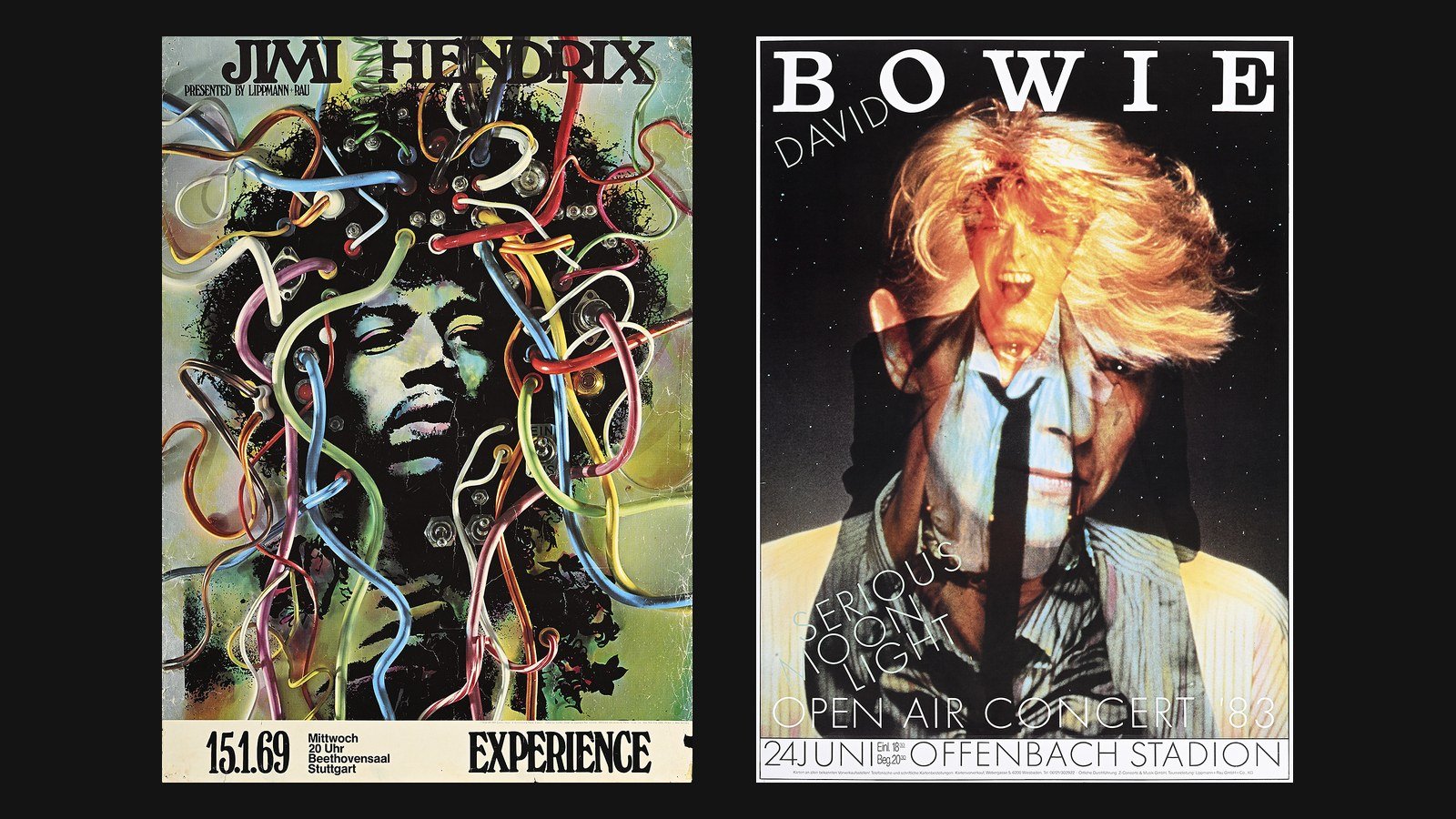
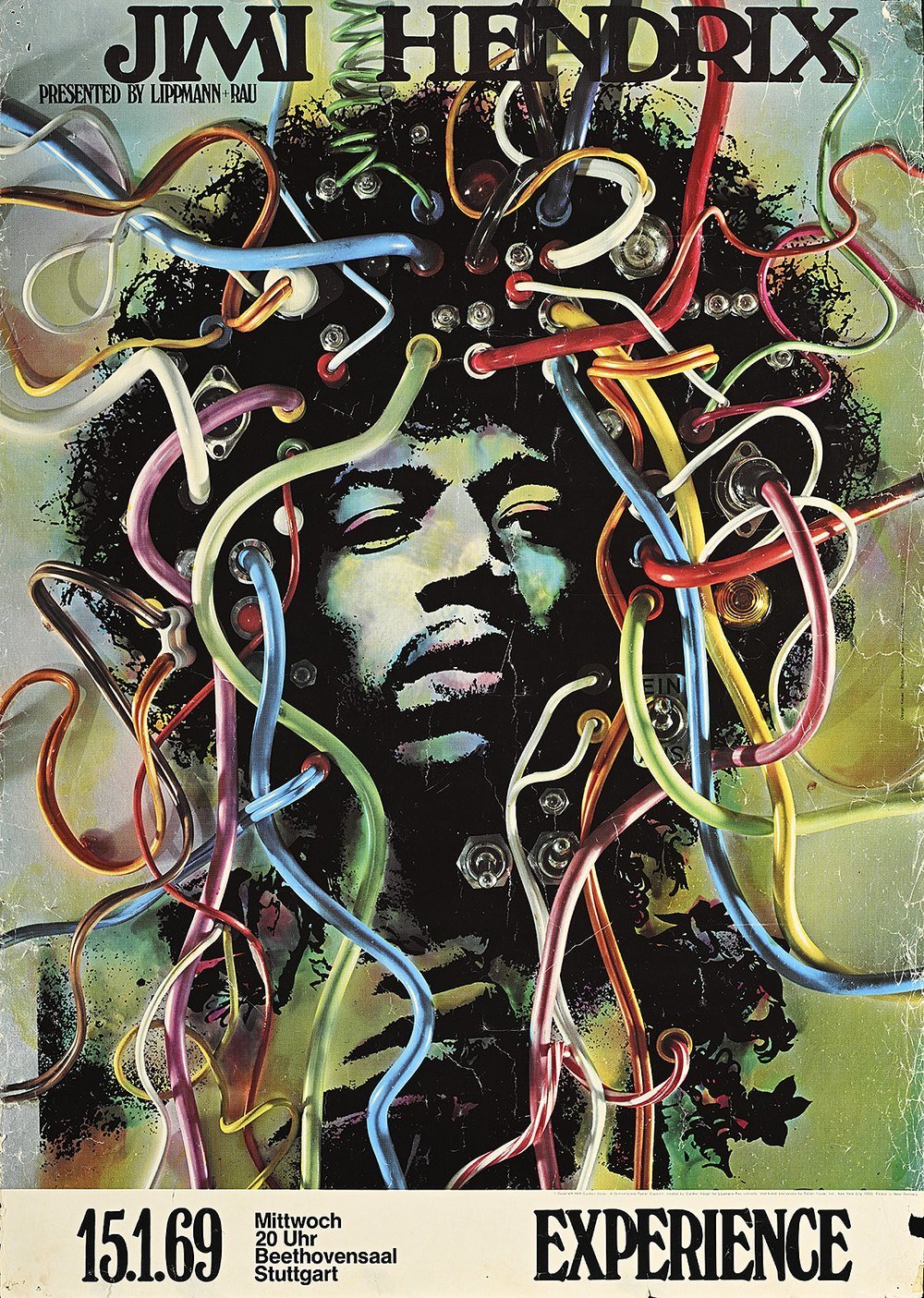
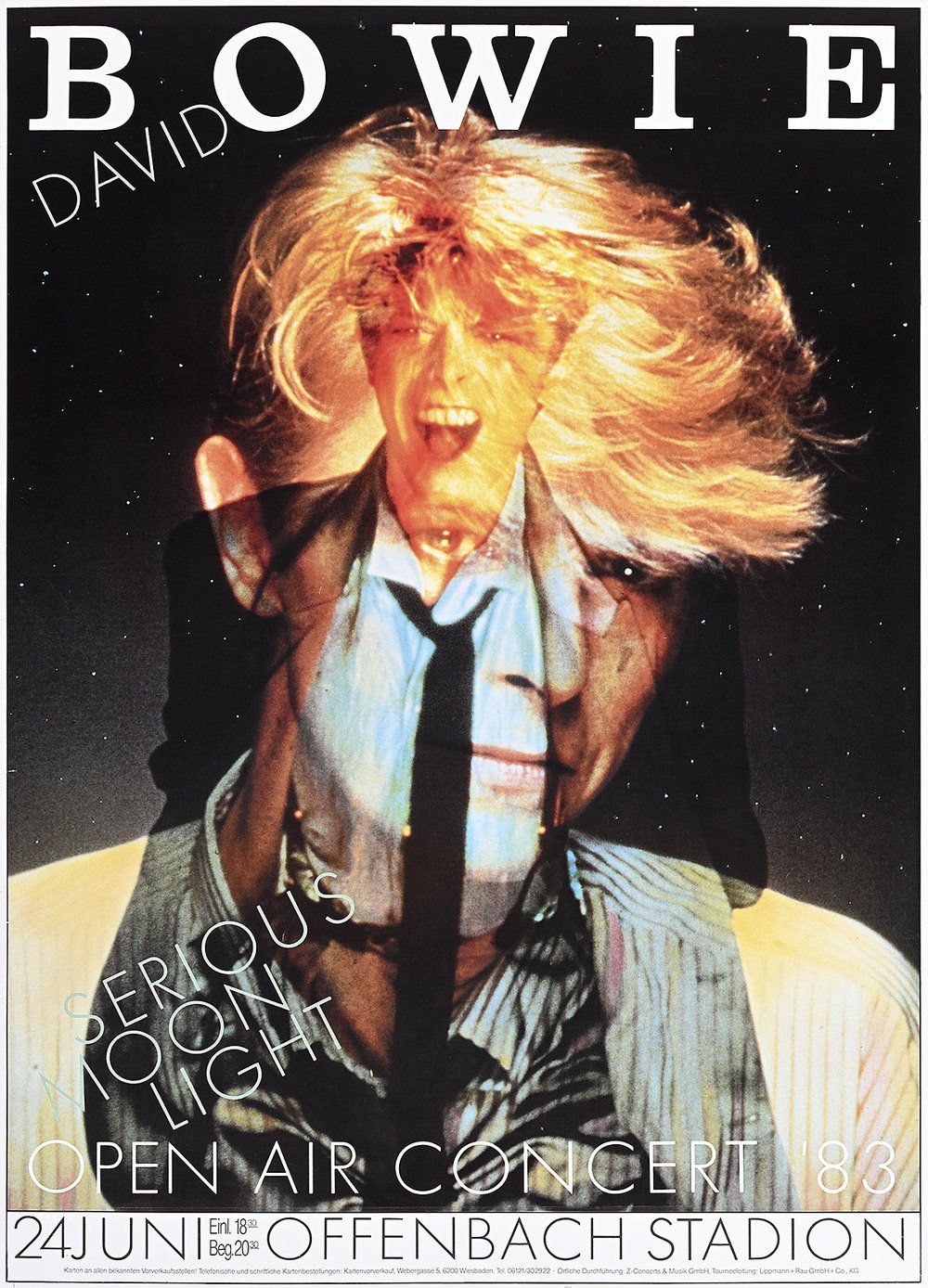
Sculpting Sound, curated by Tim Medland, follows him across more than four decades, from a 1956 jazz concert poster to the 1999 Deutsches Jazz Festival Frankfurt. The names read like a history of the music of the era: Miles Davis, James Brown, Ravi Shankar, Diana Ross and the Supremes, Jefferson Airplane, Jimi Hendrix, Fleetwood Mac, Ike & Tina Turner, Santana, Wings, Alice Cooper, The Who, the Grateful Dead, Roxy Music and David Bowie, along with the American Folk Blues Festival tours that brought blues legends to Germany in the 1960s. The 1969 Hendrix poster, for a concert in Stuttgart, wraps the guitarist’s face in a tangle of glowing colored cables, and it is worth the visit on its own. Fourteen years later, his 1983 poster for David Bowie’s Serious Moonlight open-air concert in Offenbach layers two portraits of the singer into one restless face.
The New York Times wrote that the show “draws out the physical elements of Kieser’s work” and sets them beside the “nebulous, free-form and abstract” nature of the music itself. The exhibition fills the museum’s lower-level hallways and takes about 20 minutes. It comes with what the museum calls the first English-language book on the designer, and with a Spotify playlist to listen to as you walk.
Good to know: the museum rates the show PG-13 for mild nudity.
Just Say Nyet: The Soviet Battle Against Booze
In the 1980s, alcohol was a national emergency in the Soviet Union. According to the museum, complications from alcoholism caused 52% of deaths among people aged 15 to 53, about two-thirds of murders and violent crimes were committed by people who were drunk, and drinking cost the economy some $8 billion a year in lost labor.
In 1985, under Mikhail Gorbachev, the government launched a campaign of severe restrictions and blunt advertising, meant to end drinking on a “voluntary-obligatory” basis. The posters from that campaign are startling. A bottle becomes a razor cutting into a heart. A vodka label becomes the sheet over a body on an autopsy table. A worker who skips his shift flies away from his lathe like a drunken fly.
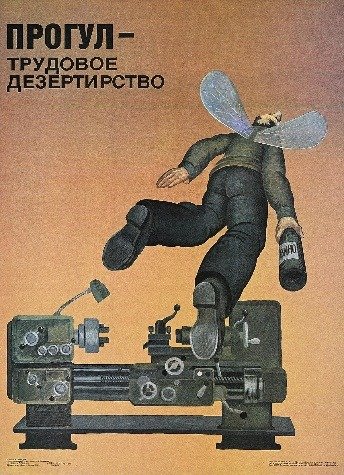
Just Say Nyet, curated by photographer and author B.A. Van Sise, gathers these late-1980s designs in the museum’s entry foyer. Works include Alcohol is the Enemy of Life and Lethally Harmful by Sergei Bulkin and Evgeniya Mikheeva (both 1989), Vodka is the Enemy by V. Vasiliev (1987), The Reason for This: Alcohol by Irina Vol’nova (1989), If a Woman Drinks by Elena Simonova (1989), Physical Education Is Health! That’s the Only Way! by P. Sabinin (1988) and Absenteeism is Labor Desertion by N. Sviridov (1988).
What makes them interesting, Van Sise told Fast Company, is their “humanist view of the problem”: instead of the heroic worker of classic Soviet propaganda, they speak to the individual’s own health and life. The campaign still failed. People turned to substitutes, which led to mass poisonings, and the government ended the campaign in 1988, a few years before the USSR collapsed. As Van Sise puts it, “no slogan is going to dissuade somebody with tremors.”
The show is small, about 10 minutes, and rated G.
Also on View: The Two Big Fall Shows
- Designed to Be Red: Native American & Indigenous Poster Works, through February 21, 2027. Curated by Brian Johnson (Monacan Indian Nation), the main-gallery show covers nearly two centuries of Native and Indigenous graphic design from more than 60 tribes and nations, with themes from sovereignty and activism to environmental advocacy and Indigenous futures. Allow about an hour.
- Cuteness, Conservatism, & Consumption: Lefor-Openo and Postwar France, through February 21, 2027: postwar French advertising seen through the work of Lefor-Openo.
Tips for Your Visit
- Go on a Friday. Admission is free every Friday, and the museum stays open until 9 p.m. Entry is also free on every third Sunday; the next one is November 15, 2026.
- Plan for Thursday to Sunday. The museum is closed Monday to Wednesday.
- Start downstairs. Sculpting Sound and Just Say Nyet together take about half an hour; leave an hour for Designed to Be Red.
- Combine it with Chelsea’s galleries. Poster House is about a 15-minute walk from the West Chelsea gallery district, where entry is always free. See our guide to the wealth of free art in NYC, and our list of the best art exhibitions in NYC this winter.
Read also: Famous Art Museums in New York · Masaaki Sato: New York Since 1970 at NowHere · 1337: A Phone-Hacking Immersive Experience Premieres in Brooklyn · Best Art Magazines in New York
Plan Your Visit
Poster House
- Where
- 119 West 23rd Street, between Sixth and Seventh Avenues, Chelsea
- Hours
- Thursday, Saturday, Sunday: 10 a.m. – 6 p.m.
Friday: 10 a.m. – 9 p.m.
Closed Monday to Wednesday - Free
- Every Friday and every third Sunday
- New shows
- Sculpting Sound · Just Say Nyet
November 12, 2026 – April 11, 2027 - Fall shows
- Designed to Be Red · Cuteness, Conservatism, & Consumption
Through February 21, 2027 - Info
- posterhouse.org
