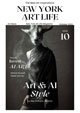


A rigorous intersection of creative storytelling and analytical precision defines the landscape of modern marketing in New York City. As brands navigate an increasingly fragmented digital ecosystem, the demand for professionals who can synthesize hard data with intangible cultural narratives has grown substantially. Mikaela Stenmo represents this emerging class of marketing strategists. Based in New York City, Stenmo has built a career spanning experiential marketing, luxury brand management, and advanced data analytics. Her professional trajectory reflects a synthesis of academic rigor and practical application, grounded in a Master of Science in Integrated Marketing with a focus on Marketing Analytics in New York.
Mikaela Stenmo operates within sectors that require distinct approaches to audience engagement. Her portfolio includes work with exclusive matchmaking services like The Bevy. In each instance, her role has moved beyond simple promotion to encompass the creation of immersive experiences and the development of sustainable operational frameworks. Her expertise lies not only in event execution but also in the strategic architecture that supports them, using tools such as Python, SQL, and Tableau to inform creative decisions. This duality enables her to meet the aesthetic requirements of high-fashion and lifestyle brands while delivering measurable business outcomes.
Mikaela Stenmo has applied her skills to nonprofit initiatives, contributing to Climate Week events for Daughters for Earth, and to the music industry through operational roles at SongTools. These varied experiences have provided her with a comprehensive view of the New York creative economy.
In this interview, we discuss the methodologies behind her most prominent projects, the role of data in luxury storytelling, and her perspective on the evolving nature of experiential marketing. Stenmo offers insight into the operational realities of managing events at venues like The Plaza and Diane von Furstenberg’s headquarters, as well as the digital strategies that drive engagement for niche luxury services. Her approach is characterized by a focus on structural efficiency and cultural relevance, ensuring that every campaign resonates with its intended audience while meeting specific performance metrics.
New York Art Life: Your academic background includes a Master of Science in Integrated Marketing with a specialization in Marketing Analytics from New York University. How has this specific combination of creative strategy and statistical analysis influenced your approach to experiential marketing in the luxury sector?
Mikaela Stenmo: The integration of data analytics into creative marketing provides a structural foundation that is often missing in purely qualitative approaches. At NYU, my coursework focused heavily on statistical analysis, database management, and modeling. These are not subjects typically associated with event planning or luxury branding, yet they are essential for modern campaign efficacy. When I approach a project, I do not view it solely through an aesthetic lens. I analyze the competitive strategy and the financial implications of marketing decisions.
In the luxury sector, the margin for error is minimal. Exclusive matchmaking firms like The Bevy require absolute precision. My education in tools like SPSS and Python allows me to interpret consumer behavior patterns and predict outcomes before an activation takes place. It changes the conversation from “what looks good” to “what will perform.” For example, understanding audience segmentation through SQL queries can dictate the guest list for an event or the targeted messaging for a digital campaign. In experiential marketing, we create moments that feel spontaneous and emotional, but the framework that supports them must be built on logic and rigorous analysis. This academic training ensures that I can communicate effectively with both creative directors and financial stakeholders, bridging the gap between artistic vision and business return on investment.
NY Art Life: You contributed to the 2025 Gala L’Alliance at The Plaza. This event honored prominent figures like Angèle and Paddy McKillen. What are the specific operational requirements when executing a large-scale gala at a historic venue like The Plaza?
Mikaela Stenmo: The Plaza is an iconic venue, and a gala of this magnitude—with over 500 guests in attendance—carries a very specific set of expectations. It is important to clarify that we did not contribute to the actual organization or production of the event itself. Rather, we assisted specifically in the connecting phase to enhance the digital guest experience.
My primary responsibility was ensuring the successful on-site execution of our photography technology, Impulse. Through strategic positioning and active engagement, we helped approximately 400 out of the 500 guests sign up for Impulse, which seamlessly sent photos of themselves directly to their phones in real time. For an event honoring figures like Angèle and Paddy McKillen, our main operational requirement was absolute frictionless integration. We had to ensure that onboarding hundreds of guests to this technology felt like an organic, high-end extension of the evening, capturing their moments without creating any logistical bottlenecks during the reception.
New York Art Life: You currently serve in a Social Media and Business Development role at The Bevy. This firm offers exclusive matchmaking for elite individuals. How did you approach the digital brand refresh for such a niche and private service?
Mikaela Stenmo: The Bevy operates in a sector where privacy and exclusivity are the product. Marketing such a service requires a delicate balance; it must be visible enough to attract new clients but discreet enough to maintain its allure. When I led the digital brand refreshes, my primary goal was to translate the brand’s positioning into a social-first content strategy that aligned with luxury lifestyle aesthetics.
We could not simply post testimonials or reveal client identities. Instead, the content strategy focused on the lifestyle associated with The Bevy’s clientele. I curated visuals and narratives that evoked sophistication, connection, and curated experiences. The refresh involved updating the visual identity on digital platforms to ensure consistency with modern luxury codes. We moved away from generic dating advice and toward content that spoke to the values and aspirations of successful professionals. It was about building a brand universe that potential clients wanted to inhabit. This required a shift in tone and visual quality. I analyzed competitor strategies and identified a market gap for a more refined, less transactional digital presence. The refresh was not just cosmetic; it was a strategic realignment to ensure that our digital footprint accurately reflected the caliber of the service provided.
New York Art Life: In your role at The Bevy, you achieved a 381% increase in engagement and a 97% lift in reach among non-followers. These are significant metrics. What specific data-driven strategies did you implement to achieve this growth?
Mikaela Stenmo: These results were the direct outcome of a rigorous analytical approach to content creation. I did not rely on intuition; I relied on performance metrics. I used platform analytics to understand which types of content resonated with our target demographic and, crucially, with the “non-follower” segment that represented potential growth.
One key strategy was optimizing conversion pathways. I analyzed the user journey from the initial impression to the profile visit and website click. We found that educational content regarding the philosophy of modern dating, presented in a polished, editorial format, performed best. I implemented a schedule that maximized visibility based on audience activity times. Furthermore, I utilized paid content initiatives to amplify our most successful organic posts. By monitoring the cost per click and engagement rates daily, I was able to reallocate budget to the highest performing assets in real time.
The 381% increase in engagement came from fostering two-way conversations in the comments and utilizing interactive features like polls and Q&As, which the algorithms favor. The 97% lift in reach was driven by creating shareable content that transcended our immediate follower base. Data informed every decision, from the color palette of the graphics to the keywords used in the captions.
New York Art Life: Your experience extends to the nonprofit sector with Daughters for Earth. You assisted in planning their 2024 NYC Climate Week event. How does the planning process for a mission-driven event differ from a commercial luxury activation?
Mikaela Stenmo: While the logistical mechanisms of event planning remain consistent, the objective and the atmosphere of a mission-driven event are distinct. For Daughters for Earth, the goal was advocacy and community building rather than sales or brand prestige. The event was hosted at Diane von Furstenberg’s flagship headquarters, which provided a fantastic backdrop, but the focus remained on the message of climate action.
In a commercial activation, the brand is the hero. In a nonprofit event, the cause is the hero. This shifts the planning priorities. We had to ensure the speakers and partners were effectively highlighted. I coordinated vendor outreach and daily logistics, but with a heightened sensitivity to sustainability. We had to ensure that the event production itself aligned with the values of the organization. This meant careful selection of vendors and waste management strategies. The audience, comprising over 300 guests, included activists, donors, and industry leaders. The flow of the event needed to facilitate networking and educational exchange. Working alongside agencies like Uncle PR and Prose Public Relations, we ensured a cohesive guest experience that left attendees feeling empowered. The success metric was not product engagement but the amplification of the message, as seen in the coverage by Forbes.
New York Art Life: At Meta Vocus, you worked as a Growth Marketing Manager within the fashion sector, specifically during New York Fashion Week (NYFW). How did you utilize influencer marketing to support the new collection launch and secure features in major publications?
Mikaela Stenmo: Fashion marketing today is intrinsically linked to influencer validation. At Meta Vocus, my role was to support digital campaigns that leveraged this dynamic during the critical window of NYFW. We produced content for TikTok and Instagram that was designed to go viral or at least generate significant organic conversation.
I conducted extensive audience and trend research to identify creators whose aesthetic aligned with the brand’s new collection. It is not enough to find influencers with large followings; they must have high engagement and brand fit. We collaborated on content activations that showcased the clothing in motion, capitalizing on short-form video trends. I contributed to the production of video assets that were visually striking enough to be picked up by traditional media. The strategy was to create a digital echo chamber where the collection appeared ubiquitous during fashion week. This visibility contributed to features in Vogue Italy, Harper’s Bazaar, and ELLE. The key was providing these publications and influencers with high-quality, ready-to-use visual assets. By bridging the gap between the digital creator economy and traditional fashion PR, we maximized the reach of the collection launch.
New York Art Life: You also have a background in the music industry through SongTools, where you served as a Label Operations Manager. How did you navigate the digital distribution landscape for independent artists, and what role did operational efficiency play in that position?
Mikaela Stenmo: My time at SongTools offered a different perspective on the creative economy, focusing heavily on the digital infrastructure that supports artistry. The music industry is notoriously complex regarding metadata and rights management. My primary responsibility was to simplify this for independent artists who often lack the administrative support of major labels. I onboarded and supported three new artists onto the SongDistro digital distribution platform. This process involved meticulous attention to metadata setup and release scheduling to ensure that the DSP delivery to platforms like Spotify and Apple Music was flawless.
Operational efficiency was the core of this role. I realized early on that creativity cannot thrive without organization. I streamlined our internal label operations by building and maintaining comprehensive tracking systems using Google Sheets and Excel. These systems tracked releases, playlist placements, and partner outreach in real-time. By organizing this data, I was able to identify and facilitate collaboration opportunities for our priority artists, managing communications between producers and playlist partners. It was a role that required me to be the bridge between the chaotic nature of music production and the rigid requirements of digital distribution platforms. This experience reinforced my belief that successful project management is the backbone of any creative enterprise.
New York Art Life: Your resume highlights a robust set of technical skills, including SPSS, Python, Tableau, and SQL, alongside your creative experience. How do you leverage these analytical tools to inform decisions in industries that are typically driven by intuition, such as fashion and luxury?
Mikaela Stenmo: There is a misconception that the luxury and fashion industries rely solely on instinct and taste. While aesthetic vision is vital, sustainable growth in these sectors is driven by data. My technical background in SPSS, Python, and SQL enables me to interrogate data to reveal underlying consumer behaviors. For instance, when I analyze a campaign, I do not just look at the vanity metrics like likes or views. I use Python to clean and process large datasets, allowing me to uncover deeper correlations between content types and conversion rates.
Tableau is particularly useful for visualization. Stakeholders in creative industries respond better to visual stories than to raw spreadsheets. By using Tableau, I can translate complex statistical findings into clear, actionable visual insights. This was relevant during my academic work on the Samsung Strategic Partnership, where we developed business solutions to increase retail performance. I applied modeling techniques to forecast outcomes based on different competitive strategies. In my professional life, whether I am working on an influencer campaign for Meta Vocus or a brand refresh for The Bevy, I use these tools to mitigate risk. If I can prove via a SQL query that a specific demographic is engaging with a particular aesthetic, I can justify the creative direction to the client with empirical evidence. It bridges the gap between the art of marketing and the finance of marketing decisions.
New York Art Life: You have stated that New York is the place that taught you how to turn creative ideas into real experiences. As you look toward the future of your career, how do you see the intersection of cultural storytelling and analytics evolving?
Mikaela Stenmo: New York is the place that taught me how to turn creative ideas into real, culturally relevant experiences. The energy of this city demands that you do not just dream but execute. My journey from the classrooms of NYU Tisch School of the Arts to the event spaces of The Plaza has been defined by this relentless pursuit of realization. I see the future of experiential marketing moving toward a complete symbiosis of physical immersion and digital intelligence.
We are entering an era where cultural storytelling must be hyper-personalized. High-level activations and exclusive services are successful because they create a compelling narrative world. However, the future lies in using data to tailor that world to the individual guest before they even arrive. I envision using AI and predictive modeling to enhance the guest experience in real time, ensuring that every interaction feels bespoke. My career goal is to continue sitting at this intersection, helping brands navigate the complex cultural landscape of New York and beyond. I want to build strategies that respect the heritage of luxury while aggressively adopting the tools of the future. Whether through creating a gala for 500 people or optimizing a digital campaign for a niche audience, the objective remains the same: to create work that resonates on a human level but performs on a business level.
Links Mikaela Stenmo:
