


Washington, D.C. – As the United States navigates the complexities of mid-2025, the economic narrative remains dominated by the persistent challenge of inflation. After several years of volatility, the nation finds itself in a delicate balancing act. The dramatic inflationary spikes of the early 2020s have subsided, but the return to the Federal Reserve’s long-term 2% target has proven to be a challenging and nonlinear journey. This article provides a detailed analysis of the current state of inflation, its historical context, key related economic concepts, and a forward-looking forecast for 2026.
The Current Economic Landscape: July 2025
As of the latest data released for June 2025, the Consumer Price Index (CPI) for All Urban Consumers rose by 3.4% on a year-over-year basis. While significantly lower than the four-decade highs seen in 2022, this figure represents a slight uptick from the sub-3% levels briefly touched in late 2024, causing a renewed sense of caution among policymakers and market participants.
The primary drivers of this persistent inflation are multifaceted:
- Stubborn Services Inflation: The key challenge for the Federal Reserve has been the “stickiness” of inflation in the services sector. Core services, excluding housing, a metric closely watched by Chair Jerome Powell, remain elevated. This is fueled by a still-tight, albeit softening, labor market where wage growth, while moderating, continues to outpace productivity gains. Sectors such as hospitality, healthcare, and personal care continue to see significant price pressures.
- Renewed Commodity Pressures: After a period of relative calm, the first half of 2025 saw a modest rebound in some global commodity prices. Minor geopolitical flare-ups in key shipping channels and production cuts by major energy-producing nations have contributed to a floor under energy prices, preventing the significant disinflationary impulse seen in 2023.
- Resilient Consumer Demand: Despite the highest interest rates in over two decades, the American consumer has shown remarkable resilience. A strong labor market, accumulated savings from the pandemic era, and a psychological shift towards prioritizing experiences have kept demand for services and certain durable goods robust. This sustained demand gives businesses the latitude to pass on higher input and labor costs to consumers.
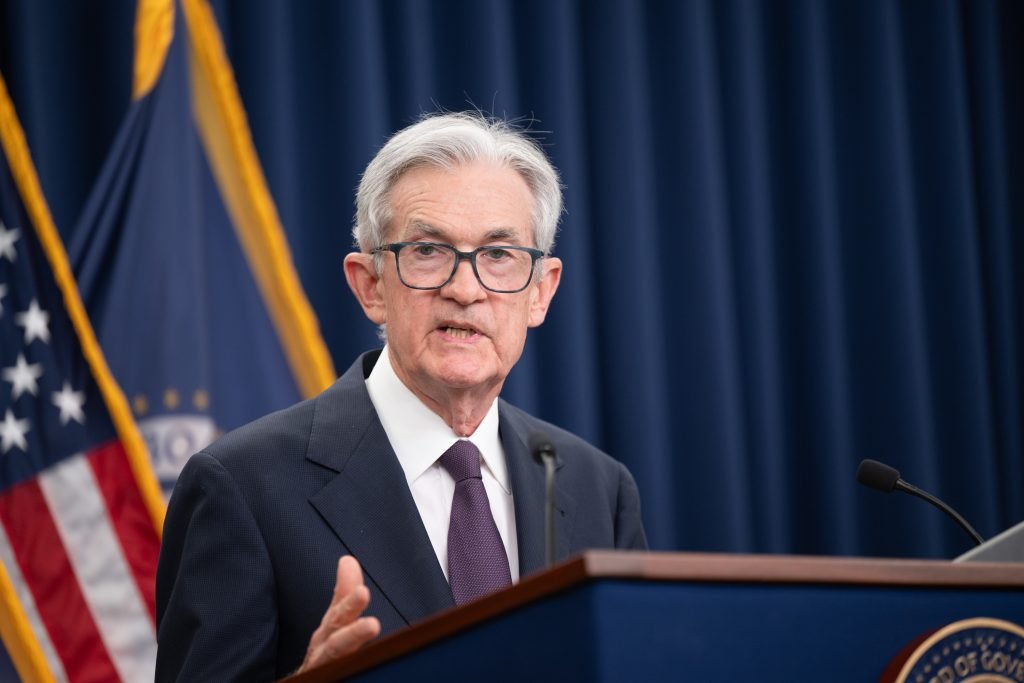
The Federal Reserve’s Stance: In response to this environment, the Federal Reserve has adopted a posture of resolute patience. After a brief period of signaling a potential easing cycle in late 2024, the “higher for longer” interest rate mantra has returned. The federal funds rate remains in the 5.00% to 5.25% range, where it has been for much of the past year. Fed officials have emphasized in recent statements that they require several consecutive months of clear and convincing data showing inflation on a sustainable path back to 2% before contemplating any rate cuts. This data-dependent approach has injected a degree of uncertainty into financial markets, which are now pricing in a prolonged period of restrictive monetary policy.
A Brief History of Inflation in the United States
Understanding the current situation requires examining the nation’s varied experience with inflation.
- Post-War and the “Great Inflation” (1965-1982): Following World War II, inflation was generally moderate. However, the period from the mid-1960s to the early 1980s became known as the “Great Inflation.” This era was characterized by a confluence of factors: “guns and butter” spending on the Vietnam War and Great Society programs without corresponding tax increases, two severe oil shocks in the 1970s, and a monetary policy that was often too accommodative. Inflation became entrenched in public expectations, leading to a damaging wage-price spiral. CPI inflation peaked at 13.5% in 1980.
- The Volcker Disinflation and “The Great Moderation” (1982-2007): In the early 1980s, Federal Reserve Chairman Paul Volcker implemented a famously aggressive monetary policy, raising interest rates to unprecedented levels (the federal funds rate peaked above 20%). This induced a sharp recession but successfully broke the back of inflation and reanchored inflation expectations. The subsequent two decades, known as “The Great Moderation,” were characterized by stable growth and low, predictable inflation, generally hovering around the 2% mark.
- The Post-Financial Crisis Era (2008-2020): The 2008 Global Financial Crisis ushered in a period of persistently low inflation. Despite near-zero interest rates and multiple rounds of quantitative easing, the Fed struggled to achieve its 2% inflation target. The primary concerns during this decade were deflationary pressures, slow wage growth, and economic slack.
- The COVID-19 Pandemic and the Inflationary Surge (2021-2023): The pandemic created a perfect storm for inflation. Unprecedented fiscal stimulus (stimulus checks, enhanced unemployment benefits) massively boosted consumer demand. Simultaneously, global supply chains were severely disrupted by lockdowns and logistical bottlenecks. This collision of supercharged demand and constrained supply sent inflation soaring to a 40-year high of 9.1% in June 2022, prompting the most aggressive Federal Reserve tightening cycle since the Volcker era.
This historical context shows that the U.S. has navigated periods of high inflation, low inflation, and price stability. The current challenge is unique in its pandemic-related origins and the globalized nature of its persistence.
Understanding Key Economic Concepts: Stagflation and Deflation
To fully grasp the risks the Federal Reserve is managing, it is essential to understand two challenging economic scenarios: stagflation and deflation.
What is Stagflation? Stagflation is a portmanteau of “stagnation” and “inflation.” It describes a pernicious economic condition characterized by three simultaneous occurrences:
- High Inflation: Prices are rising rapidly.
- High Unemployment: The economy is not creating enough jobs.
- Stagnant Economic Growth: The overall output of the economy (GDP) is weak or declining.
Stagflation is particularly challenging for central bankers to combat because the tools used to fight inflation (raising interest rates) often exacerbate unemployment and slow economic growth. Conversely, the tools used to stimulate growth and employment (lowering interest rates) can aggravate inflation. The United States last experienced a significant period of stagflation during the 1970s. While current growth is sluggish, the labor market remains strong, indicating that the U.S. is not currently experiencing stagflation. However, it remains a persistent risk if inflation persists at high levels while the economy weakens significantly.
What is Deflation? Deflation is the opposite of inflation. It is a sustained decrease in the general price level of goods and services, meaning the inflation rate is negative. While falling prices may sound appealing to consumers, deflation is considered highly dangerous for a modern economy for several reasons:
- Delayed Spending: If consumers and businesses expect prices to be lower in the future, they tend to delay their purchases. This results in a decline in aggregate demand, which can lead to a severe economic downturn.
- Increased Real Debt Burden: In a deflationary environment, the real value of debt increases. A $100,000 mortgage is still a $100,000 mortgage, but the wages and income used to pay it are falling, making it harder to service debt. This can lead to widespread defaults and financial instability.
- Deflationary Spiral: Falling demand leads to lower production, layoffs, and lower wages, which in turn leads to even less demand and further price drops. This vicious cycle, known as a deflationary spiral, is complicated to escape. Japan’s “Lost Decades” are a modern example of the long-term struggle with deflationary pressures.
The Federal Reserve’s 2% inflation target is designed to provide a buffer against the risk of deflation while keeping inflation low enough to avoid distorting economic decisions.
Question & Answer: 10 Key Questions on U.S. Inflation in 2025
1. What is the current inflation rate? As of the latest data for June 2025, the year-over-year inflation rate, as measured by the Consumer Price Index (CPI), is 3.4%.
2. Why is inflation still above the Fed’s 2% target? The persistence is due to a combination of factors: strong consumer demand for services, sticky wage growth in a tight labor market, and a recent stabilization or slight increase in global energy and commodity prices. This makes the “last mile” of disinflation particularly challenging.
3. What is the Federal Reserve’s current policy on interest rates? The Fed is currently holding the federal funds rate steady in a target range of 5.00% to 5.25%. After hinting at potential cuts in late 2024, the central bank has reverted to a cautious, data-dependent stance, emphasizing the need for more evidence that inflation is sustainably declining.
4. How does the current inflation affect the average American household? Households are experiencing a mixed impact. While wage growth for many has been strong, it is often barely keeping pace with, or is being eroded by, the cost of living, particularly for essentials such as housing, insurance, and food. Furthermore, high interest rates make borrowing for major purchases, such as homes, cars, and education, significantly more expensive.
5. Are we in a recession? No. As of July 2025, the U.S. economy is not in a recession. Economic growth is sluggish, and specific sectors are contracting, but the overall economy is still expanding, and the labor market, while cooling, remains resilient with a low unemployment rate. The current situation can be best described as one of slow, below-trend growth.
6. What is the difference between CPI and PCE inflation? CPI (Consumer Price Index) measures the average change over time in the prices paid by urban consumers for a market basket of consumer goods and services. PCE (Personal Consumption Expenditures) Price Index is the Federal Reserve’s preferred measure. It has a broader scope, accounts for substitution (when consumers switch to cheaper goods), and its weights are updated more frequently. Typically, PCE inflation runs slightly lower than CPI inflation.
7. Could the U.S. enter a period of stagflation? The risk exists, but it is not the baseline scenario. Stagflation is characterized by both high inflation and high unemployment. Currently, unemployment is low. However, if the Fed’s restrictive policies were to trigger a sharp rise in unemployment while inflation remains stubbornly high, stagflation would become a more significant concern.
8. What is the outlook for the housing market? The housing market remains constrained. High mortgage rates (hovering around 7%) have locked many existing homeowners into their current, lower-rate mortgages, suppressing housing supply. This lack of supply has kept prices firm, even as high rates have reduced affordability and demand for new buyers. The market is in a state of low-volume gridlock.
9. How do global events impact U.S. inflation? International events are a key factor. Geopolitical tensions can disrupt supply chains and raise shipping costs. Decisions made by oil-producing cartels, such as OPEC+, directly influence gasoline prices. A global economic slowdown could reduce demand for U.S. exports and have a disinflationary effect, while a synchronized global recovery could boost commodity prices and add to inflationary pressures.
10. What positive signs are there in the economy? Despite the challenges, there are positive indicators. The labor market has remained strong, preventing a severe downturn. Corporate balance sheets are generally healthy. There has been significant progress in bringing inflation down from its 2022 peak. Furthermore, ongoing investments in domestic manufacturing, technology (particularly AI-driven productivity), and green energy hold the potential for long-term, non-inflationary growth.
Economic Forecast for 2026: The Path Forward
Looking ahead to 2026, the consensus among economists suggests a continued, albeit gradual, path of disinflation and economic normalization. The forecast is predicated on several key assumptions:
Baseline Scenario: A Bumpy Soft Landing The most probable scenario for 2026 is that the Federal Reserve’s tight monetary policy will gradually achieve its goal.
- Inflation: We forecast that year-over-year CPI inflation will gradually decline, reaching the 2.2% to 2.7% range by the end of 2026. This will be driven by a further softening of the labor market, which will cool wage growth and services inflation. The resolution of pandemic-era supply-and-demand mismatches will also continue to contribute.
- Monetary Policy: Assuming inflation trends downward as projected, the Federal Reserve is expected to begin a cautious and shallow rate-cutting cycle starting in early to mid-2026. The pace will be measured to normalize policy without reigniting inflation. The federal funds rate could end 2026 in the 3.75% to 4.25% range.
- Economic Growth: GDP growth is likely to remain below its long-term trend, hovering around 1.5% to 2.0%. The economy will feel sluggish, but a deep recession is expected to be avoided. The unemployment rate is projected to tick up modestly, possibly settling in the 4.0% to 4.5% range, which remains historically low.
Key Risks to the Forecast:
- Upside Inflation Risk: An unforeseen geopolitical shock, particularly in energy or food markets, could disrupt the disinflationary trend and prompt the Fed to maintain higher rates for an even more extended period, thereby increasing the risk of a recession.
- Downside Growth Risk (Hard Landing): The cumulative effect of sustained high interest rates could eventually “break” something in the economy, leading to a more rapid deterioration in the labor market and a more pronounced economic contraction than forecasted.
- Productivity Boom: A more optimistic risk is that recent investments in technology, particularly artificial intelligence, could begin to yield significant productivity gains. This would enable stronger economic growth and higher wages without fueling inflation, creating a path for a truly “soft” and prosperous landing.
Conclusion
The United States economy in July 2025 is at a critical juncture. The war against the high inflation of 2022 has been essentially won, but the final battle to achieve price stability is proving to be a persistent campaign. The current environment, characterized by 3.4% inflation, sluggish growth, and high interest rates, demands careful navigation from policymakers, strategic planning from businesses, and continued resilience from consumers. The path to 2026 appears to be one of gradual normalization, but the journey will remain subject to both domestic and global uncertainties. The era of easy money and benign inflation that characterized the 2010s is firmly in the past; the “new normal” is an environment that requires a constant and vigilant focus on the fundamental goal of a stable and prosperous economy.
