


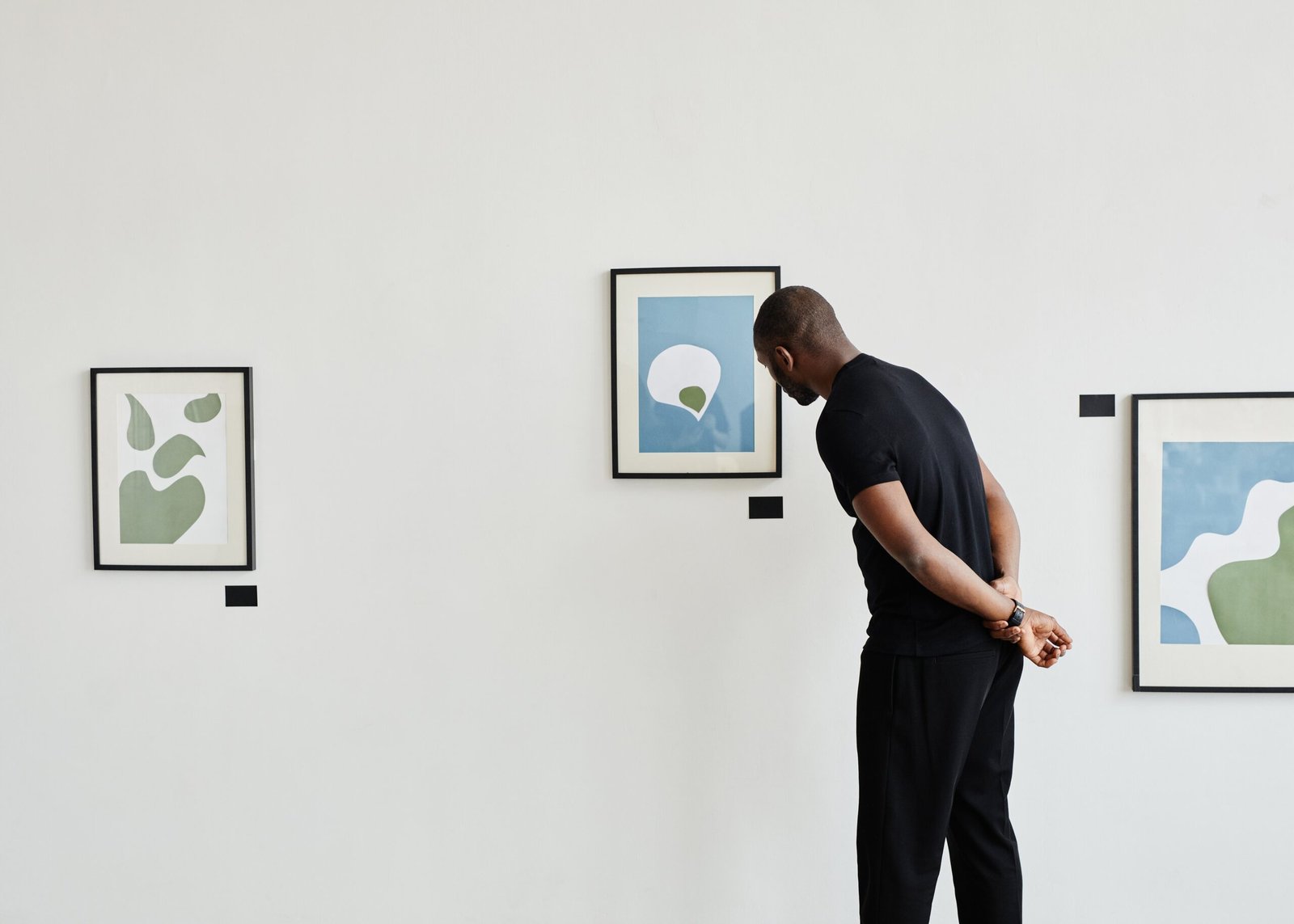
Subheadline: In a new Chelsea exhibition, the longtime landscape painter transforms rivers, moonlit skies, flowers, and familiar scenery into expressive arrangements of color, rhythm, and abstraction.
NEW YORK — Nature rarely stands still, yet John Evans’s paintings invite viewers to experience it as a moment of quiet contemplation. In The Shape of Stillness, on view at Gallery Henoch from October 15 through November 7, 2026, the artist presents new paintings that move between recognizable landscapes and increasingly abstract visual forms. Rivers become sweeping curves, trees dissolve into marks, and flowers develop into rhythmic patterns across the canvas.
The exhibition brings together landscapes, waterways, moonlit scenes, and botanical subjects, reflecting Evans’s continuing interest in how the natural world can be translated into the language of painting. Rather than reproducing every detail of a place, he distills its visual character into color, shape, line, and movement.
The result is a body of work that remains connected to the experience of looking at nature while allowing the paintings to develop an independent visual life.
Between the observed world and abstraction
Evans has worked as a landscape painter for more than four decades. Over that period, his approach has increasingly moved away from straightforward description toward a more reduced interpretation of his subjects. In The Shape of Stillness, this shift is particularly apparent in the relationship between identifiable natural forms and the geometry they create.
A winding river, for example, can remain recognizable as water while becoming a pale blue curve cutting through fields of green. A moon may appear as a circle or a softened presence against a darkened sky. The natural subject supplies the initial structure, but the painting’s color relationships and composition become equally important.
In Blackstone, the curve of a tributary establishes a strong visual line across the landscape. Its significance lies not only in the water it represents but also in the way it interrupts the surrounding fields. The river becomes both a feature of a place and an organizing element within the composition.
Other works approach the landscape through the changing presence of light. In Dark Beauty, the moon and its hazy reflection are softened toward abstraction. Instead of presenting a sharply defined celestial image, Evans allows atmosphere and color to carry the scene.
These paintings ask viewers to consider how much information is necessary for a landscape to remain emotionally and visually recognizable. Evans preserves enough detail to suggest a familiar world, while simplifying other elements until they begin to function as independent forms.
A painting process built on discovery
Evans’s method is physical and intuitive. He brushes, scrapes, rolls, sands, draws, covers, and uncovers the painted surface, sometimes setting a work aside for weeks or months before returning to it. Images may emerge, disappear, and reappear in altered form as the painting develops.
“The landscape gives me a place to begin,” Evans writes, “but once I’m working, the painting develops a life of its own.”
That distinction is central to the exhibition. The natural world provides an initial point of departure, but the final work is shaped by the decisions, revisions, and unexpected possibilities that arise during the act of painting. The stillness suggested by the exhibition’s title is therefore not necessarily something Evans seeks to reproduce from the outset. It is something that can emerge through a sustained process of experimentation.
This approach also helps explain why his paintings can feel familiar and unfamiliar at once. Viewers may recognize a shoreline, a field, or a moonlit reflection, but the arrangement of forms prevents the scene from becoming a simple transcription of reality. The image retains the memory of a place while establishing its own visual logic.
Botanical forms and the rhythms of repetition
The exhibition extends this process beyond traditional landscapes. In botanical paintings such as Dance and Nothing Lost, flowers and lily pads remain identifiable, but their petals, leafy clusters, and oval outlines also operate as repeated shapes across the canvas.
Repetition becomes a way of organizing the image. A flower is not simply an isolated subject; it contributes to a larger rhythm of forms, colors, and intervals. The same principle can be found in the artist’s treatment of trees, boats, and water elsewhere in the exhibition. Details are reduced until they become visual marks, while broader areas of color establish the composition’s overall movement.
In Timeless, figures along a beach are pared down to small vertical marks set within larger expanses of color. Human presence remains part of the scene, but it does not dominate the landscape. Instead, the figures become another element in the relationship between scale, space, and the surrounding environment.
These works demonstrate how Evans moves between observation and simplification without entirely abandoning either. The viewer can still find a recognizable subject, yet the experience of looking gradually expands to include the painting’s structure and surface.
The moon, water, and the possibilities of scale
Moonlit scenes and waterways give Evans another way to explore the relationship between natural imagery and abstraction. Rivers introduce long, winding lines; the moon offers a circular form; and distant points of light can punctuate darker fields of color. Such elements lend themselves to geometric organization while retaining their association with the natural world.
Works including The Flowing Air and Marching to the Moon extend these interests across different scales and compositions. The titles suggest movement, atmosphere, and celestial distance, while the exhibition’s broader approach encourages viewers to look at the way those ideas are constructed through paint.
Across the show, large and small canvases share an interest in visual harmony. Harbors, fields, and botanical gardens remain legible, even when reduced to essential shapes and colors. The paintings do not insist on a strict division between representation and abstraction; instead, they allow the two to coexist.
A longstanding presence at Gallery Henoch
Evans earned his MFA from Boston University, and his paintings are held in public collections that include the Museum of Fine Arts, Boston; the Smithsonian American Art Museum in Washington, D.C.; the Harvard Art Museums/Fogg Museum in Cambridge, Massachusetts; and the Museum of Fine Arts, Houston. Gallery Henoch has represented the artist for more than four decades.
That long relationship provides a context for The Shape of Stillness, which presents an evolving practice rather than a departure from the artist’s established concerns. Nature remains the starting point, but Evans continues to test how far its forms can be simplified while retaining their resonance.
For visitors to Chelsea, the exhibition offers an opportunity to spend time with paintings that reward a slower kind of looking. Their subjects are accessible, but their visual relationships invite closer attention. A river’s curve, a cluster of flowers, or a blurred moon can become the beginning of a broader reflection on color, rhythm, and the act of seeing.
In The Shape of Stillness, Evans finds calm not by freezing nature into a fixed image, but by discovering order within its movement and variety. The paintings hold onto the world’s recognizable forms while allowing them to change, suggesting that stillness may be less a condition of nature than a quality that emerges when we take the time to look.
