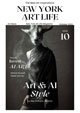


This week in New York Art Life magazine: a conversation with Korean jazz pianist Siwon Lee, whose artistry is redefining the city’s jazz landscape.
This spring, the city’s Jazz lovers have been buzzing about the performances of Korean pianist Siwon Lee, whose performances from the stages of Lincoln Center to the atmospheric confines of Dizzy’s Club have captured the attention of audiences alike.
This week, New York Art Life magazine was granted the opportunity to sit down with Lee following her headlining appearance at Dizzy’s, just days after the release of her latest album, Roots, recorded in collaboration with her acclaimed ensemble, Color Therapy.
Siwon Lee’s journey to New York began long before her arrival on its storied stages. Born and raised in Seoul, Lee discovered jazz as a teenager when she heard Oscar Peterson and Stan Getz’s classic album I Want To Be Happy. “There was a moment of absolute revelation,” Lee recalls in our interview. “The way Peterson played—so exuberantly alive, and yet so controlled—opened up a world where emotion and technique were equals. I knew from that moment that this was the journey I wanted to take.”
That inspiration led Lee to immerse herself in jazz, first as a devoted listener and then as a dedicated student. Her first album, Toward Myself, released shortly after her move to New York, is a meditation on self-discovery. Comprised primarily of original compositions, the album charts Lee’s emotional and musical growth, mapping the internal landscapes she traversed as she embarked on her path as a jazz artist far from home. The result is a collection of pieces that are meditative, often understated, yet always deeply personal, earning praise for their honesty and sophistication from both Korean and American jazz circles. A New Chapter: “Roots” with Color Therapy. On stage, her presence is at once commanding and inviting; she exhibits the calm confidence of a seasoned bandleader and the sensitivity of an artist genuinely searching for connection within each moment of improvisation.
“What’s striking about Siwon is her ability to be at home in multiple traditions,” wrote one reviewer after her Dizzy’s Club debut. “She’s an artist who listens deeply to her band, to her audiences, and to history itself.”
New York Art Life: What experiences or emotions from your 20s shaped the narrative of “Toward Myself,” and how did you translate those into musical compositions?
Siwon Lee: In my early 20s, I spent most of my energy trying to stay busy and avoid personal struggles, often worrying about how others perceived me. Practicing was difficult because it forced me to face my challenges, which I wasn’t ready to face. That changed in my mid-20s when I was diagnosed with cancer at the same time as my mother with COVID. Navigating that experience on my own taught me the importance of self-care and facing reality head-on.
After that, I began to focus inward, letting go of others’ opinions and reconnecting with music in a sincere, almost childlike way—sometimes practicing in the dark just to listen closely to the sounds. This approach became central to my compositions on “Toward Myself,” turning struggle into a source of personal growth and musical expression. I truly believe every struggle brings its own blessing, and that sentiment is woven throughout the album.
New York Art Life: The Toward Myself album’s title suggests introspection—how did your relationship with jazz evolve during its creation, compared to when you first discovered Oscar Peterson and Stan Getz?
Siwon Lee: The first time I heard Oscar Peterson and Stan Getz, I was immediately struck by how “cool” their music sounded. I wanted to be just like them—chasing that sense of coolness and trying to play as many impressive lines as possible, without fully understanding the roots or the deeper history of jazz. Creating Toward Myself marked a turning point in my journey. Thanks in large part to my mentor, Jon Faddis, I began to study jazz’s rich heritage and really immerse myself in its traditions. This process deepened my appreciation and connection to the music, transforming jazz from something I admired on the surface into a much more meaningful, personal form of expression rooted in respect for its history.
New York Art Life: Regarding your band album “Roots,” how did disagreements or creative debates during the arranging process ultimately strengthen the final product?
Siwon Lee: In the process of arranging “Roots,” we encountered many differing opinions within the group. Each member often had a distinct vision—sometimes preferring one approach over another—and these differences sparked a lot of discussion. However, we always prioritized respect for the original composer’s intentions. We would experiment with suggestions from the group, and if the composer liked the direction, we’d incorporate it; if not, we accepted their decision without issue. This open yet respectful dynamic meant that every piece maintained its own unique character, reflecting the voice of its composer while also benefiting from the collective creativity of the group. Ultimately, these debates pushed us to be more thoughtful and collaborative, which made the final album stronger and more diverse.
New York Art Life: What’s one unforgettable moment from your Birdland shows that still resonates with you today? (For our readers: Birdland Jazz Club is the temple of jazz, graced by legends like Maxie Kaminsky, Hot Lips Page, Lester Young, Charlie Parker, and frequented by icons such as Frank Sinatra, Marilyn Monroe, and Judy Garland.)
Siwon Lee: Performing at Birdland, a place rich with jazz history and cultural icons, is always an incredible honor. One moment that stands out to me happened right before a show. I had recently discovered a new “cool” musical idea and, excited by it, I decided I wanted to showcase it on stage—even though I hadn’t truly made it my own through practice. When I tried to force it during my performance, I found myself struggling, and it actually affected my playing negatively. That experience was a powerful lesson: you can’t force something just because you think it sounds impressive or cool. Authenticity comes naturally when you truly internalize the music. Since then, I’ve focused on being present and true to myself on stage, trusting that genuine expression will always connect with the audience more than anything rehearsed for appearance’s sake
New York Art Life: Playing at Dizzy’s Club places you in a lineage of jazz legends. Did that history influence how you approached your sets there?
Siwon Lee: Absolutely, the rich history of Dizzy’s Club and its association with so many iconic figures in jazz has had a profound impact on how I approach every performance there. When you step onto that stage, you’re not just performing for the present audience, you’re also keenly aware of the immense legacy that surrounds you. While performing with Jazz at Lincoln Center, I had the privilege of playing a repertoire that spans classic charts by giants like Count Basie, Duke Ellington, and Thad Jones. Immersing myself in their works gave me invaluable insight into their unique approaches to rhythm, harmony, and ensemble interplay.
This experience acted as a foundation from which I could both honor tradition and also find my own voice. Understanding how these legends constructed their music and led their bands inspired me to think more deeply about arrangement, dynamics, and the energy I bring to each set. I became especially attentive to the ways in which these masters communicated with their fellow musicians—sometimes subtly, sometimes boldly—to create unforgettable moments on stage.
Additionally, playing such historically significant material in an iconic venue like Dizzy’s truly resonates with me. It pushes me to be authentic and to bring a heightened sense of respect and intention to every performance. I see myself as both a student and a contributor to this ongoing tradition: I embrace what has come before me, allow it to inform my interpretations, and then strive to add something personal and contemporary to the tapestry of jazz.
New York Art Life: Your 2025 calendar includes diverse venues like Silvana and KGB Bar. How do you adapt your sound or setlist for these different spaces?
Siwon Lee: Each venue offers its own unique atmosphere and audience, so I adapt by being flexible both in my role and my approach. Sometimes I’m performing as a bandleader, and other times as a sideman, which requires me to understand and align with the bandleader’s vision and the group’s overall style. While my setlist doesn’t change dramatically, my style of playing often does. I’m particularly influenced by the drummer—if the drummer plays with a more flowing, organic feel, I tend to match that with a more fluid approach myself. If the drummer is driving and focused on swing, I respond by emphasizing rhythm and time in my playing. Ultimately, adapting to the specific energy of each space and collaborating with fellow musicians is key to creating a memorable performance, regardless of the venue.
New York Art Life: Siwon, you played in the house band for the Latin Jazz Festival at Purchase Performing Arts Center dedicated to Eddie Palmieri. What was that experience like?
Siwon Lee: It was truly inspiring. Eddie Palmieri’s fusion of Latin music and jazz is legendary, and being part of a tribute to him deepened my appreciation for this rich musical tradition. Performing his music required both technical precision and emotional connection.
New York Art Life: You also performed alongside Ray Vega, a renowned trumpeter associated with Tito Puente. How did that collaboration influence you?
Siwon Lee: Playing with Ray Vega was an honor. His deep understanding of Latin jazz and his expressive playing taught me a lot about phrasing and groove. It was an invaluable experience to share the stage with someone so connected to the roots of the genre.
New York Art Life: Winning the 2014 Kyung-Hee University Jazz Competition (1st Prize) early in your career—did it solidify your path in jazz, or did it add pressure to meet expectations?
Siwon Lee: At that stage, I had just begun exploring jazz and, honestly, I lacked confidence in my playing and wasn’t sure if I was truly on the right path. Winning the Kyung-Hee Jazz Competition was a pivotal moment for me. It gave me a real sense of validation and assurance that I could pursue jazz seriously. Rather than feeling external pressure, the experience instilled self-belief and helped me commit more fully to developing my voice as a jazz artist. It was an important milestone that solidified my decision to walk this musical path.
New York Art Life: What advice would you give to young musicians entering competitions today?
Siwon Lee: My advice to young musicians entering competitions is to truly be yourself. Focus on educating and developing your skills for your own growth, not just to impress the audience or judges. When you are authentic and passionate about your craft, your individuality and artistry will naturally shine through. Competitions are just one step in your journey—trust your unique voice and let your genuine love for music lead the way.
New York Art Life: How do you approach balancing technical instruction with the emotional storytelling of jazz in educational settings?
Siwon Lee: I view jazz much like learning a new language. The more vocabulary and phrases you have, the more effectively you can express your ideas. In jazz, understanding and internalizing the roots and traditions of the music is just as important as developing your own authentic voice. When teaching, I encourage my students to immerse themselves in the fundamentals—chords, scales, classic recordings—so they can build a solid technical foundation. At the same time, I emphasize the importance of personal interpretation and emotional expression. As students gain experience and knowledge, emotional storytelling will come more naturally. Ultimately, my goal is to empower students to play the music they connect with and want to share, balancing technical skill with genuine emotion and creativity.
New York Art Life Magazine: The Neuberger Museum of Art, located at the heart of Purchase College and housing nearly 7,000 works of modern, contemporary, and African art, is one of the nation’s premier academic museums. How did being surrounded by such a diverse and dynamic collection of visual art influence your trio’s approach to improvisation and the selection of your setlist?
Siwon Lee: Performing at the Neuberger Museum was incredibly inspiring for me and my trio. The presence of diverse visual art encouraged us to be more creative and to challenge ourselves musically in the moment. The environment naturally sparked new ideas during our improvisation, pushing us to experiment more with our sound and interact in fresh ways. Additionally, the audience was filled with people who were passionate about art—they were enthusiastic and very supportive, responding openly to our music. That energy from the visual works and the people made the experience exciting and helped us fully enjoy and immerse ourselves in each performance.
New York Art Life Magazine: What would you say to someone who feels disconnected from themselves, urging them to explore jazz as a tool for healing?
Siwon Lee: Whether you play it or listen, jazz requires a particular vulnerability and openness to the present moment. One of the healing powers of jazz is its incredible diversity—there are so many distinct styles, from traditional New Orleans jazz to very modern expressions. Sometimes it’s hard to believe that these completely different sounds all belong to the same genre, but that’s what makes jazz so special: every style is its unique conversation.
If you’re feeling disconnected from yourself, I would encourage you to explore the different branches of jazz and find a style that truly resonates with you. Allow yourself to listen deeply or even try playing—don’t worry about being perfect. The act of engaging with jazz can help you reconnect, be present, and experience the joy of genuine expression and interaction. Just dive in and let the music guide you—over time, you may find it’s a powerful tool for healing and self-discovery.
Read Also:
A Music Lover’s Comprehensive Guide to the Best Jazz Bars in NYC
Why Taylor Swift’s ‘Tortured Poets’ Vinyl Is a Must-Have for Fans
