


Organic compounds discovered in NASA’s Bennu asteroid sample mark a historic breakthrough in space exploration. Indeed, this remarkable finding represents the first-ever detection of complex carbon-based molecules from an asteroid sample returned to Earth. The analysis of material collected by the OSIRIS-REx mission has revealed an unprecedented wealth of chemical compounds. Specifically those essential for life as we know it. Furthermore, these samples contain valuable clues about the early solar system’s composition and potential role in delivering life-building materials to Earth. This groundbreaking discovery not only advances our understanding of asteroid composition. But also provides crucial insights into the fundamental question of how life might have emerged in our cosmic neighborhood.
Groundbreaking Sample Analysis Results
Laboratory analysis of the Bennu samples has revealed an extensive array of organic compounds essential for biological processes. Scientists identified 14 of the 20 amino acids necessary for protein formation in terrestrial life 1. Additionally, researchers discovered thousands of nitrogen-bearing chemical species, along with crucial organic molecules including amines, formaldehyde, carboxylic acids, and polycyclic aromatic hydrocarbons 1.
Key organic compounds identified
The samples contained a diverse mixture of carbon-based molecules, with approximately 10,000 nitrogen-bearing chemical compounds detected 1. Laboratory tests revealed the presence of formaldehyde and various organic acids, primarily formed through low-temperature reactions 1. These compounds demonstrate remarkable chemical diversity, suggesting complex organic chemistry occurred on the asteroid.
Unprecedented ammonia concentrations
The analysis uncovered extraordinarily high levels of ammonia in the Bennu samples. Scientists measured concentrations of approximately 230 parts per million, which stands roughly 100 times higher than natural soil levels found on Earth 1. The hot-water extract showed significant nitrogen-15 isotopic enrichment, with ammonia comprising about 40% of the total nitrogen content 1. These findings suggest the compounds formed in extremely cold conditions, potentially in regions beyond Saturn’s orbit 1.
DNA and RNA building blocks discovered
Perhaps most significantly, researchers identified all five nucleobases essential for DNA and RNA formation – adenine, guanine, cytosine, thymine, and uracil 1. The total abundance of these nitrogen-containing heterocycles measured approximately 5 nanomoles per gram, marking a 5-10 times higher concentration than previously found in other asteroid samples 1. The presence of these genetic building blocks in pristine asteroid material provides compelling evidence about potential chemical pathways for life’s emergence.
The chemical composition analysis revealed that these compounds likely formed in a cold molecular cloud or the outer regions of the early solar system 1. The relative abundances of amino acids and other soluble organic molecules point toward formation through low-temperature reactions, possibly involving ammonia-rich fluids 1.
Technical Achievement of Sample Collection
The OSIRIS-REx spacecraft accomplished a remarkable feat of engineering precision in collecting and returning samples from asteroid Bennu.
OSIRIS-REx mission overview
The Origins, Spectral Interpretation, Resource Identification, and Security-Regolith Explorer launched on September 8, 2016 1. Subsequently, the spacecraft reached Bennu on December 3, 2018, where it began analyzing the asteroid’s surface for suitable sampling locations 1. The mission achieved its primary objective on October 20, 2020, when it successfully collected surface material through a precise “Touch-And-Go” maneuver 1. The sample return capsule parachuted safely to Earth on September 24, 2023, landing at the Department of Defense’s Utah Test and Training Range 1.
Sample preservation challenges
The curation process presented unique challenges due to the abundance of collected material. The initial processing revealed 2.48 ounces (70.3 grams) of rocks and dust from the sampler hardware, surpassing NASA’s target of 60 grams 1. Moreover, scientists discovered bonus asteroid material covering the collector head, canister lid, and base 1. This unexpected abundance essentially slowed the careful containment process, as teams worked meticulously to preserve every particle.
Advanced analysis methods
The analysis process employed multiple sophisticated techniques:
- Scanning electron microscopy for detailed imaging
- Infrared measurements for molecular identification
- X-ray diffraction for structural analysis
- 3D computer modeling through X-ray computed tomography 1
The Johnson Space Center established specialized clean rooms equipped with custom-designed gloveboxes and tools to maintain sample pristinity 1. Meanwhile, a cohort of more than 200 scientists worldwide participated in the analysis program, primarily focusing on the regolith’s properties 1. NASA plans to preserve at least 70% of the sample at Johnson Space Center, ensuring material availability for future research generations 1.
The mission’s success relied heavily on advanced navigation techniques, combining traditional Deep Space Network radio metric tracking with spacecraft-based laser ranging and optical landmark tracking 1. This integrated approach enabled precise maneuvering during the critical sample collection phase, demonstrating unprecedented accuracy in asteroid proximity operations.
Evidence of Ancient Water Activity
Analysis of Bennu’s samples has unveiled compelling evidence of ancient water activity, particularly in the form of preserved briny environments dating back 4.5 billion years 1. These findings offer unprecedented insights into the asteroid’s watery past and its potential role in early solar system chemistry.
Briny environment indicators
Scientists discovered traces of 11 distinct minerals that formed as part of an ancient briny mixture 1. These minerals emerged through a complex evaporation process, rather similar to how salt deposits form in modern-day settings. The analysis revealed that these briny environments became increasingly sodium-rich over time 1. Notably, the samples contained sodium carbonate compounds, including trona, marking the first-ever detection of these minerals in extraterrestrial samples 1.
Mineral composition analysis
The sample analysis revealed a diverse mineral assemblage:
- Water-rich clay minerals
- Sulfide compounds
- Carbonate formations
- Iron oxide minerals
- Phosphate-rich deposits 1
Particularly significant was the discovery of calcite, halite, and sylvite, which formed through the gradual evaporation of salt-containing water 1. These minerals preserved an evaporation process that might have lasted thousands of years or more 1. The presence of abundant phosphate minerals holds special significance, as these compounds play crucial roles in biological processes on Earth 1.
Comparison with Earth’s early conditions
The salty crystals discovered in Bennu’s samples bear striking resemblance to sodium-rich crusts found in Earth’s dry lakebeds, particularly those at Searles Lake in California 1. Nevertheless, Bennu’s ancient brines exhibit distinct characteristics, primarily an unusually high abundance of phosphorus coupled with a notable absence of boron 1. These chemical signatures differ from Earth’s modern soda lakes, consequently providing unique insights into early solar system conditions.
The mineral formations indicate that Bennu’s parent body contained an extensive network of underground water bodies 1. Although similar briny mixtures exist elsewhere in our solar system, particularly on Saturn’s moon Enceladus and the dwarf planet Ceres 1, the completeness of Bennu’s evaporite sequence makes it exceptionally valuable for scientific study. Scientists noted that these minerals demonstrate remarkable sensitivity to water exposure, as they deteriorate even upon contact with minimal atmospheric moisture 1.
Implications for Origin of Life Theories
The discovery of diverse organic compounds in Bennu’s samples strengthens the hypothesis that asteroids played a crucial role in delivering life’s building blocks to Earth. The findings reveal that carbonaceous asteroids contained essential organic materials from the solar system’s earliest days 1.
Asteroid delivery hypothesis
The analysis supports the theory that space rocks brought vital chemicals to Earth through ancient cosmic collisions 1. Scientists found that water-rich asteroids commonly produced these elements, suggesting they delivered both water and prebiotic organics to Earth, Mars, and other planetary bodies 1. The presence of all five nucleobases necessary for DNA and RNA formation, along with 14 of the 20 amino acids found in proteins, provides compelling evidence for this delivery mechanism 1.
Chemical evolution insights
The samples demonstrate that complex chemical processes occurred in the cold regions of the early solar system 1. Primarily, the discovery of abundant phosphate minerals, crucial for biological processes, indicates that fundamental life-building reactions could take place in asteroid environments 1. In fact, the presence of magnesium-sodium phosphates suggests conditions favorable for concentrating these essential elements 1.
The analysis revealed that these chemical building blocks existed in the solar system practically from its formation 1. Hence, the basic molecules required for life were present much earlier than previously theorized. The samples contained thousands of organic compounds, therefore providing unprecedented insight into the chemical diversity available for life’s emergence 1.
Early solar system conditions
The research indicates that conditions necessary for life’s emergence were widespread across the early solar system 1. Similarly, the presence of briny environments and organic compounds suggests that chemical evolution could have occurred in multiple locations beyond Earth 1. The samples showed that Bennu’s parent body likely contained extensive water bodies, creating environments suitable for organic chemistry 1.
The findings indicate that these compounds formed in extremely cold conditions, potentially in regions beyond Saturn’s orbit 1. Accordingly, this suggests that the building blocks for life could be more common throughout the solar system than previously understood 1. The presence of volatile ammonia and other compounds points toward formation in the outer solar system, where temperatures were sufficiently low to preserve these delicate molecules 1.
Future Research Directions
Scientists worldwide currently analyze the precious Bennu samples, with extensive research plans extending decades into the future. NASA will preserve approximately 70% of the collected material at Johnson Space Center for future studies 1.
Remaining sample analysis plans
Presently, researchers are completing the disassembly of the Touch-and-Go Sample Acquisition Mechanism (TAGSAM) head to access the remaining rocks and dust 1. Soon, image specialists will capture ultra-high-resolution pictures of the sample while it remains inside the TAGSAM head 1. The curation team plans to release a comprehensive catalog of the OSIRIS-REx samples this spring, making it available to the global scientific community 1.
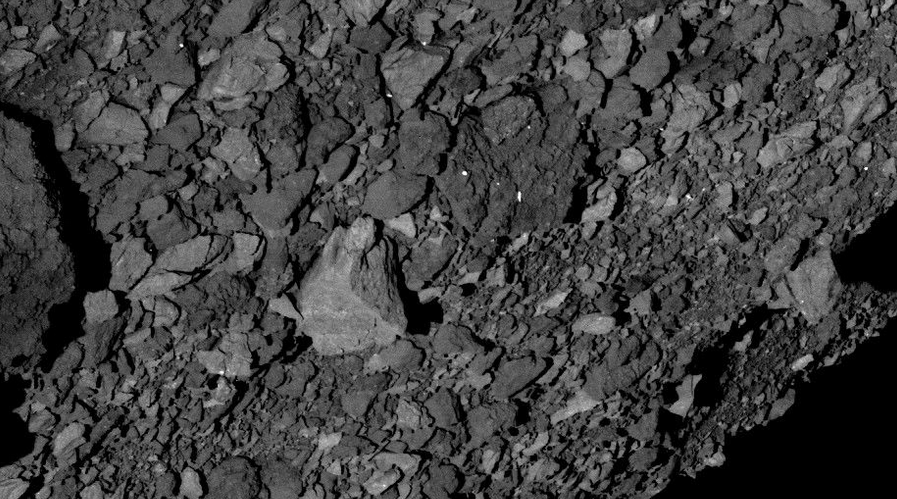
A cohort of more than 200 scientists worldwide will explore the regolith’s properties, primarily focusing on collaboration between NASA and international partners, including JAXA and CSA 1. These studies will continue for the next two years as part of the mission’s primary science program 1.
New analytical techniques development
Forthwith, researchers are developing advanced methods to probe potential new physics using asteroid data. Scientists are utilizing ground-based tracking data combined with X-band radiometric and optical navigation tracking to explore extensions of the Standard Model of physics 1. This innovative approach could help identify possible fifth forces in the universe and search for ultralight bosons 1. The team is henceforth implementing new space quantum technologies to enhance tracking precision 1. These advancements will enable more accurate measurements and potentially lead to direct dark matter detection methods 1.
Potential follow-up missions
NASA has outlined an ambitious schedule of upcoming asteroid missions:
- Lucy: Launching in October 2021, reaching its first main belt asteroid in 2025, and exploring six Jupiter Trojan asteroids from 2027 to 2033 1
- Psyche: Set for October 2023 launch, arriving at the metal asteroid 16 Psyche in 2030 1
- OSIRIS-APEX: The spacecraft that completed the Bennu sample return is currently en route to investigate asteroid Apophis 2
The Lucy mission will study relics from an earlier era in solar system history, potentially formed beyond Jupiter’s current orbit 1. Meanwhile, Psyche will explore a unique metal asteroid approximately 130 miles in diameter, composed primarily of metallic iron and nickel 1. This mission could help scientists understand how planets and other bodies separated into their layers during early solar system formation 1. These Discovery Program class missions operate under a relatively modest budget cap of approximately $450 million 1. The missions will provide additional pieces of the puzzle in understanding how the sun and its family of planets formed and changed over time 1.
References
[1] – https://www.jpl.nasa.gov/news/nasa-selects-two-missions-to-explore-the-early-solar-system/
[2] – https://www.foxweather.com/earth-space/nasa-asteroid-sample-bennu-analysis-findings
Read also:
Air Quality in NYC: The Air We Breathe
Chung-Chiang Chen: An Exclusive Interview with Renowned Landscape Designer.
