


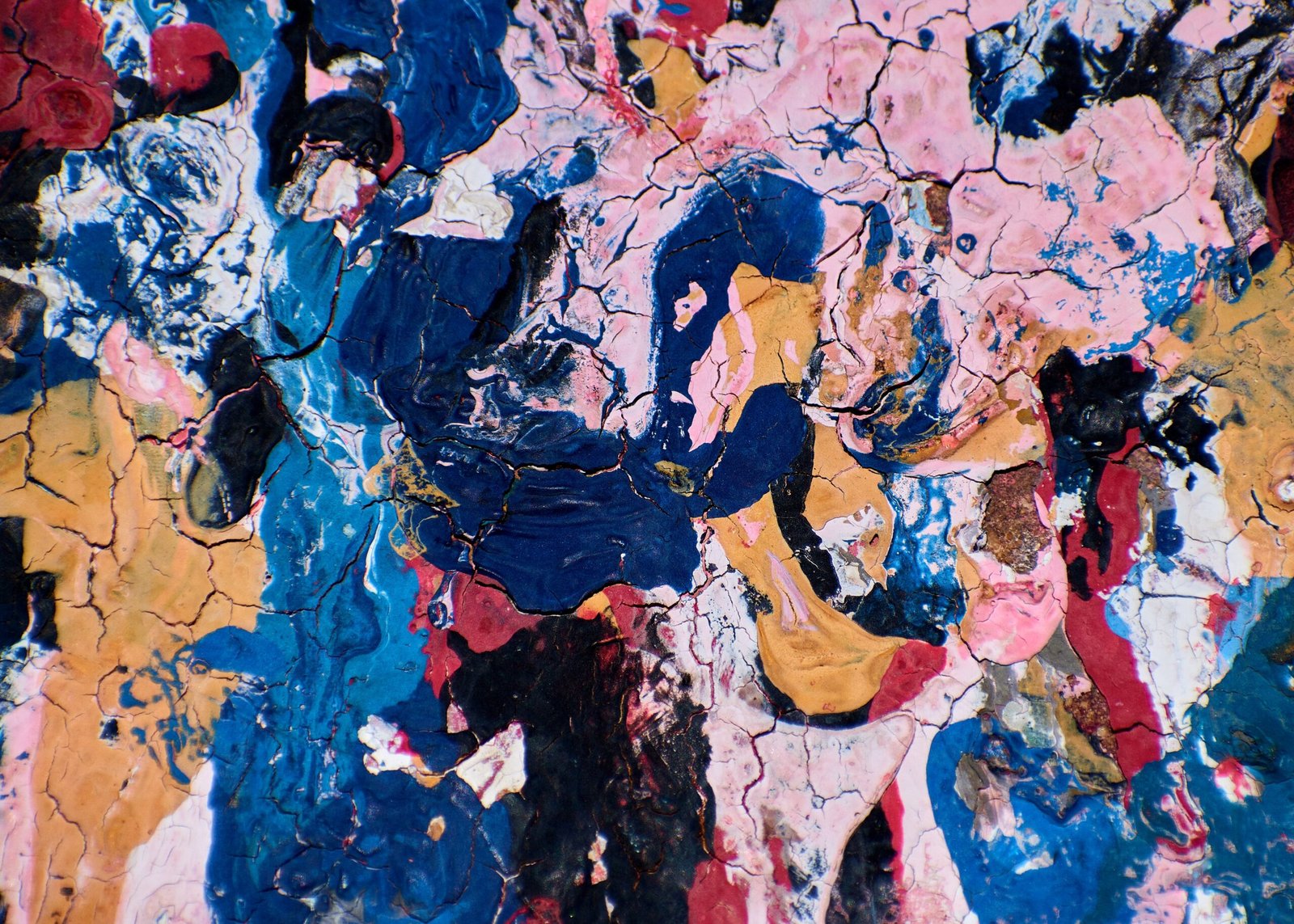
Subheadline: Rare sketchbook pages, experimental prints, an early sculpture, and studio objects offer an unusually personal view of the Abstract Expressionist whose creative legacy transformed modern art.
Jackson Pollock is often remembered through the sweeping gestures of his poured and dripped paintings: canvases alive with intersecting lines, splashes, and seemingly limitless movement. Those works helped redefine postwar painting, turning the act of making an image into a physical performance. Yet the story of an artist cannot be contained in a handful of celebrated masterpieces. At Pace Gallery in Chelsea, Jackson Pollock: Intimate Legacy invites visitors to look beyond the familiar image and encounter a more private, exploratory side of his practice.
On view from September 11 through October 24, 2026, the exhibition brings together works on paper, sketchbook pages, silkscreens, engravings, drypoint prints, a rare sculpture, and objects from Pollock and Lee Krasner’s studio. The selection offers a portrait of an artist whose creative life extended well beyond the monumental canvases that established his reputation. <Cite refs={[“turn503993search0″,”turn503993search4”]}/>
The exhibition’s most revealing feature is its attention to the personal histories attached to the works. Some objects were kept by family members; others connect to Pollock’s experiments with drawing, printmaking, and sculpture. Together, they shift the focus from the public legend of the artist to the intimate circumstances in which art was made, handled, preserved, and passed between people.
Beyond the Drip Painting
Pollock remains a defining figure of Abstract Expressionism, the postwar movement associated with a new emphasis on abstraction, gesture, and the physical process of painting. His poured and dripped works, developed from 1947 onward, challenged conventional ideas about composition and the relationship between an artist and a canvas. Rather than treating painting simply as the representation of an external subject, Pollock made the movement of the hand and body central to the image. <Cite refs={[“turn503993search0″,”turn503993search4”]}/>
Intimate Legacy widens that picture. Its emphasis on drawings and prints demonstrates how experimentation developed across different formats, including works that were never intended to command the scale or attention of his best-known paintings.
The exhibition’s earliest work is a double-sided drawing from 1939–1940, made with graphite and orange pencil. Created during a period when Pollock was exploring symbols and forms, it provides an early glimpse of ideas that would continue to evolve throughout his career. The drawing was associated with his sessions with therapist Dr. Joseph L. Henderson, for whom Pollock brought drawings to discuss. <Cite refs={[“turn503993search0″,”turn503993search4”]}/>
Its significance lies partly in the context of its creation. Rather than functioning as a polished public statement, the drawing emerged from a private exchange. It reminds viewers that the development of an artistic language can involve uncertainty, personal reflection, and experimentation long before a work enters a gallery.
Sketchbooks and the Private Act of Making
Among the exhibition’s central attractions is a group of six framed sketchbook pages dated 1950–1954. Made with ink, ink wash, pen, and pencil on Japanese commercial airmail stationery, the pages reveal an energetic field of shapes and fluid movements. Pace identifies the sketchbook as one of only five known complete sketchbooks by Pollock, and the only one remaining in private hands. The pages in the exhibition belonged to Krasner. <Cite refs={[“turn503993search0″,”turn503993search4”]}/>
These works offer a different kind of intimacy from the large paintings. Their scale brings the viewer closer to the decisions made by the artist’s hand: a line begins, a form shifts, and a composition develops without necessarily settling into a fixed hierarchy.
The sketchbook pages also complicate the familiar notion that Pollock’s mature work emerged from spontaneous action alone. The drawings demonstrate an ongoing engagement with marks, rhythm, and visual relationships. They allow visitors to consider abstraction not as an instantly recognizable style but as a process that develops through repeated acts of looking and making.
Their history adds another dimension. Krasner’s preservation of the sketchbook connects Pollock’s artistic practice to the life they shared. The pages become evidence not only of individual creativity but also of the ways an artist’s work survives through the care and decisions of those closest to it.
Printmaking as Another Form of Experiment
The exhibition also features a complete set of six silkscreens from 1951, created as interpretations of selected works from Pollock’s Black Paintings. His brother Sanford McCoy helped select the paintings for the project. The prints demonstrate Pollock’s interest in translating the expressive energy of his work into another medium, using a photonegative process to create the images. <Cite refs={[“turn503993search0″,”turn503993search4”]}/>
The silkscreens are important because they complicate the idea that Pollock’s artistic identity depended exclusively on painting. Reproducing or reinterpreting a composition through printmaking required a different relationship to image, process, and repetition. The works preserve the force of his visual language while changing the means through which it reaches the viewer.
Another highlight is a complete suite of engravings and drypoint prints from 1944–1945, produced in the New York print workshop of Stanley William Hayter. Pollock worked directly on copper plates, using an open-ended process that reflected the improvisational qualities of his drawings and paintings. <Cite refs={[“turn503993search0″,”turn503993search4”]}/>
These prints offer a valuable counterpoint to the idea of the artist as an intuitive painter working only on canvas. They show Pollock engaging with the technical possibilities of printmaking while continuing to explore how marks could generate movement and meaning without a predetermined composition.
A Sculptor’s Early Ambition
Although Pollock became internationally known as a painter, sculpture remained part of his artistic interests. Intimate Legacy includes a 1964 bronze cast of a head based on an earlier stone sculpture. The original basalt work dates to approximately 1930–1933, during Pollock’s early years in New York, and is identified by Pace as his earliest known sculpture. <Cite refs={[“turn503993search0″,”turn503993search4”]}/>
The sculpture broadens the exhibition’s portrait of Pollock by revealing an interest in form that extends beyond the two-dimensional surface. It also places his later reputation in perspective: the artist’s path was not a straight line toward the drip paintings, but a continuing series of encounters with different materials and ways of constructing an image.
Seen alongside the drawings and prints, the sculpture reinforces the exhibition’s central idea. Pollock’s legacy is not only the result of a handful of iconic canvases. It also includes the experiments, diversions, and material investigations that helped shape his larger practice.
The Studio Objects That Make the Legacy Personal
Perhaps the exhibition’s most affecting objects are two paint-splattered stools from the studio used by Pollock and Krasner in Springs, East Hampton. Unlike a finished painting, the stools were tools of everyday working life. Their surfaces preserve traces of the environment in which the artists spent time making art. <Cite refs={[“turn503993search0″,”turn503993search4”]}/>
Their presence changes the emotional register of the exhibition. A drawing or print can be understood through composition, technique, and art history; a studio stool also carries the suggestion of physical presence. It places the artist in a room, at work, resting, thinking, and returning to a task.
These objects are not substitutes for the art itself. Rather, they add context to the process of creation. They connect Pollock and Krasner’s artistic achievements to the ordinary routines that sustained them—the hours spent in a studio, the materials left behind, and the spaces that made sustained work possible.
That emphasis on Krasner’s role in preserving objects and works is especially meaningful. The exhibition acknowledges that an artist’s legacy is rarely preserved by the artist alone. Family, partners, institutions, collectors, and archivists all influence what remains available for future generations to encounter.
Rethinking an Icon at Pace Gallery
At Pace’s 540 West 25th Street gallery, Intimate Legacy offers an opportunity to reconsider an artist whose work is often discussed in terms of scale, spectacle, and revolutionary technique. The exhibition does not diminish Pollock’s importance as a painter. It deepens the story by making room for the less monumental evidence of his creative life. <Cite refs={[“turn503993search0″,”turn503993search3”]}/>
For visitors familiar with his drip paintings, the drawings and prints provide another entry point into his practice. For those encountering his work through these lesser-seen formats, the exhibition presents a more varied account of how artistic ideas develop across time and material.
The exhibition closes on October 24, 2026, at Pace Gallery, 540 West 25th Street, New York. The gallery’s published hours are Tuesday through Saturday, 10 a.m. to 6 p.m.; visitors should confirm details before visiting. <Cite refs={[“turn503993search0″,”turn503993search2”]}/>
Ultimately, Intimate Legacy makes its strongest case through the relationship between art and the life surrounding it. The sketchbook pages, prints, sculpture, and studio stools reveal a practice shaped by experimentation and sustained attention. They also remind us that even the most influential artists leave behind evidence of private moments, unfinished thoughts, and ordinary working days.
Pollock’s legacy may be inseparable from the dramatic canvases that changed modern painting. At Pace Gallery, however, it is the smaller, more personal traces that bring the artist into focus—not as a distant icon, but as a person continually testing what an image could become.
