


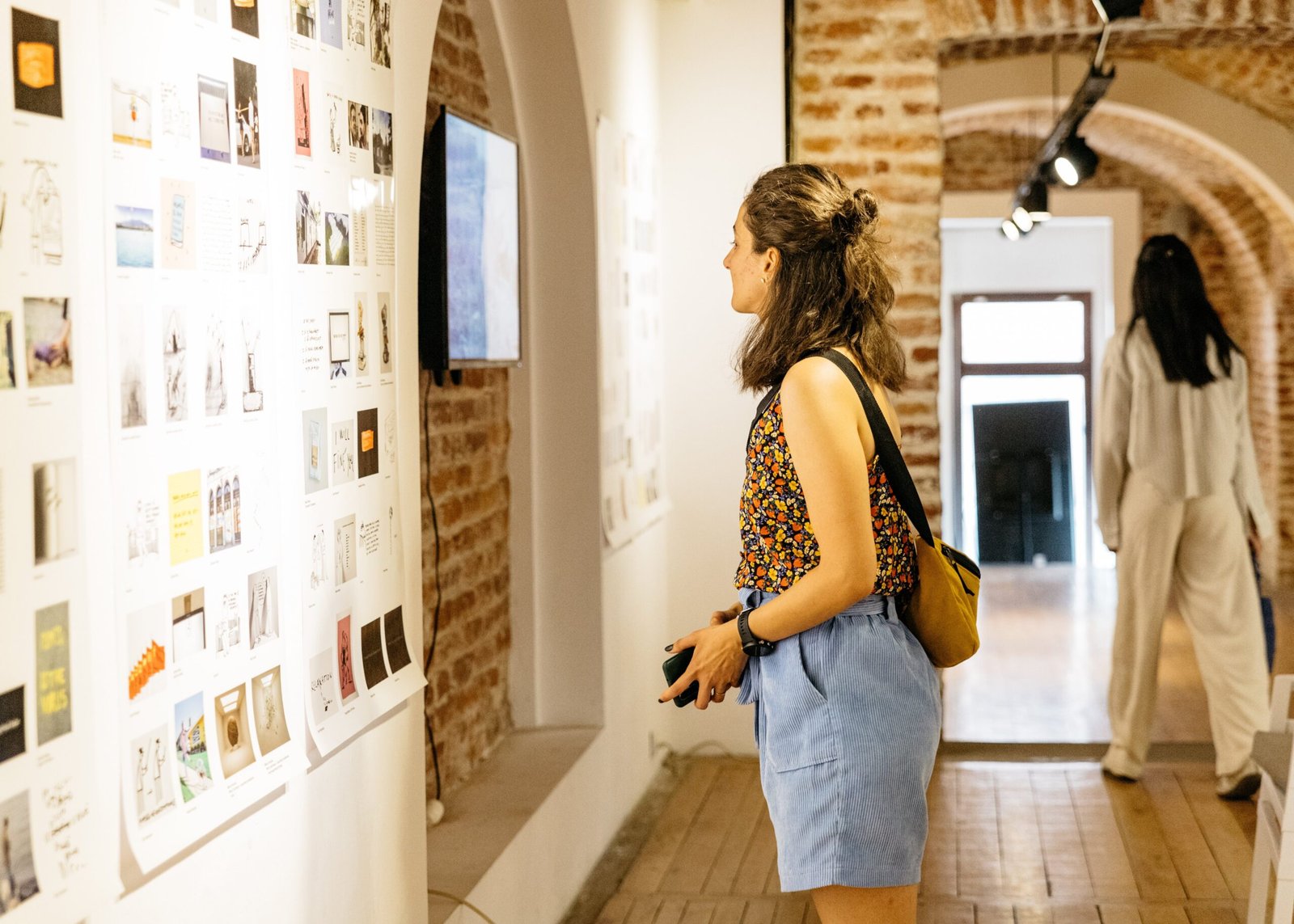
Subheadline: Featuring artists in residence Derriann Pharr, Simonette Quamina, and Taylor Simmons, the exhibition brings painting, collage, printmaking, drawing, and sculpture into a conversation about cultural memory and the evolving nature of Black artistic expression.
At the heart of artistic practice is a question that rarely has a final answer: How does the past continue to shape who we are becoming? At the Studio Museum in Harlem, A sustained becoming: Studio Museum Artists in Residence 2026 approaches that question through the work of three emerging artists whose practices explore figuration, cultural memory, and the possibilities of storytelling.
On view through January 3, 2027, the exhibition features new work by Derriann Pharr, Simonette Quamina, and Taylor Simmons. The presentation marks an important moment for both the artists and the institution: they are the first cohort in the Studio Museum’s Artist-in-Residence program to create work in the museum’s new building, using its purpose-designed residency studios. <Cite refs={[“turn794826search0″,”turn794826search1”]}/>
Rather than treating artistic development as a destination, the exhibition’s title suggests a process that remains open. Becoming is not a single transformation or a clean break from the past. It is something sustained—formed through memory, lived experience, cultural inheritance, and the uncertain possibilities of the future.
A New Chapter for a Landmark Harlem Institution
Founded in 1968, the Studio Museum in Harlem has built an international reputation for supporting artists of African descent and connecting contemporary artistic practice with broader conversations about culture, history, and community. Its Artist-in-Residence program has supported more than 150 artists of African and Afro-Latinx descent, helping establish an influential pathway for emerging practitioners. <Cite refs={[“turn794826search1″,”turn794826search0”]}/>
The 2026 exhibition carries that legacy into a new architectural chapter. The museum’s purpose-built home opened to the public in November 2025, returning the institution to its longtime location on West 125th Street with expanded spaces for exhibitions, education, and artistic development. The new building also includes the J. Bruce Llewellyn Artist in Residence Center, designed to support the museum’s signature program. <Cite refs={[“turn794826search0″,”turn794826search1”]}/>
The return of the annual residency exhibition to the museum’s own galleries is significant. During construction of the new building, the program’s exhibition was presented off-site at MoMA PS1. The 2026 presentation therefore reconnects the work of the resident artists directly with the institution that nurtured its development.
The result is more than a showcase of recent production. It demonstrates how a residency can provide the conditions for experimentation while placing individual artistic practices within a larger cultural and institutional history.
Three Artists, Distinct Approaches to Figuration
Pharr, Quamina, and Simmons work across painting, collage, printmaking, drawing, sculpture, and mixed media. Their approaches to figuration—the representation of bodies, people, and recognizable forms—offer different ways of considering how images can carry stories and preserve traces of experience. <Cite refs={[“turn794826search1″,”turn794826search0”]}/>
The museum describes the exhibition as a meeting of real and otherworldly imagery, with familiar and unfamiliar narratives emerging from the artists’ work. Memory and dreaming provide useful points of entry: both can preserve details while rearranging them, combining what is known with what remains uncertain.
That tension gives the exhibition its interpretive breadth. Figuration does not have to function as straightforward portraiture or literal documentation. A figure can suggest a remembered person, a cultural connection, a private experience, or a story that cannot be fully recovered. Images can feel recognizable without becoming entirely fixed in meaning.
The artists’ use of different media further broadens this inquiry. Painting can establish atmosphere and presence; collage can bring fragments into new relationships; printmaking and drawing can explore the possibilities of line, repetition, and mark-making; sculpture can give form a physical relationship to the viewer. These are possibilities offered by the exhibition’s varied materials rather than a single prescribed reading of each artist’s work.
Together, the practices suggest that identity is not a static image. It is assembled, revisited, questioned, and reimagined over time.
Cultural Memory as a Living Process
Cultural memory is often associated with preservation: keeping stories, images, and traditions from disappearing. In contemporary art, however, memory can also be an active process of reinterpretation. The past does not simply remain behind us; it changes as new experiences alter how we understand it.
A sustained becoming places that evolving relationship at the center of its premise. The museum notes that the works create moments of suspension in time, allowing viewers to consider what has already happened while imagining what might come next. <Cite refs={[“turn794826search0″,”turn794826search1”]}/>
This approach resists the expectation that personal or collective histories must resolve into a single narrative. Memories can be incomplete, contradictory, or shaped by the distance between an event and its later recollection. Dreams can make familiar places feel strange, while ordinary images can acquire new significance when placed in a different context.
For artists working with questions of cultural inheritance and identity, these shifts can be particularly meaningful. Images become ways to engage with histories that are both deeply personal and connected to wider communities. They can hold intimacy and ambiguity at once.
The exhibition’s title reinforces this sense of continuity. “Becoming” suggests change, while “sustained” implies duration and persistence. Together, the words point toward an understanding of creative practice in which transformation does not require abandoning what came before.
The Importance of Artist Residencies
Artist residencies occupy a distinctive place in the contemporary art ecosystem. They offer artists time, space, and institutional support to develop work, often allowing ideas to evolve beyond the demands of a conventional exhibition schedule.
At the Studio Museum, that model is connected to a longer commitment to artists of African descent. The residency program is not separate from the institution’s wider mission; it is one of the ways the museum invests in artistic careers and helps new practices enter public conversation. <Cite refs={[“turn794826search1″,”turn794826search0”]}/>
The 2026 cohort also arrives during the museum’s inaugural year in its new building. Its exhibition sits alongside other presentations that reflect the breadth of the institution’s work, including Geometries, which considers the expressive potential of form, and Dreams of This Future: The Collection of Peggy Cooper Cafritz, which highlights a major gift celebrating the collector’s support for artists of African descent. <Cite refs={[“turn794826search0″,”turn794826search1”]}/>
Seen in this context, A sustained becoming links the museum’s future-facing residency program with its ongoing work of collecting, preserving, and presenting art. Emerging artists are not positioned outside history, waiting to enter it. They are already contributing to the stories through which that history will be understood.
An Exhibition That Leaves Room for What Is Unfinished
The exhibition’s most compelling proposition may be its refusal to treat becoming as a finished state. Rather than offering a single definition of identity or memory, it creates space for images and narratives to remain open to interpretation.
That openness is also an invitation to viewers. The work asks for attention to the relationships between figure and story, the familiar and the imagined, personal recollection and shared cultural experience. The aim is not necessarily to resolve these relationships, but to stay with them long enough for new meanings to emerge.
For the Studio Museum in Harlem, this presentation demonstrates the continuing value of placing emerging artists at the center of its program. For Pharr, Quamina, and Simmons, it marks a public milestone within a larger process of artistic development.
A sustained becoming: Studio Museum Artists in Residence 2026 is on view through January 3, 2027, at the Studio Museum in Harlem, 144 West 125th Street, New York. The museum is open Wednesday through Sunday, 11 a.m.–6 p.m., with extended hours on Friday until 9 p.m. Sunday admission is free. Visitors should check the museum’s official website for current ticketing and visitor information. <Cite refs={[“turn794826search0″,”turn794826search2”]}/>
In a city whose cultural life is continually shaped by movement, memory, and reinvention, the exhibition offers a thoughtful reminder that artistic identity is not simply something inherited or achieved. It is something made and remade—over time, through practice, and in conversation with the world.
