


Five words can challenge an entire worldview. When Alfredo Jaar presented A Logo for America on a giant electronic billboard in Times Square in 1987, his message confronted a linguistic habit so common that many people barely noticed it: using the word “America” to mean only the United States.
Jaar’s intervention made that habit visible. By separating the name from the national identity it was commonly used to represent, he asked viewers to reconsider the geography, history and power embedded in everyday language. Nearly four decades later, the work remains an incisive examination of who is represented—and who disappears—when a single nation claims a name shared by an entire continent.
At Galerie Lelong in Chelsea, Alfredo Jaar: A Logo for America, 1987 revisits the origins and continuing influence of this landmark work. On view from September 10 through October 24, 2026, the exhibition brings together a newly digitized version of the original animation, previously unseen storyboard drawings, photographic presentations and later adaptations of the work across different media. <Cite refs={[“turn886383search1″,”turn886383search4”]}/>
The exhibition arrives at a particularly resonant moment, as the United States approaches the 250th anniversary of its Declaration of Independence in 2026. Against this historical backdrop, Jaar’s project asks a question that extends beyond national borders: who has the authority to define a place, and what happens when a name excludes the people it should encompass?
A Billboard Becomes a Political Space
Born in Santiago, Chile, in 1956, Jaar trained as an architect before developing an international practice spanning photography, film, installation and public art. His work frequently examines political power, inequality and the ways images influence public understanding. <Cite refs={[“turn886383search2″,”turn886383search5”]}/>
In 1982, Jaar moved from Chile to New York. Five years later, he created A Logo for America for Public Art Fund’s Messages to the Public, a series that brought artists’ animations to the Spectacolor electronic billboard in Times Square.
The project ran from April 19 to May 2, 1987, placing an explicitly political message inside one of the city’s most commercial visual environments. Instead of advertising a product, Jaar used the billboard to question a cultural assumption. <Cite refs={[“turn886383search4”]}/>
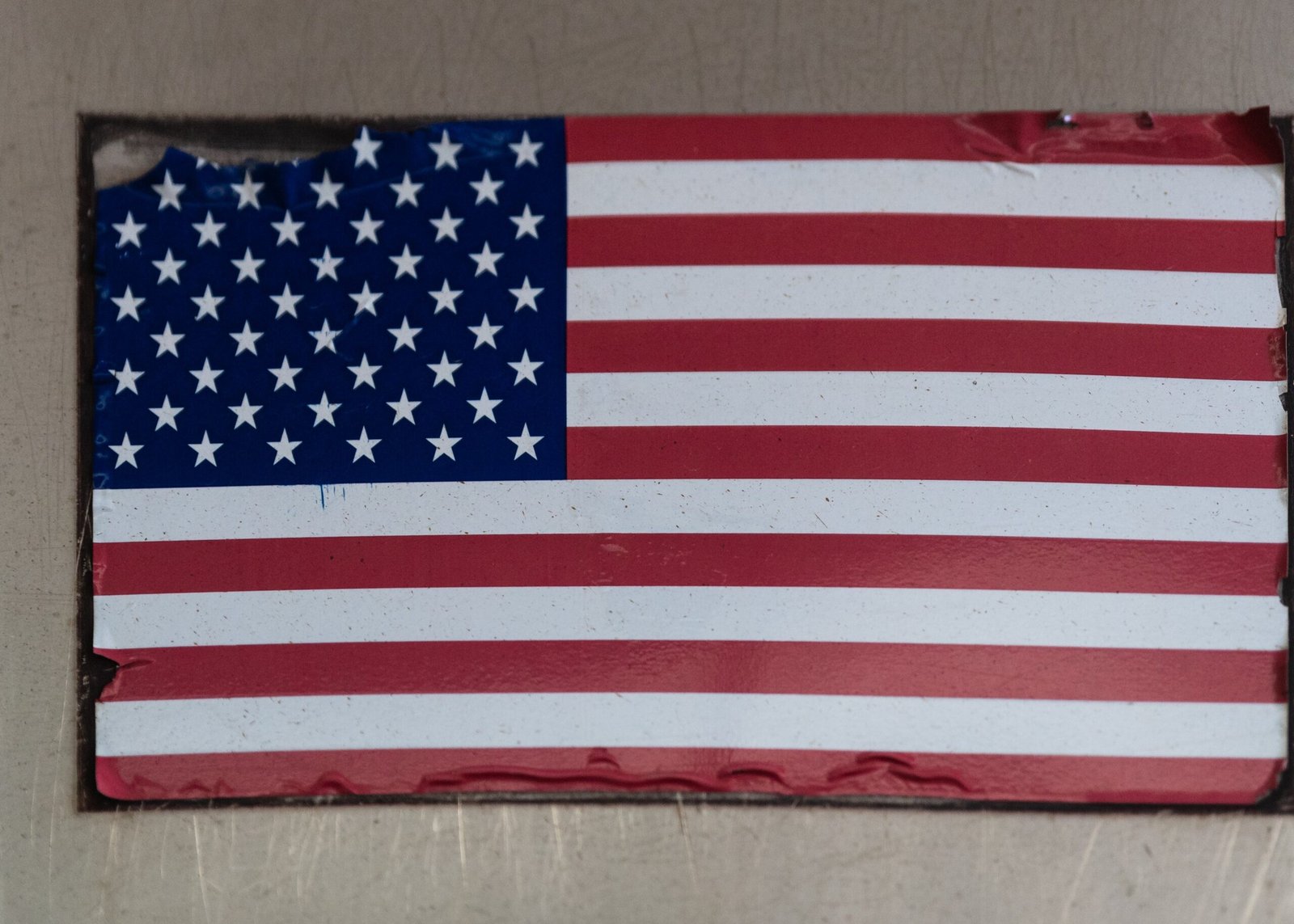
The animation begins with a map of the United States, followed by the words “This Is Not America.” The American flag appears next, accompanied by the statement “This Is Not America’s Flag.” As the sequence progresses, the word “America” expands, and its letter “R” transforms into a map of North and South America. The final image connects the name to the wider Western Hemisphere rather than a single country. <Cite refs={[“turn886383search4″,”turn886383search2”]}/>
The visual language is deliberately direct. Maps, flags and words are recognizable symbols, and the billboard’s brief duration gives viewers little time to ignore the message. Yet the simplicity is deceptive. By rearranging familiar signs, Jaar exposes how national identity can become embedded in language until an exclusionary assumption feels natural.
The Politics Hidden in a Word
In everyday speech, “America” is frequently used as shorthand for the United States. But the Americas encompass a much larger geography, including Canada, Mexico, Central America, the Caribbean and South America.
Jaar’s intervention asks what this linguistic shortcut makes invisible. When one country becomes synonymous with an entire region, the histories and identities of other countries can be pushed to the margins. The issue is not simply vocabulary; it is the relationship between language and geopolitical power.
For Jaar, who grew up in Chile before moving to the United States, the distinction carries particular significance. His work comes from the perspective of someone who belongs to the wider American continent but does not share the national identity most commonly associated with the word. <Cite refs={[“turn886383search4″,”turn886383search5”]}/>
The work does not require a complicated visual vocabulary to communicate its argument. Its force lies in making a familiar word strange again. Once viewers are asked to question the meaning of “America,” the term becomes a site of debate rather than a neutral label.
This strategy also reveals Jaar’s understanding of public art. A work placed in a commercial environment can interrupt the routines of consumption and redirect attention toward a political question. The billboard does not need to remove itself from the city’s visual noise; it uses that environment to reach people who may never enter a gallery.
From Times Square to the Gallery
At Galerie Lelong, the original public intervention is examined through a broader body of material. A newly digitized version of the 1987 animation is presented on a large scale within a dimly lit space. The exhibition also displays the original storyboard drawings publicly for the first time, providing insight into how Jaar developed the work’s concise sequence of images and statements. <Cite refs={[“turn886383search1”]}/>
These drawings offer more than historical documentation. They make visible the process through which a complex political argument becomes a carefully structured visual message. Each image must be legible, each transition meaningful, and each phrase capable of registering almost immediately.
Elsewhere in the exhibition, photographic suites, lightboxes and videos document the original Times Square presentation and subsequent adaptations. These include a version presented on a barge off Miami Beach and later appearances on television screens. <Cite refs={[“turn886383search1”]}/>
The changing formats demonstrate how the work’s message can travel. A billboard in Times Square, a screen on the water and a television display are different environments, each with its own audience and visual conventions. Yet the underlying question remains recognizable.
By bringing these iterations together, the exhibition transforms a brief public animation into a history of an idea—one that has continued to evolve as its political and cultural contexts have changed.
Images, Power and Public Memory
Jaar’s broader practice examines how images shape what societies acknowledge, remember or overlook. The Museum of Modern Art describes his work as an investigation into the ethics of representation and the responsibilities involved in witnessing political and humanitarian crises. <Cite refs={[“turn886383search2”]}/>
A Logo for America approaches these concerns through language and national symbolism rather than documentary images of suffering. It demonstrates that political representation begins long before a photograph is taken or a historical event is recorded. It is also present in the names used to describe places, the borders drawn on maps and the symbols treated as universal.
This makes the work especially relevant to discussions of public memory. National flags and geographic labels can appear self-evident, but they are also cultural constructions that reflect particular histories and interests. By disrupting their familiar presentation, Jaar encourages viewers to recognize the choices and assumptions behind them.
The exhibition’s inclusion of later versions is important for this reason. A political artwork does not remain fixed simply because its central message is clear. Its reception changes as it enters new contexts, and each presentation creates another opportunity to examine the assumptions it challenges.
An American Identity Still Being Negotiated
The timing of the exhibition adds another layer to its meaning. As the United States prepares to commemorate 250 years since the Declaration of Independence, questions about national identity, belonging and the meaning of citizenship remain central to public debate.
Jaar’s work does not offer a simple definition of what it means to be American. Instead, it asks viewers to notice the difference between the United States as a nation and America as a broader geographical and cultural idea.
That distinction opens a space for a more inclusive understanding of the continent. It also encourages reflection on the way national narratives are constructed and whose experiences they center.
At Galerie Lelong, A Logo for America demonstrates how an artwork created for a public billboard can sustain its urgency across generations. Its visual vocabulary remains economical, but its implications extend into language, identity, politics and the distribution of cultural recognition.
The work’s enduring strength lies in its refusal to let a familiar word pass without scrutiny. By making the name “America” visible as a contested idea, Jaar turns a fleeting public message into an invitation to rethink the map—not only the one printed on a page, but the one people carry in their minds.
