

A newly acquired cycle of 63 drawings transforms wartime memory into a silent visual narrative—moving from military pageantry to devastation, mourning, and the recurring machinery of violence.
There are stories that demand words.
And then there are experiences for which words seem inadequate.
At The Metropolitan Museum of Art this fall, Si Lewen’s The Parade confronts that second category. Presented under the title There Are No Words: Si Lewen’s Parade, the exhibition brings together all 63 drawings of Lewen’s extraordinary postwar cycle, allowing visitors to experience the work as an unfolding visual narrative rather than as a collection of individual images.
The exhibition opens October 1, 2026, and remains on view through January 5, 2027, in Gallery 690 at The Met Fifth Avenue. It marks the first public exhibition of the complete work at the Museum since The Met acquired the drawings in 2024.
Created around 1950, the drawings were shaped by Lewen’s experiences as a refugee from Nazi persecution, a U.S. Army soldier during World War II, and a witness to the aftermath of the Holocaust.
But The Parade is not presented as a conventional war documentary.
It is a wordless novel.
And its silence is part of its meaning.
A Story Without Words
Lewen himself described the structure of The Parade in remarkably direct terms: “there are no words … just the picture itself is the narrative.” The Met’s exhibition title, There Are No Words, draws from that description while also reflecting Lewen’s belief that the horrors of war ultimately resist language.
The idea places The Parade within the tradition of the European wordless novel, a form associated with artists such as Frans Masereel.
Rather than relying on captions, dialogue, or explanatory text, Lewen creates meaning through sequence.
One drawing leads to another.
Figures return.
Crowds gather.
Marching becomes movement.
Movement becomes violence.
And violence eventually becomes mourning.
The viewer has to participate in constructing the narrative.
There is no narrator explaining what happened.
The images make the argument themselves.
From Parade to Death March
The structure of the work is built around a devastating transformation.
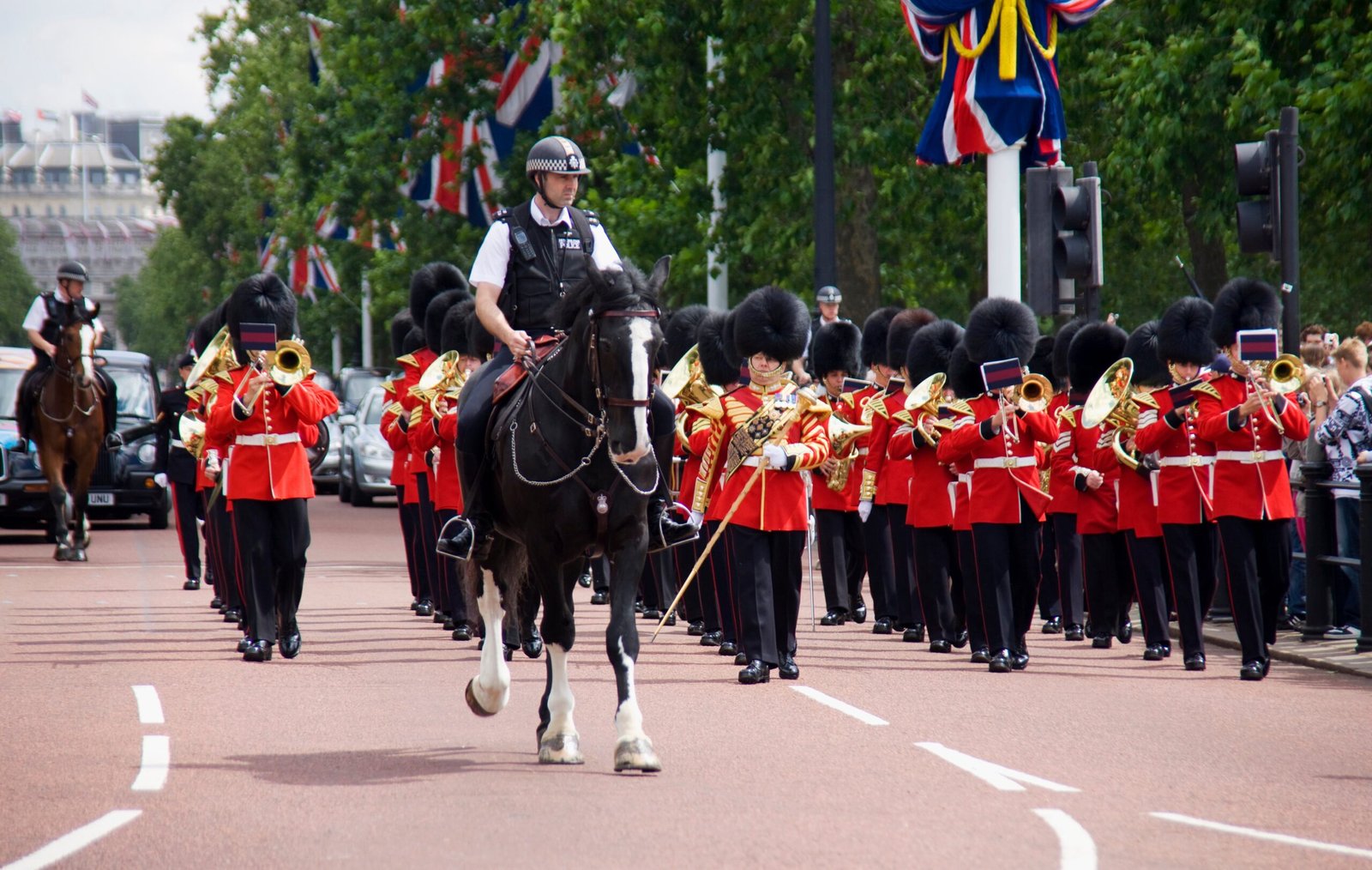
Lewen remembered the military parades he witnessed as a child in Germany. In The Parade, that visual language of organized celebration gradually mutates into something darker: the marches and mass movements associated with war and destruction.
The sequence begins with the appearance of military pageantry before progressing through conflict, devastation, and mourning. The Met describes this progression as revealing the cyclical nature of violence.
That transformation is central to the work’s power.
A parade can initially suggest order.
Uniforms suggest discipline.
Marching suggests collective purpose.
But the same visual mechanisms can also produce obedience, mobilization, and destruction.
Lewen turns the spectacle of the crowd into a meditation on how easily organized movement can become organized violence.
The Artist Who Saw War Twice
The history behind The Parade is inseparable from Lewen’s own life.
Born in Lublin, Poland, in 1918 to Jewish parents and raised in Germany, Lewen and his family fled Nazi persecution in 1933. He eventually immigrated to the United States.
During World War II, he served in the U.S. Army as one of the Ritchie Boys, a specialized group of German-speaking soldiers.
In 1945, after seeing action in Normandy, Lewen was present at Buchenwald shortly after the concentration camp’s liberation.
The experience profoundly affected him. The Met identifies it as one of the central experiences that shaped The Parade and its meditation on war, memory, and the human condition.
The work therefore occupies an unusual position.
It is historical without functioning simply as historical illustration.
It is autobiographical without becoming a conventional memoir.
And it is political without depending upon written political argument.
The artist’s experience enters through the structure of the images.
Black, White, and the Weight of the Image
Technically, The Parade is remarkably restrained.
The complete Met work consists of 63 drawings made using charcoal, pencil, crayon, ink, scratching, and hand-applied gesso on paperboard. Each panel measures approximately 13⅞ by 19¾ inches.
That limited palette is crucial.
Without color to create emotional distraction, Lewen relies on contrast, density, line, repetition, scale, and gesture.
Early scenes can feel comparatively open.
Figures are isolated.
Space remains visible around them.
As the sequence progresses, compositions become increasingly crowded and dark.
The Met’s curator Maria Castro describes the drawings as moving from sparse compositions centered on small groups of figures toward densely packed and increasingly chaotic scenes.
The visual experience therefore intensifies through accumulation.
One image may be disturbing.
Sixty-three images become an environment.
Drawing as Sequential Cinema
Although The Parade predates the contemporary graphic novel, its structure feels remarkably familiar to today’s visual culture.
The drawings operate almost cinematically.
A figure appears.
The next frame changes the situation.
A crowd grows.
An action accelerates.
The consequences emerge.
Yet the work is slower than film.
The viewer controls the pace.
There is no soundtrack.
No spoken dialogue.
No camera movement.
The physical act of moving from one drawing to the next becomes part of the storytelling.
The Met emphasizes that the work unfolds as viewers move around the gallery, creating an immersive narrative through the sequence itself.
That physical movement is important because The Parade was never intended to function as a single isolated image.
Its meaning exists between images.
A Forgotten Masterpiece Returns
The Parade was first published as a book in 1957. The original publication contained 55 reproduced drawings, while the complete body of 63 original drawings now belongs to The Met. The Museum already holds a copy of the 1957 book in its Drawings and Prints collection.
The work’s relative obscurity has been part of its story.
In recent decades, however, The Parade has received renewed attention.
A major presentation at the Menil Drawing Institute in Houston in 2023 brought the complete group of 63 drawings together. In 2024, James Cohan presented Lewen’s work in New York, including the full suite of The Parade.
The Met’s acquisition now places the complete cycle within one of the world’s major encyclopedic museum collections.
Its arrival also expands the Museum’s modern and contemporary holdings as the institution prepares for its new Tang Wing for Modern and Contemporary Art, scheduled to open in 2030.
Why the Silence Still Matters
The most striking aspect of The Parade may be that it does not tell viewers exactly what to think.
It shows.
Then it shows something else.
The meaning accumulates.
The absence of words does not make the work less specific. In some ways, it makes the images more difficult to distance.
There is no historical footnote between the viewer and the figure.
No paragraph explaining the crowd.
No caption telling us how to interpret the march.
The sequence asks the viewer to confront what happens when collective spectacle, militarism, fear, and destruction become part of the same visual language.
That is why the work can move beyond its immediate historical circumstances.
The Met describes The Parade as rooted in Lewen’s experiences while also transcending any single historical moment, inviting reflection on the continuing human consequences of war.
The Parade After the Parade
There is an uncomfortable irony in the title.
A parade is supposed to end.
The participants pass.
The crowd disperses.
The streets return to normal.
But Lewen’s The Parade does not end so easily.
Its sequence moves toward devastation and mourning, but the implications remain open.
Violence repeats.
Memory remains.
The images continue marching through the viewer’s mind.
That may explain why the work still feels relevant more than seven decades after its creation.
Lewen was not simply documenting one war.
He was examining a pattern.
A society organizes itself.
A crowd gathers.
A spectacle begins.
The spectacle becomes mobilization.
Mobilization becomes conflict.
And eventually, the survivors are left to remember.
When There Are No Words
At The Met, There Are No Words: Si Lewen’s Parade offers something increasingly rare in contemporary museum culture: an exhibition that asks visitors to slow down and read images without text.
There are no explanatory speech bubbles.
No digital interface.
No cinematic soundtrack.
Just drawing, sequence, movement, and memory.
Lewen understood that images could carry a narrative without becoming illustrations for words.
He also understood something darker: some experiences are so devastating that language can only circle around them.
The Parade therefore does not try to make war easier to understand.
It makes the viewer stay with the images.
Sixty-three drawings become a silent procession.
A childhood memory of marching becomes a meditation on death.
A wordless book becomes a historical testimony.
And a work created in the aftermath of World War II enters a New York museum more than seventy years later with its central question still intact:
What happens when the parade never really ends?
