

Subheadline:
From ornate interiors and sculptural frames to heavily textured paintings and bas-relief surfaces, a new appetite for visual excess is bringing Baroque drama into contemporary New York.
Discover Hook
For years, contemporary design seemed determined to flatten everything: clean walls, quiet palettes, minimal furniture and digital screens without physical texture. Now the surface is pushing back.
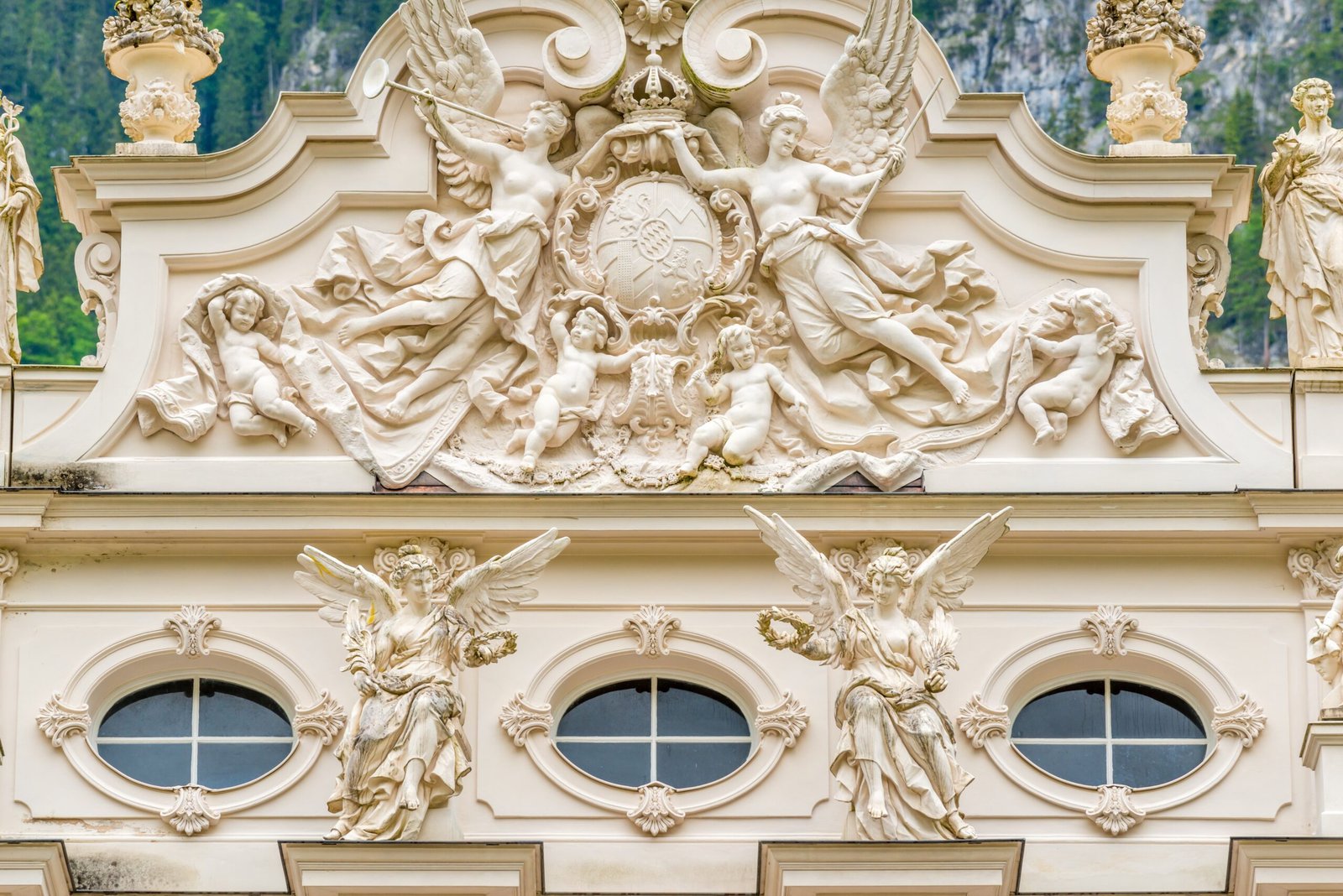
In 2026, Baroque references are returning through a contemporary vocabulary of carved detail, gilded frames, theatrical interiors, layered ornament and artworks that physically project into space. The result is not necessarily a literal return to seventeenth-century aesthetics. Instead, it is an appetite for depth, density, decoration and visual drama.
The revival is particularly visible in interiors, where designers are reintroducing historical ornament into otherwise contemporary environments. At the same time, artists are exploring relief, impasto and heavily worked surfaces that transform the artwork from something viewed into something almost physically encountered.
Beyond Minimalism
The original Baroque period, broadly associated with European art and architecture from the seventeenth through the mid-eighteenth centuries, was built around theatricality, movement, ornament and emotional impact. The later Baroque Revival of the nineteenth and early twentieth centuries brought many of those characteristics back into architecture and decorative arts.
The contemporary revival is different.
Rather than reproducing an entire historic interior, today’s designers can use a single carved chair, gilded mirror, elaborate cornice or sculptural wall treatment against a restrained architectural background. The historical object becomes a point of tension rather than a complete stylistic environment.
Recent design commentary has identified richer surfaces, jewel tones, velvet, gilded frames and thickly layered treatments as part of a broader movement away from strict minimalism. Surface itself is increasingly treated as an architectural and artistic element.
That shift matters because it changes how a room is experienced. A wall is no longer simply a background. It can become the event.
Heavy Relief: Painting Becomes Almost Sculpture
The same impulse is appearing in contemporary art.
At New York’s Nancy Hoffman Gallery, Jody Guralnick’s As Close As Breath, on view September 10 through October 28, 2026, offers a particularly striking example. Guralnick’s paintings investigate microscopic ecological networks involving mosses, lichens, molds and fungal mycelium. Her acrylic impasto creates heavily textured surfaces that move into bas-relief, producing intricate, lace-like configurations against luminous painted grounds.
The work demonstrates why the idea of “heavy dimensional relief” is useful as an editorial lens.
The subject may be microscopic, but the physical treatment is anything but delicate. Paint accumulates. Forms rise from the surface. Shadows become part of the composition. The viewer is encouraged to read the work not only through color and image but through its material presence.
Guralnick herself has described the fungal structures she observes as “baroque,” an unusually direct connection between contemporary ecological imagery and the historical language of visual excess.
The Frame Is No Longer an Afterthought
One of the most interesting consequences of the revival is the renewed importance of the frame.
In a minimalist gallery environment, the frame can disappear into the background. A Baroque-influenced approach reverses that relationship. Ornamented frames, carved borders and sculptural edges can become extensions of the artwork itself.
Recent 2026 design commentary has pointed to this development, describing the frame as something increasingly considered alongside the artwork rather than simply added afterward.
That idea connects contemporary painting with interiors, furniture and architecture. The boundary between artwork and environment becomes less certain.
A heavily carved frame can operate almost like a piece of sculpture. A relief painting can function like an architectural panel. A decorative wall can behave like an installation.
New York’s Old-and-New Tension
New York is particularly suited to this visual contradiction.
The city already contains layers of Beaux-Arts architecture, Victorian interiors, Art Deco ornament, industrial lofts and contemporary glass towers. A Baroque-inspired object placed inside a stripped-back downtown interior can therefore produce a distinctly New York kind of friction.
The goal is not necessarily historical accuracy.
Instead, the attraction comes from contrast: old against new, polished against raw, flat against dimensional, restraint against excess.
That tension also explains why contemporary Baroque references can work within spaces that remain otherwise modern. A single dramatic object may provide enough visual weight without turning an entire room into a historical reconstruction.
From Decoration to Material Experience
Heavy relief also reflects a wider desire for tactile experience.
In an increasingly screen-based cultural environment, dimensional surfaces offer something that a digital image cannot fully reproduce: shadow, texture, scale and physical resistance.
A carved surface changes as the viewer moves. A thickly built painting catches light differently throughout the day. Raised material creates shadows that become part of the composition.
This makes relief especially relevant to contemporary art’s continuing interest in materiality.
The “Baroque” element, in this context, is less about copying historical motifs and more about embracing abundance—more texture, more layers, more ornament, more physical presence.
A New Maximalism?
Whether this develops into a sustained movement remains an open question.
For now, “Baroque Revival” is better understood as a useful lens for observing several overlapping developments across interiors, furniture, decorative arts and contemporary painting. Current design discussions point toward richer, more theatrical environments, while New York exhibitions such as Guralnick’s As Close As Breath demonstrate how contemporary artists are pushing dimensionality directly into the painted surface.
What connects these examples is not a single aesthetic formula.
It is the rejection of the assumption that contemporary must mean flat, quiet or minimal.
The new Baroque impulse is about letting surfaces speak loudly again.
In galleries and interiors alike, walls are becoming textured fields, frames are becoming objects, paintings are becoming reliefs, and decoration is reclaiming its ability to create atmosphere.
After years of minimalism, perhaps the most contemporary gesture is simply to add another layer.
