

A landmark New York exhibition brings nearly forty Renaissance bronzes from Siena together, revealing a city whose artistic innovation extended far beyond painting
For centuries, Siena has occupied a distinctive place in the history of the Italian Renaissance. Its paintings are celebrated for their elegance, devotion, and sophisticated visual language, while the city itself is often positioned in art history through the achievements of painters such as Duccio and Simone Martini.
But Renaissance Siena had another story to tell—one forged in metal.
This fall, The Frick Collection presents Siena: The Art of Bronze, 1450–1500, the first exhibition devoted specifically to Siena as a major center of artistic excellence and technical innovation in bronze sculpture during the Italian Renaissance. Running from October 15, 2026, through January 18, 2027, the exhibition brings nearly forty bronze works to New York, including statues, reliefs, candelabra, medals, and other objects.
Many of the works have never previously been exhibited outside Tuscany, making the exhibition an unusually concentrated encounter with a largely underrecognized chapter of Renaissance sculpture.
Recasting the Renaissance Through Bronze
The Renaissance is often introduced through the language of painting, drawing, architecture, and monumental marble sculpture.
Siena: The Art of Bronze shifts the emphasis.
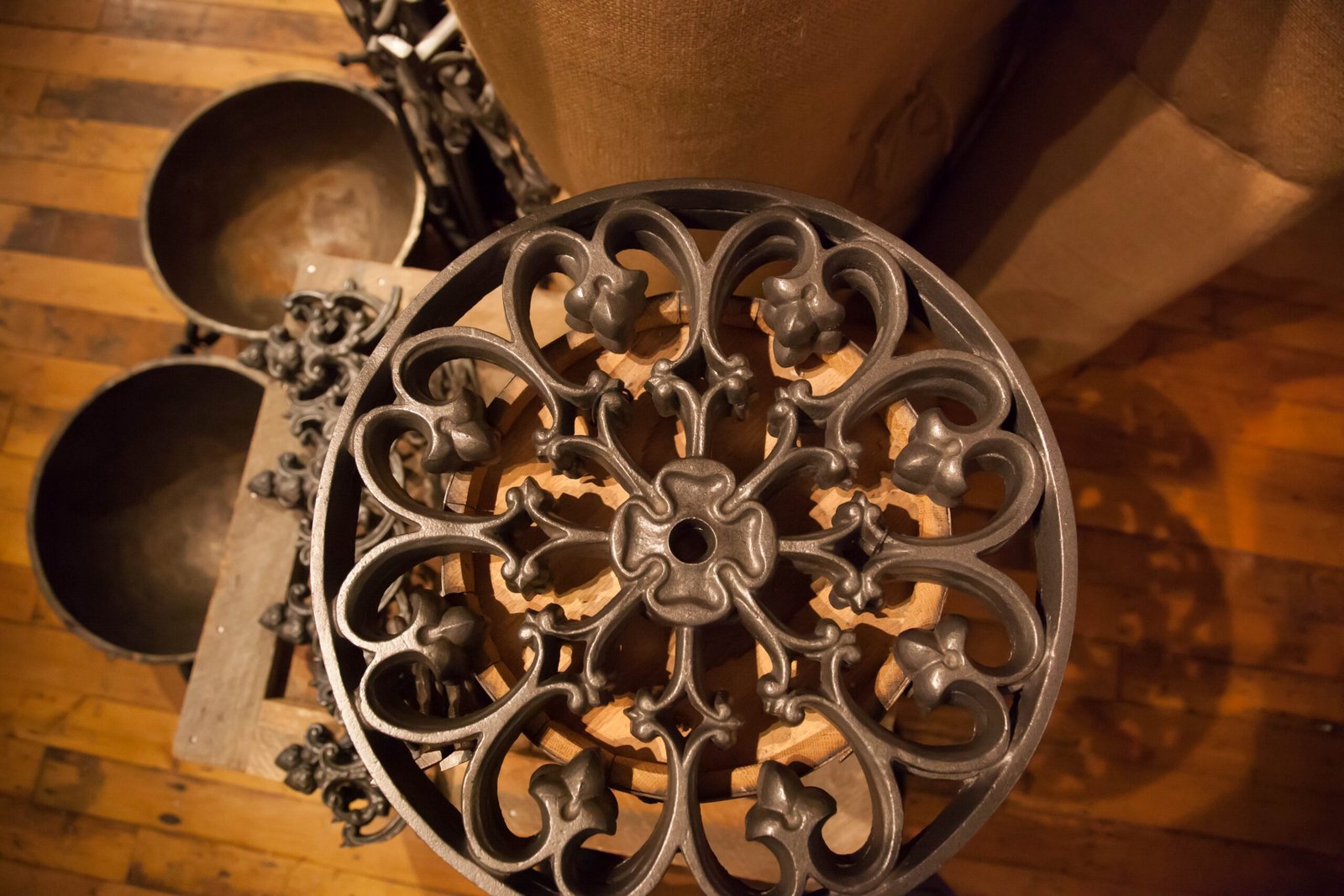
Bronze offered artists a remarkable combination of durability, detail, mobility, and technical possibility. It could be polished, textured, cast, assembled, and finished in ways that allowed sculptors to move between intimate objects and ambitious life-size figures.
At The Frick, that versatility becomes the exhibition’s central subject.
The nearly forty works range from small-scale objects resembling precious jewels to reliefs, liturgical objects, medals, and large sculptures. Together they demonstrate that bronze was not simply an alternative material—it was a medium capable of generating its own artistic language.
Siena’s Bronze Masters
Among the principal artists represented are Donatello, Vecchietta, and Francesco di Giorgio, figures whose careers demonstrate the complex artistic networks surrounding fifteenth-century Siena.
Donatello’s presence is particularly significant.
Although Florence is central to the conventional story of Renaissance sculpture, Donatello’s influence extended across Italy, and works associated with his artistic world help reveal the movement of ideas, techniques, and artists between Italian centers.
Vecchietta, meanwhile, was one of Siena’s most important fifteenth-century artists, active across sculpture, painting, architecture, and other forms of artistic production.
Francesco di Giorgio represents another dimension of the Sienese Renaissance. His work crossed disciplinary boundaries, connecting sculpture with architecture, engineering, design, and theoretical thought.
The exhibition uses such artists to present Siena not as an isolated provincial center but as a place where artistic experimentation could flourish.
The Technical Problem of Bronze
Bronze sculpture is beautiful partly because its technical complexity is hidden.
A finished bronze can appear effortless: a smooth surface, a delicate gesture, a finely modeled face, a dramatic fold of fabric.
Behind that appearance lies a demanding production process.
The Frick exhibition examines the technical and political challenges faced by Sienese bronzeworkers, placing the finished objects within the material conditions that made them possible.
This emphasis on process changes how viewers encounter the works.
A bronze statue becomes not only an image but also evidence of collaboration, specialized knowledge, investment, access to materials, and sophisticated workshop organization.
The metal itself carries a history.
From Devotion to Display
The variety of objects is one of the exhibition’s defining characteristics.
Visitors will encounter religious sculptures and reliefs alongside medals, candelabra, and other forms.
That range reveals the flexibility of bronze within Renaissance culture.
A bronze object could serve a devotional purpose, commemorate a person, celebrate political identity, decorate an elite interior, or function as an object of artistic admiration.
This movement between sacred, civic, personal, and decorative contexts is essential to understanding Renaissance metalwork.
Bronze existed at the intersection of art and life.
Francesco di Giorgio’s Lamentation
One of the exhibition’s featured works is Francesco di Giorgio’s Lamentation at the Foot of the Cross, dating to around 1475.
The bronze relief measures approximately 33⅞ by 29½ inches and comes from Santa Maria del Carmine in Venice.
Its dramatic subject—mourning at the foot of the Cross—makes it an especially powerful example of how bronze could translate emotional intensity into three dimensions.
The tightly arranged figures, gestures, and expressions demonstrate the expressive potential of relief sculpture.
Rather than presenting bronze as cold or mechanically produced, works such as this reveal a medium capable of extraordinary psychological and devotional force.
Siena Beyond Florence
The exhibition also addresses a larger problem in Renaissance art history.
After Siena was defeated by Florence in the 1550s, the city increasingly came to be viewed through the shadow of its more politically dominant rival. The Frick describes Siena as having subsequently been framed as an emblem of the medieval past rather than recognized for the full extent of its Renaissance innovation.
Siena: The Art of Bronze challenges that historical imbalance.
Its premise is not simply that Siena produced beautiful bronzes.
It is that the city’s bronze tradition deserves to be considered as a significant chapter in Renaissance artistic innovation in its own right.
That distinction matters.
Art history is shaped not only by what survives, but also by which centers, artists, materials, and traditions receive sustained scholarly attention.
An International Renaissance in New York
The exhibition’s importance is reinforced by its lenders.
Works have traveled from major Italian institutions including the Museo Nazionale del Bargello in Florence, Museo Nazionale di Capodimonte in Naples, Galleria Nazionale dell’Umbria in Perugia, Museo Diocesano Albani in Urbino, and Museo Civico in Siena.
Additional loans come from the National Gallery of Art in Washington, the British Museum and Victoria and Albert Museum in London, as well as collections in Berlin, Dresden, and Vienna.
The result is a transatlantic gathering of objects that would rarely be seen together.
For New York audiences, the exhibition becomes an opportunity to encounter a geographically dispersed history in one concentrated setting.
The Frick’s Renaissance Expertise
The exhibition also fits naturally within The Frick Collection’s broader identity.
The museum’s collection spans European art from the Renaissance through the nineteenth century, while its research library has long supported scholarship in art history.
Following its major renovation and reopening in April 2025, the Frick has continued expanding its exhibition and public-programming ambitions.
Siena: The Art of Bronze therefore arrives as part of a renewed institutional emphasis on research-driven exhibitions that connect scholarship with intimate encounters with objects.
Bronze, Sound, and the Renaissance City
The Frick is extending the exhibition beyond the galleries through music.
The museum’s 2026–27 concert season includes two weekends devoted to The Music of Siena, featuring early-music specialists and programs connected directly to the exhibition. Free Garden Court performances on November 14 and November 22 will allow visitors to encounter music associated with the period while moving through the museum.
That programming introduces an intriguing historical dimension.
Fifteenth-century Siena was not simply a city of visual objects. Churches, streets, ceremonies, and civic spaces were filled with sound.
The bronzes that survive today represent one form of Renaissance memory.
Music, much more fragile, survives through manuscripts, reconstruction, and performance.
The Frick’s programming places these two forms of cultural survival into conversation.
A Material History of Power and Innovation
There is also a political dimension to bronze.
Producing large or technically ambitious bronze works required resources. Access to skilled labor, materials, patrons, workshops, and specialized knowledge was part of the medium’s infrastructure.
The exhibition’s attention to the technical and political realities of Sienese bronze production therefore adds another layer to the objects.
These were not simply beautiful things.
They were products of a particular urban culture.
Siena’s artistic identity was shaped by pilgrimage, civic competition, religious devotion, international exchange, and its position on the Via Francigena, the important pilgrimage route connecting northern Europe with Rome.
Bronze became one of the materials through which that world expressed itself.
Rewriting the Material Map of the Renaissance
The most significant contribution of Siena: The Art of Bronze may ultimately be its insistence on looking at Renaissance art through material rather than hierarchy.
Painting does not disappear from the story.
Instead, bronze enters the center of the conversation.
The exhibition asks viewers to consider how much of Renaissance creativity can be understood differently when sculpture, metalwork, workshop practice, technical knowledge, and civic culture are given equal attention.
In New York, where museums constantly reinterpret established art-historical narratives, Siena offers a particularly compelling case.
The Renaissance was not one style, one city, or one material.
It was a network of experiments.
And in Siena, some of those experiments were cast in bronze.
Exhibition Details
Siena: The Art of Bronze, 1450–1500
The Frick Collection
October 15, 2026–January 18, 2027
Ronald S. Lauder Exhibition Galleries
New York City
The exhibition is organized by Giulio Dalvit, Associate Curator at The Frick Collection. An accompanying scholarly catalogue of approximately 400 pages includes essays on Sienese bronze production, entries on the exhibited works, new photography, archival research, and scientific analysis.
Timed tickets are recommended.
