


Subheadline:
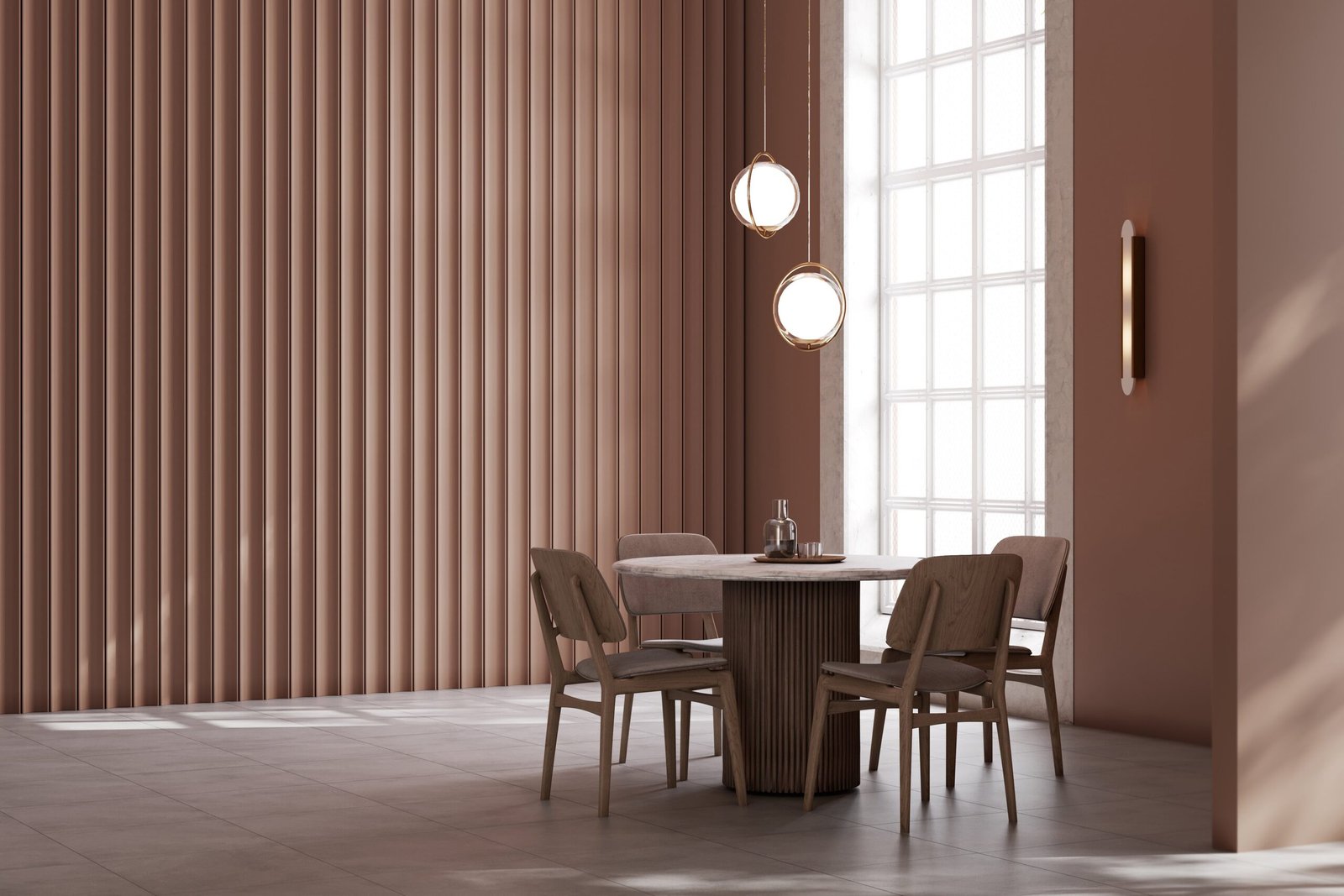
As interiors move beyond stark minimalism, pleated surfaces are bringing softness, rhythm, and controlled movement to rooms built around warmth, restraint, and tactile materials.
Discover Hook
Minimalism used to mean subtraction.
Fewer objects. Cleaner lines. Cooler palettes. Almost no visual noise.
But the interiors emerging in 2026 are asking for something more nuanced: less clutter without less feeling.
That shift has helped propel what designers increasingly describe as warm minimalism—spaces that retain the discipline of minimalist architecture while introducing natural materials, warmer neutrals, curved forms, personal objects, and tactile surfaces.
One of the most interesting expressions of this change is the return of pleating.
Known as plissé in French, the technique traditionally belongs to fashion and textile craft. In contemporary interiors, however, the fold has moved onto walls, furniture, lighting, screens, and architectural surfaces.
The result is an intriguing contradiction: a minimalist room becomes more expressive without becoming more crowded.
From Fashion Fold to Architectural Surface
Pleating has always been about transforming flat material.
A piece of fabric becomes dimensional through repeated folds. Light catches one ridge while another falls into shadow. The surface acquires rhythm without requiring a printed pattern.
Interior designers are now applying the same principle to architectural materials.
NOËL & MARQUET’s PLISSÉ wall panels, for example, translate the fan-like pleats of haute couture into sculptural wall surfaces. The company’s 2026 Harmony of Lines collection describes PLISSÉ as a system inspired by sunray pleats, using crisp folds and strong linear structures to introduce movement and clarity to walls, ceilings, and furniture.
This is where plissé becomes particularly compatible with warm minimalism.
Instead of adding decoration through pictures, patterns, or collections of objects, the architecture itself supplies the visual interest.
The wall becomes the ornament.
Warm Minimalism Is Not Maximalism in Beige
The phrase “warm minimalism” can easily become a catch-all for beige interiors.
Its more useful definition is structural.
The basic principles of minimalism remain: restraint, function, clean organization, and carefully selected objects.
What changes is the sensory experience.
Current design coverage points toward creamy whites, ivory, sand, beige, soft browns, terracotta, sage, natural wood, linen, leather, rattan, stone, and other materials that introduce warmth without overwhelming the room. Rounded forms and meaningful personal objects can also soften the strict geometry associated with earlier minimalist interiors.
Texture becomes particularly important.
A room does not need more things.
It needs more surface.
That is exactly where pleats become powerful.
Why Pleats Work in Minimal Interiors
A flat wall is visually quiet.
A heavily decorated wall is visually loud.
A pleated wall occupies the middle ground.
The repeated folds create shadows that change throughout the day as natural or artificial light moves across the surface. The geometry remains controlled, but the appearance is never completely static.
This gives minimalist interiors something they often lack: movement without clutter.
The effect is especially visible in contemporary PLISSÉ wall panels, where repeated folds create a graphic rhythm that can transform a wall or piece of furniture into an architectural feature.
The principle can also be seen beyond wall systems.
At Maison&Objet Pulse 2026, pleated forms appeared in lighting, including Artetica’s Plisse lamp, whose 3D-printed thermoplastic shade translates the visual language of fabric folds into a rigid contemporary object.
The fold is no longer dependent on cloth.
It has become a design vocabulary.
Light Becomes Part of the Material
Perhaps the greatest strength of plissé in interiors is its relationship with light.
Every fold produces a small change in surface orientation.
That means the same wall can look different in morning daylight, afternoon sun, and evening illumination.
The effect is subtle but powerful.
Rather than decorating a surface with an image, the designer gives the surface a geometry that generates its own visual variation.
This makes pleating particularly suited to interiors that prioritize calm.
The room can remain monochromatic.
The furniture can remain restrained.
The walls can remain relatively quiet.
And yet the changing light creates a continuously shifting composition.
The fold becomes a kind of silent animation.
The Textile Memory of Plissé
There is also an emotional reason pleating feels appropriate to the current design moment.
Textiles are associated with softness, domesticity, clothing, touch, and the human body.
Architecture is associated with permanence, structure, weight, and enclosure.
Plissé sits between these worlds.
When translated into architectural materials, the fold allows a hard wall to retain a visual memory of fabric.
That tension makes the technique particularly effective in warm minimalist environments.
A room can remain architecturally rigorous while introducing something that looks almost tactile enough to touch.
The surface suggests softness without actually being soft.
Is This Minimalism or Decoration?
That question is important.
Minimalism traditionally sought to remove unnecessary visual information.
A decorative pleated wall might appear to contradict that philosophy.
But the contemporary interpretation is different.
The pleating itself can perform multiple functions: creating depth, controlling light, establishing rhythm, defining a zone, and providing visual texture.
In that sense, the surface does not necessarily add decoration.
It becomes the architecture.
The distinction is similar to the difference between adding an artwork to a wall and designing the wall so that its material qualities become the artwork-like experience.
The Return of Craft
The renewed interest in pleating also reflects a wider design fascination with craft and material intelligence.
In fashion, pleats require technical knowledge of fabric behavior, pressure, heat, and repetition.
In interiors, translating the effect into panels or three-dimensional materials requires another kind of precision.
The result looks simple because the underlying system is controlled.
That relationship between apparent simplicity and technical complexity is central to contemporary design.
Warm minimalism does not necessarily reject technology.
It hides the technology behind an atmosphere of calm.
A Softer Geometry
There is a broader aesthetic shift happening alongside this.
Designers are increasingly combining straight architectural lines with curved furniture, organic shapes, natural materials, and tactile surfaces. Current 2026 trend reporting repeatedly identifies this combination of restraint and softness as an important direction in residential interiors.
Pleats fit naturally into that transition.
They are geometric but not rigid.
They are repetitive but not monotonous.
They are precise but can appear handmade.
They create order while producing movement.
That combination makes the fold surprisingly versatile.
Beyond Beige
The future of warm minimalism may therefore depend less on color than on material depth.
A warm minimalist interior does not have to be entirely beige.
A deep green wall with a pleated surface can feel warm.
Terracotta can create a richer architectural rhythm.
Oak can introduce natural variation.
Stone can provide weight.
Metal can provide contrast.
And pleated surfaces can tie those materials together through repeated geometry and changing light.
The important principle is restraint.
The room does not need every trend at once.
One carefully designed pleated surface may be enough to establish an entire atmosphere.
The New Quiet Luxury Is Tactile
The popularity of warm minimalism and plissé reflects a larger movement away from interiors that communicate luxury primarily through visible abundance.
Instead, sophistication is increasingly being expressed through proportion, craftsmanship, material quality, lighting, and texture.
The expensive-looking room is not necessarily the room with the most objects.
It may be the room where every surface has been considered.
Pleated architecture fits that philosophy perfectly.
Its impact comes from repetition.
Its character comes from light.
Its sophistication comes from precision.
And its warmth comes from the way those folds soften otherwise rigid architectural surfaces.
The Fold as a Design Language
Plissé is ultimately more than a decorative trend.
It represents a way of manipulating surface.
A flat plane becomes dimensional.
A wall becomes rhythmic.
Light becomes visible.
Shadow becomes part of the composition.
And a minimalist room gains personality without losing restraint.
That may explain why the technique feels so timely in 2026.
After years of stark minimalism, interiors are not necessarily moving toward maximalism. They are moving toward sensory minimalism—spaces where fewer elements carry more tactile, emotional, and visual weight.
The pleat is perfectly suited to that idea.
It says that simplicity does not have to mean smoothness.
A quiet room can still have rhythm.
A restrained palette can still have depth.
And a minimalist interior can still move.
Editorial note: “Warm Minimalism” is widely used in contemporary design coverage, while “plissé” is a design technique and surface language rather than a formal interior-design movement. This article uses both as an editorial framework for examining the 2026 shift toward warmer, more tactile minimal interiors.
